

Debut residential area sets a price benchmark for Northern Metropolis
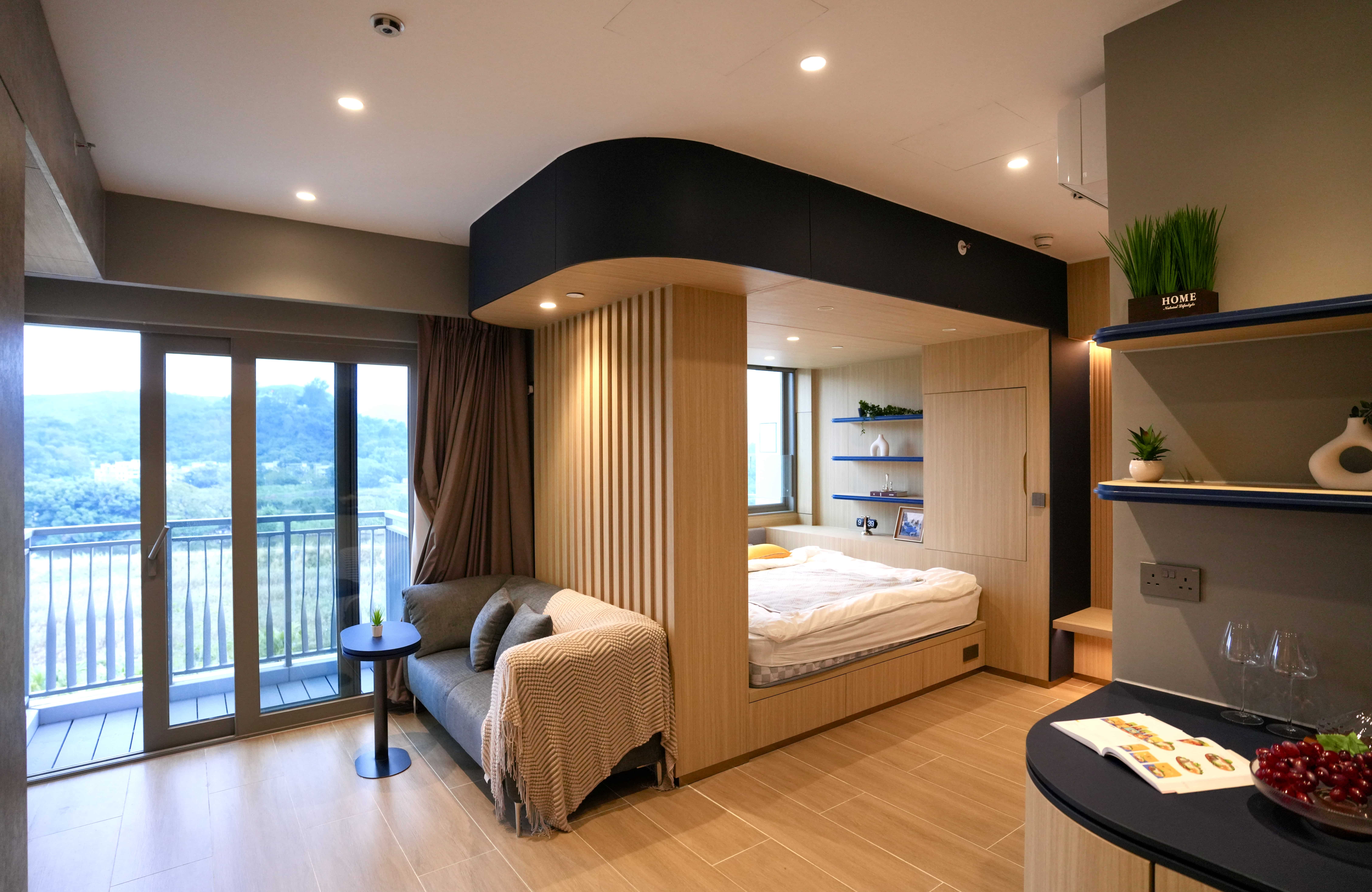
The Kwu Tung North development area in the Northern Metropolis saw its first residential project launched over the weekend.
The new project, Palo Springs, set a high benchmark for residential property prices in Kwu Tung North, according to Derek Chan Hoi-chiu, head of research at Ricacorp Properties.
“Its pricing reflects the potential of the Northern Metropolis, rather than benchmarking against existing mature, rail-connected residential projects,” Chan said. “The upside from infrastructure projects, including Kwu Tung MTR Station and the new Huanggang Port, is partially priced in and has been accepted by the market.”
Industry analysts said that in the medium to long term, as infrastructure and industry gradually develop, the Northern Metropolis — viewed as a new engine for the future development of Hong Kong — will gain increasing appeal in the property market.
With Kwu Tung Station on the East Rail Line scheduled for completion in 2027, and planned as a future interchange with the Northern Link, three further residential developments in Kwu Tung North are expected to enter the market soon, together providing about 3,500 units, according to Centaline Property.
ALSO READ: HK officials, lawmakers vow to hasten Northern Metropolis development
As Kwu Tung North’s debut residential project, sales in Palo Springs are likely to shape near-term pricing for other developments, Chan said.
The project received more than 2,500 registration applications as of Saturday, representing around 29 times oversubscription. For the first round of sales, 100 units were released on Sunday. Fifty-six units were sold, amounting to around HK$417 million ($53.15 million), according to Ricky Wong, vice chairman and managing director of Wheelock Properties.
Sammy Po, senior director of Midland Realty, said the sales results are reasonably satisfactory, considering that construction work is still underway. He added that while the district’s accessibility is currently constrained by transport links, the opening of Kwu Tung Station will increase the value of local residential projects.
In terms of buyer profiles, around 70 percent are expected to be residents, while the remaining 30 percent are investors. The majority — 60 percent — are from the New Territories, where the development is located, with others coming from the Chinese mainland, including cross-border businesspeople and Shenzhen-based families, Chan said.
“Long-term investors are eyeing Kwu Tung North’s prospects as a cross-city innovation hub, anticipating strong rental demand driven by future developments such as the San Tin Technopole and Northern Metropolis University Town,” he said.
READ MORE: HK pulls out all the stops to develop Northern Metropolis
Despite the optimism, concerns have emerged over whether improved connectivity, following the opening of Kwu Tung Station, could divert potential buyers to Shenzhen. Chan said, “Enhanced cross-border accessibility may prompt some people to live in Shenzhen, yet the project has also drawn interest from Shenzhen families buying homes in Hong Kong, pointing to a two-way cross-border flow. In the long run, the Northern Metropolis is positioned to attract tech talent to live and work.”
According to the Northern Metropolis Action Agenda, the development is expected to eventually accommodate about 2.5 million residents and provide around 650,000 jobs. Po projected that a large share of these new jobs will be in the high-tech sector, with middle- and high-income employees driving robust housing demand in both the rental and homeowner ship markets.
“Given the ample short-term residential supply, sharp price gains are unlikely to materialize until residents move in, and local jobs roll out over time. I expect the Northern Metropolis will deliver substantial upside for property price potential over a five- to 10-year horizon,” Po said.
