

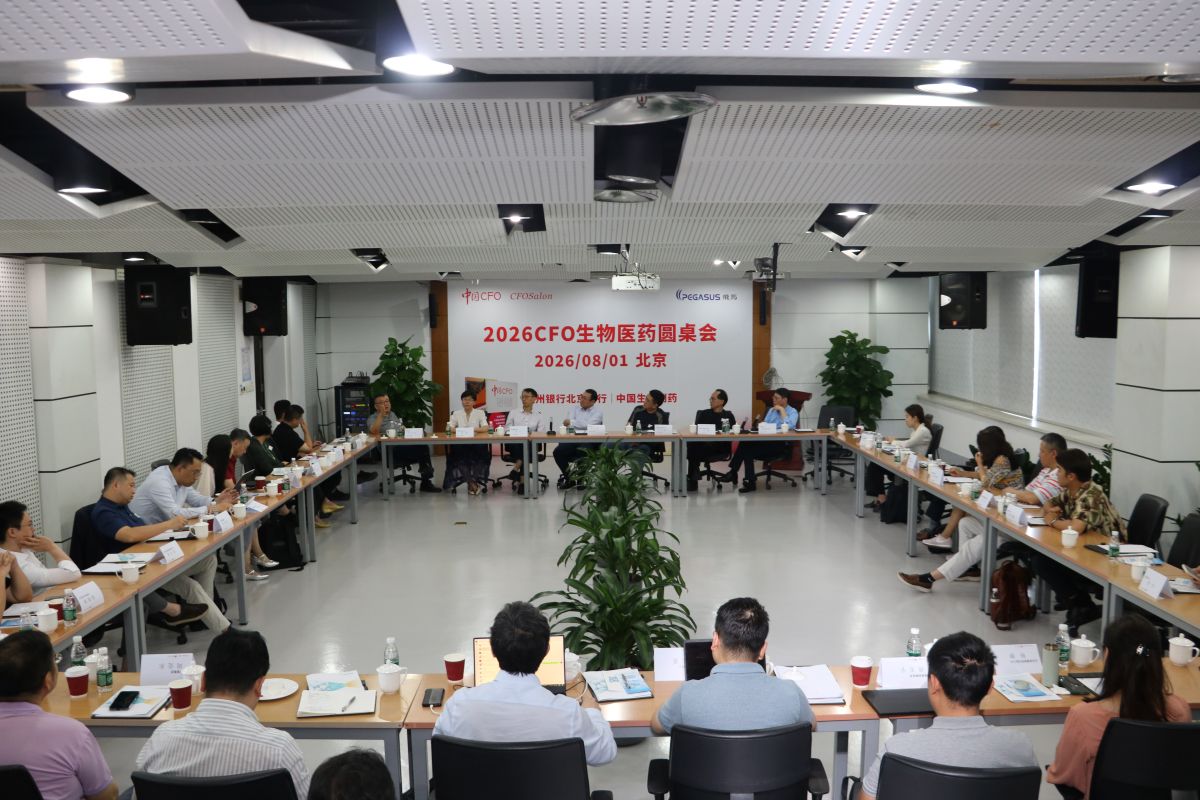
More than 30 CFOs, investors, and entrepreneurs from leading Chinese companies gathered to discuss the transformation and future opportunities of China's biopharmaceutical industry amid accelerating AI adoption and globalization at a roundtable in Beijing earlier this month.
The CFO Salon, together with GACE, hosted the 2026 CFO Biopharmaceutical Roundtable on Aug 1, with special support from Hangzhou Bank Beijing Branch.
Ze Zhang spoke at the beginning.
Against the backdrop of rapid integration of artificial intelligence, biotechnology, and industrial ecosystems, the global biopharmaceutical sector is undergoing profound changes, reshaping drug discovery, healthcare delivery, and competitive dynamics, the roundtable was told.
Participants discussed how China’s biopharmaceutical industry – supported by its complete industrial chain, large market scale, and growing innovation capabilities – is transitioning from scale-driven growth toward innovation-led development.
Moderated by Will Zeng, head of Financing at Sino Bio-Pharma, the first panel focused on the opportunities and challenges of AI for science.
Experts from investment, legal, and biopharmaceutical sectors said AI for science has entered a critical stage of development, with competition shifting from standalone algorithms toward integrated capabilities combining AI models, high-quality data, experimental systems and industry expertise.
For biopharmaceutical companies, AI cannot only accelerate research and development (R&D) cycles but also improve the success rate of drug discovery. For AI companies, building reliable data assets and sustainable commercial models will be essential for long-term value creation, they said.
With its vast pharmaceutical market, abundant data resources and strong R&D talent base, China is well positioned to develop competitive advantages in the global AI for Science landscape, they added.
The second panel, led by David Liu, explored globalization strategies of Chinese biopharmaceutical companies.

Participants observed that China’s biopharma sector is entering a new phase of global expansion. While previous overseas growth was largely driven by cost advantages and engineering capabilities, future success will increasingly depend on innovation capacity, data capabilities, and global resource integration.
Looking ahead, China’s biopharmaceutical industry may develop a “2-way globalization” model, on one hand, by leveraging its engineering expertise, industrial chains and manufacturing capabilities to transform global innovations into commercial products, and, on the other hand, by participating more actively in early-stage global innovation through capital, technology and industrial collaboration.
The panelists highlighted China’s unique talent advantage, shaped by the global education experience of Chinese professionals since the 1990s, scientific training at leading universities worldwide and R&D experience at multinational pharmaceutical companies. Combined with the capabilities accumulated during the past decade’s CRO development, these advantages provide a strong foundation for China’s future global competitiveness, they said.
Meanwhile, companies need to further strengthen technological innovation, intellectual property protection, international team building and global management capabilities, they added.
During the luncheon session, hosted by Yong Zhang, Partner of Lantau Investment, Henggui Zhang, chief scientist at the Beijing Academy of Artificial Intelligence (BAAI) and director of its Center for Life Simulation, delivered a keynote speech on AI-enabled cardiac medicine.
He introduced a new paradigm that combines principle-driven and data-driven approaches to develop AI cardiac diagnostic models and digital twin heart systems.
By integrating electrophysiological data, medical imaging, ECG signals and ultrasound data, these technologies enable simulation of cardiac functions, disease risk prediction, intelligent diagnosis, surgical planning, and drug safety evaluation. Virtual heart models and AI cardiac agents are expected to significantly enhance diagnostic, monitoring, and surgical capabilities across healthcare institutions, contributing to better management of cardiovascular health in an aging society, he said.
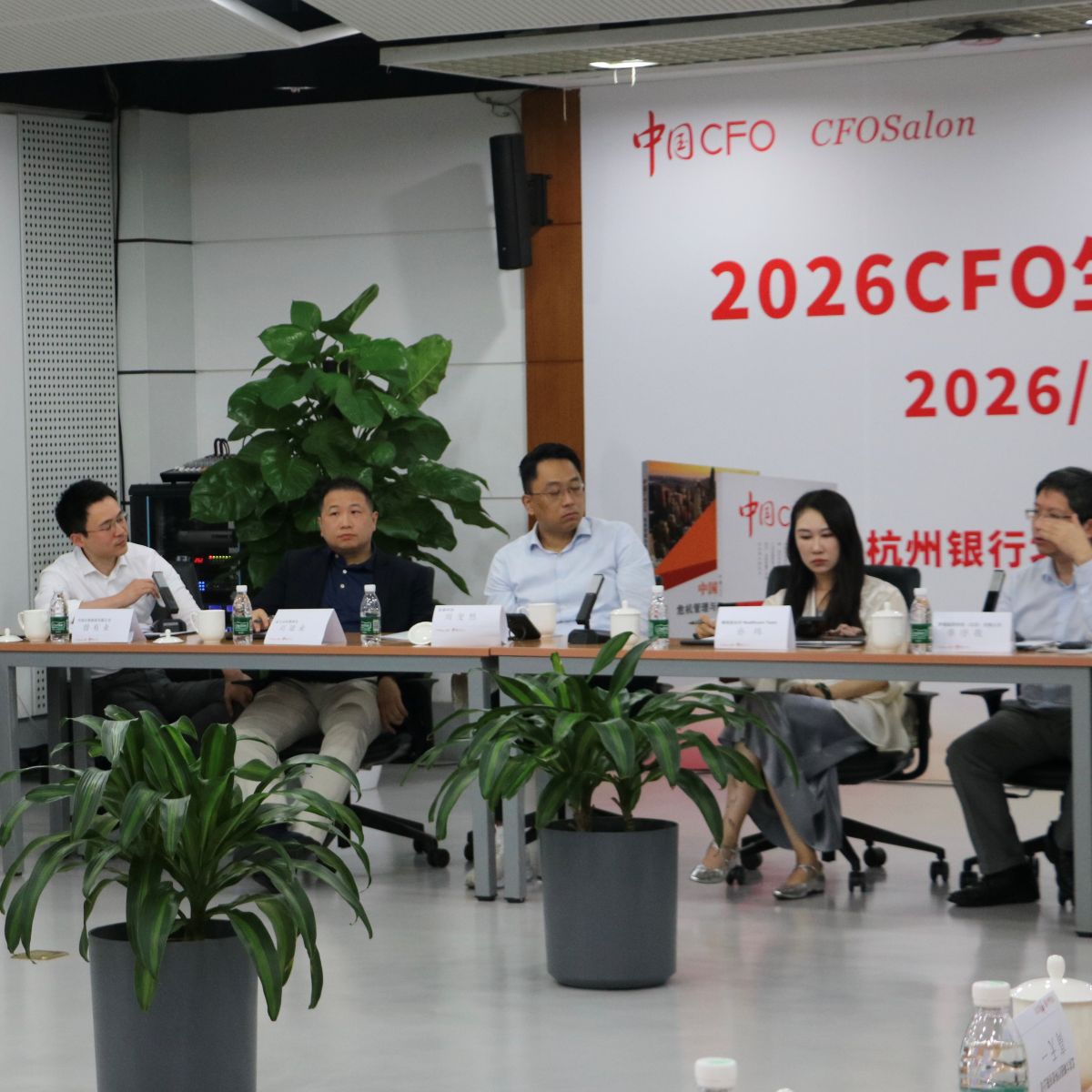
Min Zhong, head of the Cross-Border Business Dept, Hangzhou Bank Beijing Branch, shared the bank’ practices and perspectives on supporting Chinese biopharmaceutical companies in global expansion.
As Chinese enterprises move beyond traditional exports toward overseas investment, mergers and acquisitions and global industrial deployment, they face increasing challenges in cross-border payments, foreign exchange compliance, overseas financing and global cash management.
Zhong emphasized that commercial banks need to expand beyond traditional payment and settlement services toward cross-border investment and financing, asset management, and integrated financial solutions.
Leveraging its expertise in cross-border finance, Hangzhou Bank will continue to develop comprehensive financial services covering the full lifecycle of corporate globalization and support Chinese enterprises in achieving sustainable international growth, added Zhong.
The roundtable also included a visit to Beijing Tide Pharmaceutical Company, a subsidiary of Sino Bio-Pharma and the venue of the event.
As a witness to the international cooperation between China and Japan in medical innovation, the company has experienced more than three decades of transformation from chemical drugs to innovative biologics. It continues to maintain a leading position within the Yizhuang pharmaceutical ecosystem while actively embracing AI technologies to enhance R&D efficiency.
