

Nation cementing dominance in global push for next-generation clean energy
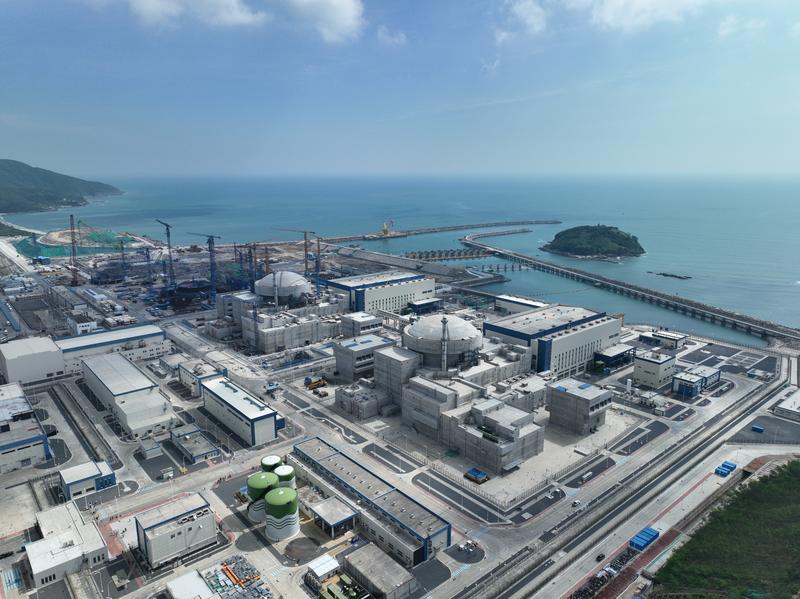
China recently greenlit eight new nuclear reactors, accelerating its atomic energy expansion and cementing its dominance in the global push for next-generation clean energy.
With a pledge to construct and operate the units according to the world's highest safety standards, the move underscores the nation's commitment to achieving its ambitious climate targets — peaking carbon emissions before 2030 and achieving carbon neutrality before 2060.
Six of the new reactors will employ the domestically designed Hualong One, China's third-generation nuclear power technology with full intellectual property rights. It is also one of the most widely accepted series of third-generation nuclear power reactors in the world.
READ MORE: Green efforts underlined to shield supply
For industry observers, the timing of these approvals carries immense strategic weight. As the inaugural batch of the 15th Five-Year Plan (2026-30) period, these projects set a definitive tone for China's energy blueprint during the most critical window for its climate commitments.
The 15th Five-Year Plan period represents the decisive sprint toward China's goal of peaking carbon emissions before 2030, said Li Jinkai, a distinguished professor at the School of Economics at the Beijing Institute of Technology.
"As a clean and stable baseload power source, the approval and construction of these new projects signal that China's nuclear power construction has firmly entered a stage of large-scale, batched and normalized development," Li said.
Nuclear projects also help promote investment growth, stabilize economic operations and attract private capital, he added.
The maturity of Hualong One has been fully validated through its large-scale deployment. Currently, 10 Hualong One units are in commercial operation domestically and internationally, with another 37 approved or under construction.
This cements its position at the forefront of global third-generation nuclear power, according to China General Nuclear Power Group.
A single Hualong One unit generates nearly 10 billion kilowatt-hours of electricity annually. This output can meet the demand of a medium-sized city of over 1 million people for a year, it said.
Furthermore, its research and construction have integrated a complete supply chain of nearly 6,000 upstream and downstream enterprises, effectively steering the upgrading of China's manufacturing sector, it said.
The steady approval pace — with 10 or more reactors greenlit annually from 2022 to 2025 — has translated into robust green energy output.
According to the National Energy Administration, the country's nuclear power generation reached approximately 467 billion kWh in 2025, drastically cutting standard coal use and reducing carbon dioxide emissions.
The China Nuclear Energy Development Report 2026 blue book, released by the China Nuclear Energy Association earlier, showed that by the end of 2025, China had 59 commercial units in operation with a total installed capacity of 62.52 gigawatts.
ALSO READ: China scores big in nuclear energy tech
An additional 35 units totaling 41.90 GW were under construction, maintaining China's global top spot for under-construction capacity for 19 consecutive years. Completed investment in nuclear power engineering hit a record 161 billion yuan ($23.84 billion) in 2025, with five approved projects that year featuring private capital participation.
Looking ahead, China's nuclear footprint is set to expand significantly.
Yang Changli, rotating chairman of the CNEA, estimates that with socioeconomic demand for energy and electricity providing ample room for the development of nuclear power, China's installed nuclear power capacity is expected to reach 200 million kW by 2040.
Contact the writers at zhengxin@chinadaily.com.cn
