

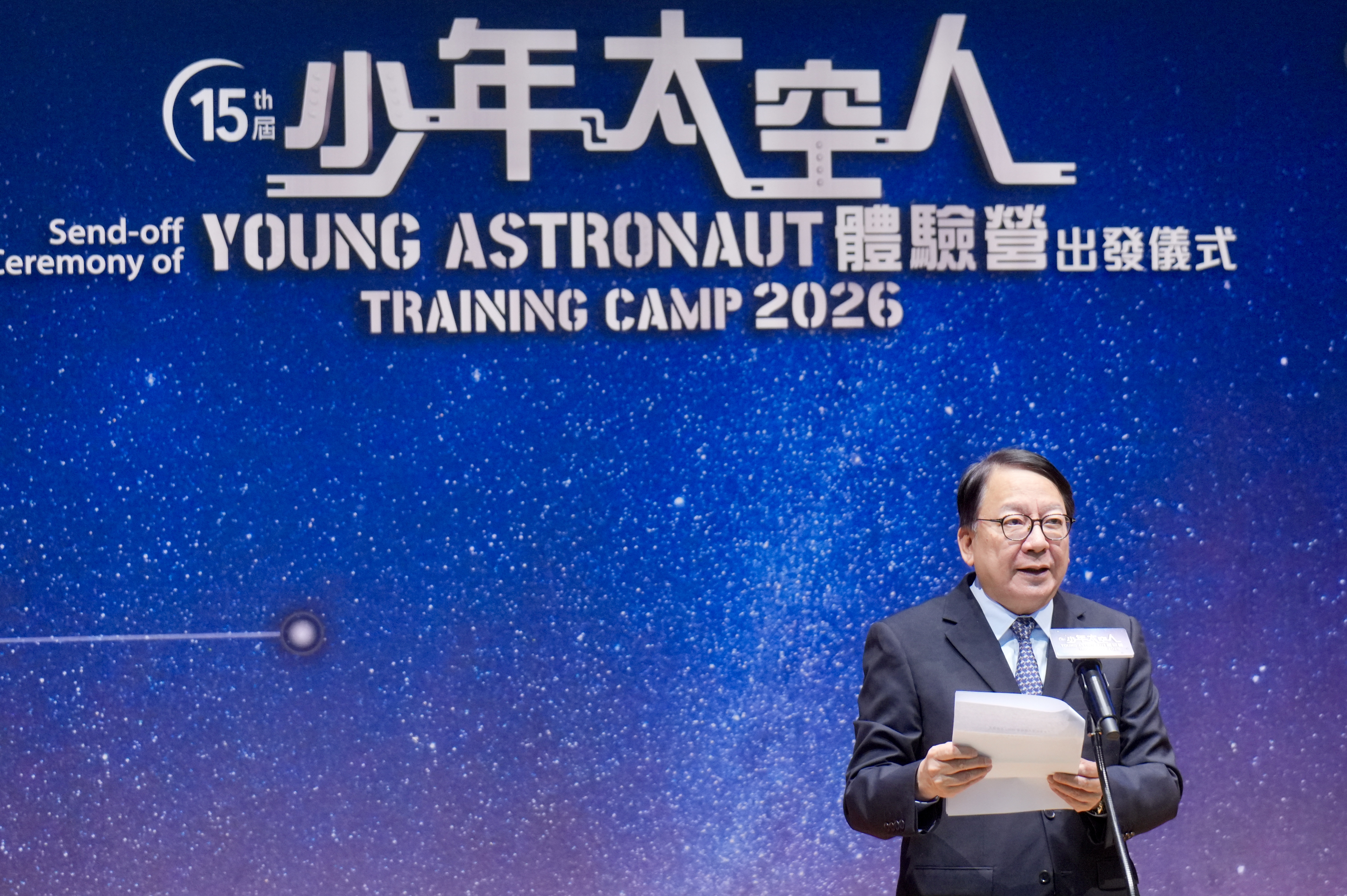
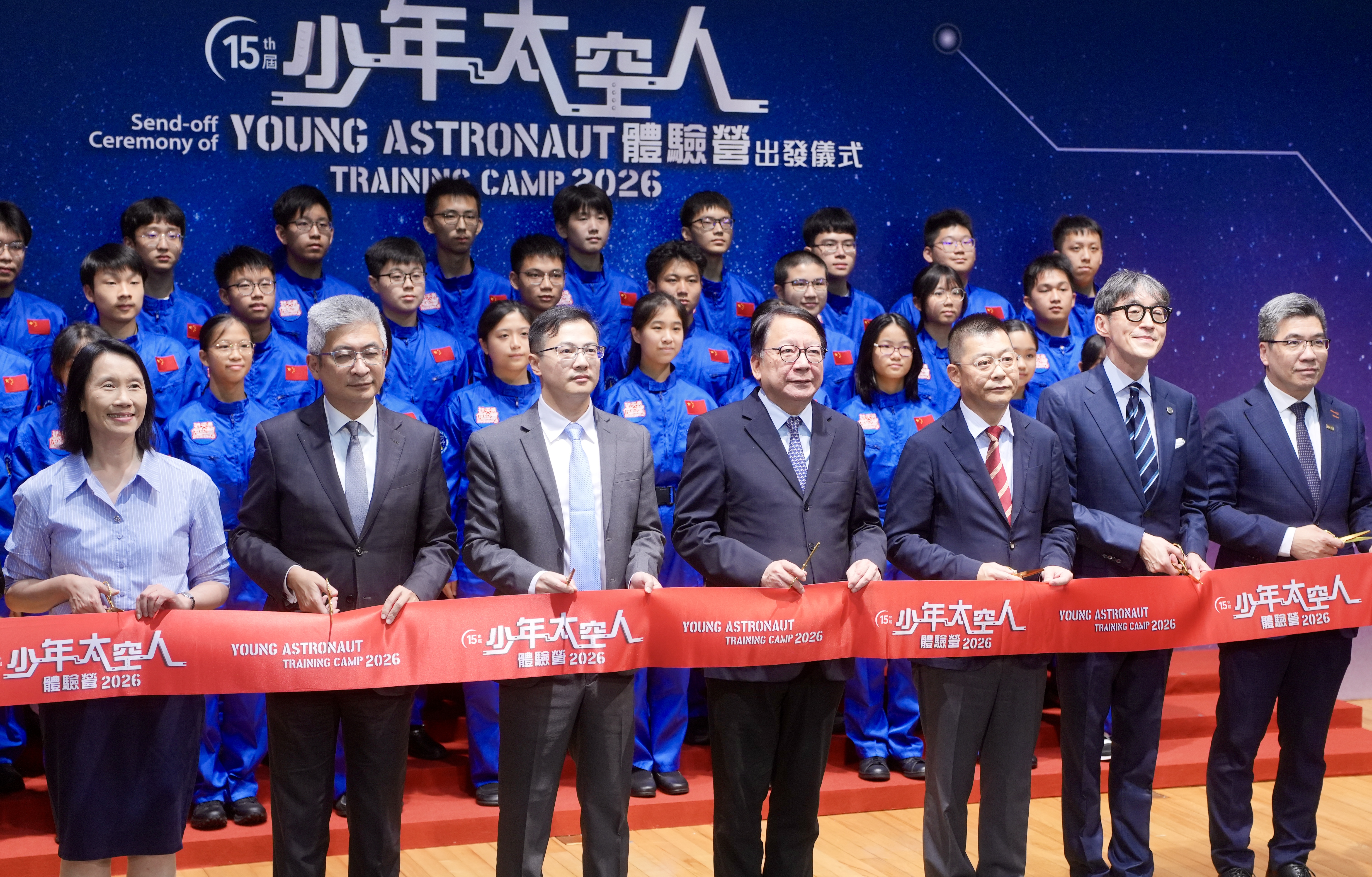
Hong Kong Chief Secretary for Administration Eric Chan Kwok-ki on Thursday encouraged the city’s youth to set their sights on joining the nation’s space endeavors, as 30 local secondary school students prepared to set off on a cross-border tour to take a closer look at the country’s aerospace triumphs.
Chan made the remarks at the launch ceremony of the Young Astronaut Training Camp 2026, the city’s yearly aerospace education program that selects 30 secondary school pupils to tour key national space and astronomy sites, experience astronaut drills, and interact face-to-face with astronauts and space scientists.
This year’s camp is co-presented by the Leisure and Cultural Services Department and the Chinese General Chamber of Commerce, Hong Kong, in association with the China Space Foundation and the Beijing-Hong Kong Academic Exchange Centre, and organized by the Hong Kong Space Museum,
From July 23 to 31, participants will travel to Beijing, Xi’an of Shaanxi province and Jiuquan, touring key national aerospace facilities such as Beijing Aerospace City, the Jiuquan Satellite Launch Center and the Xinglong Observatory of the National Astronomical Observatories.
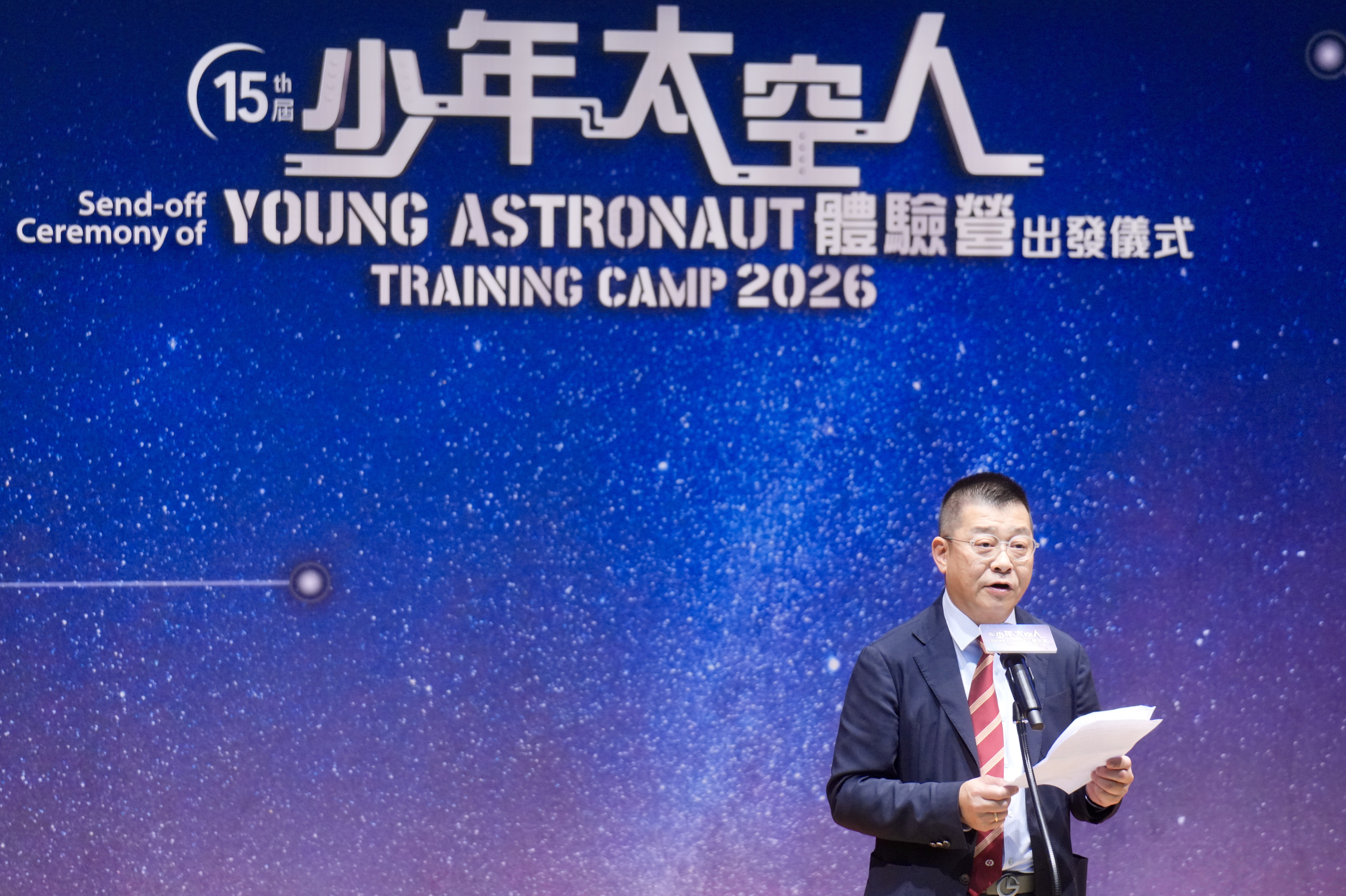
This year’s selection process was “very competitive”, said Chan, adding that around 200 applications were received from over 110 schools.
“You have all shown a great passion for space exploration,” he told the assembled trainees. “Now that you have this rare opportunity, be sure to seize it and do all you can to broaden your perspectives.”
Chan noted that this year had been a “historic moment” for Hong Kong’s aerospace aspirations, following the May launch of payload specialist Lai Ka-ying – the city’s first home-grown astronaut – on the Shenzhou XXIII mission with fellow crew members from the Chinese mainland, Zhu Yangzhu and Zhang Zhiyuan.
He added that Hong Kong had also achieved “outstanding results” in multiple space science fields – a “clear reflection”, he said, of the city’s deep-seated innovation and technology roots and its strengths in nurturing and attracting talent.
Chan cited the Multi-Spectral Imaging Carbon Observatory, or “Eye for Space”. The device, whose development was led by a research team from Hong Kong’s University of Science and Technology, went into operation aboard the country’s Tiangong space station earlier this month.
Chan said he hopes the students will make full use of the trip to prepare themselves for future roles, and that they might eventually represent Hong Kong in contributing to national space missions, “truly achieving academic growth and giving back to society what you have learned”.
The “Young Astronaut Training Camp”, first held in 2009, is now in its 15th edition. Over the years, 420 students had taken part in the program.
Contact the writer at wanqing@chinadailyhk.com
