

School of Communication offers interdisciplinary programs, industry partnerships, and experiential learning for freshmen
Receiving their Hong Kong Diploma of Secondary Education (DSE) Examination results today, students and their families may find themselves at one of the most important crossroads in their academic journey — a time filled with both anticipation and uncertainty as they seek to turn aspirations into reality through higher education.
For the growing number of young people interested in media, communication and content creation, choosing the right university program requires more than just selecting a degree. It means finding an environment that can nurture their interests, develop their abilities and prepare them for a communication profession being reshaped by digital transformation, artificial intelligence, and rapidly changing industry needs.
Situated on the campus of The Hang Seng University of Hong Kong (HSUHK) in Sha Tin, the School of Communication (SCOM) has established a strong reputation for preparing future communication professionals. Through its academic programs, practical learning opportunities and advanced teaching facilities, the school aims to equip students with the knowledge, skills and professional outlook needed to succeed in a rapidly evolving field.

More than communication
SCOM combines academic rigor with practical learning to prepare students for the future of communication. Through a curriculum that integrates theory with real-world applications, students develop the knowledge, skills and professional confidence needed for a wide range of career paths.
Unlike traditional communication or journalism programs, SCOM adopts an interdisciplinary curriculum that integrates business, communication technologies, journalism, public relations and corporate communication. The curriculum is designed to give students a broad foundation suited to a profession that now extends well beyond conventional media roles.
Business-related courses, for example, are taught by faculty members from the university’s School of Business. This cross-faculty collaboration gives students a valuable interdisciplinary perspective.
“Our school prepares communication professionals whose skills are needed across every industry,” says Professor Scarlet Tso Hung, dean of the School of Communication at HSUHK. “Studying communication opens up a wide range of opportunities for our students, both academically and professionally.”
She adds that among Hong Kong’s seven university communication schools, SCOM is the only one to integrate business education so extensively into its communication curriculum.
The school’s Bachelor of Journalism and Communication (Honours) program combines traditional journalism with the latest developments in communication technologies and business studies. The curriculum is designed to equip graduates with the versatility needed to succeed in today’s rapidly evolving communication environment, Tso says.
Another flagship program, the Bachelor of Arts (Honours) in Convergent Media and Communication Technology, prepares students for careers at the intersection of communication, computing and digital content creation, including emerging applications of artificial intelligence in communication practice.
The newly launched Bachelor of Arts (Honours) in Arts and Culture Communication provides students with an interdisciplinary education combining communication, business, and arts and culture. The program aims to develop graduates who can promote arts and culture in both local and international contexts.
Building on these undergraduate programs, SCOM also offers three taught master’s programs: the Master of Arts in Strategic Communication, the Master of Arts in Digital Media for Online Communication, and the Master of Arts in Entertainment Media Management and Communication. Together, the programs equip graduates for advanced professional roles in strategic communication, digital media innovation and the global entertainment industry.
The school has also invested heavily in teaching and learning facilities, including the Cinema and TV Production Centre, the Radio Broadcasting Studio, the Editing Room, the Multimedia Training Centre and the Radio Broadcast Training Centre.
According to Tso, SCOM graduates pursue careers across a wide range of sectors. Some have joined government departments, while others work in banking, law firms, accounting firms and major corporations — evidence, she says, that communication skills are increasingly valued across different industries.
Going beyond classrooms
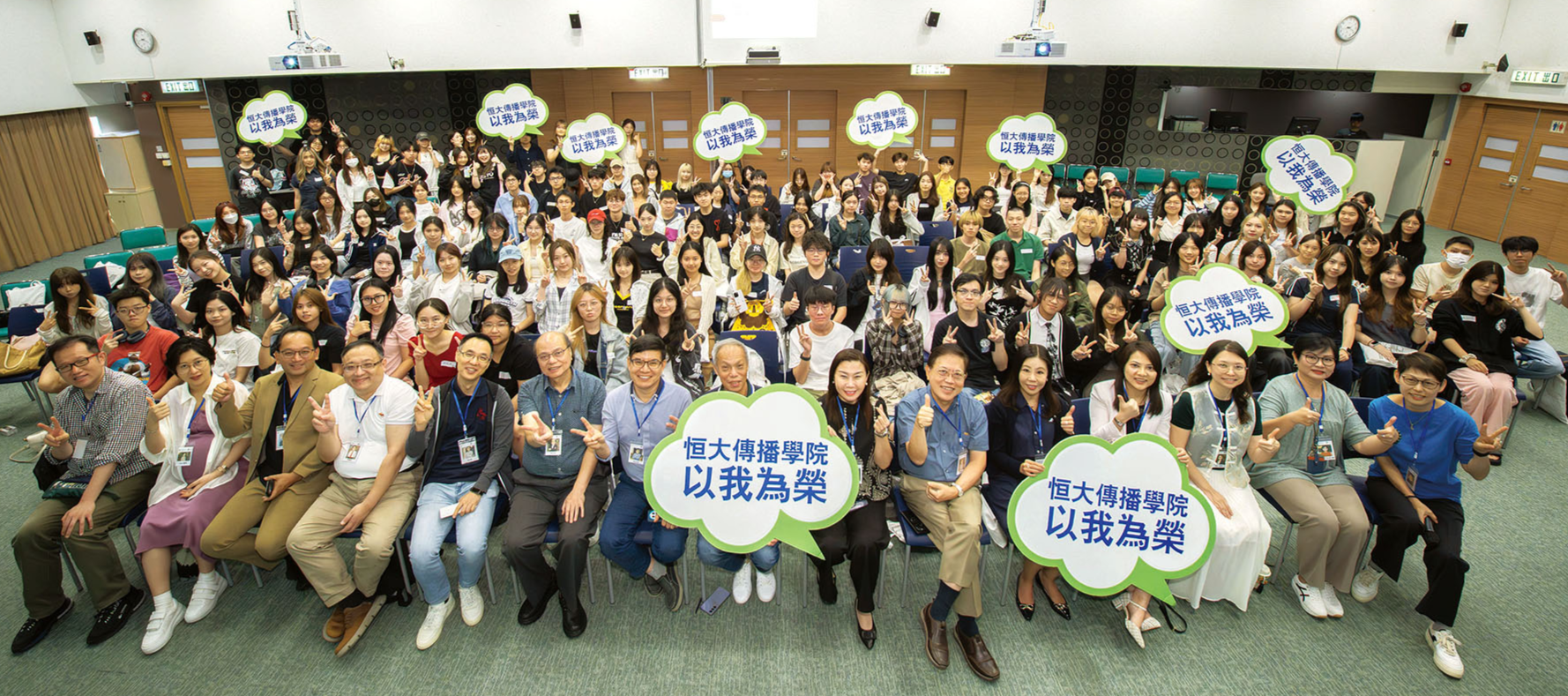
At SCOM, practical experience is a central part of the learning experience. Through internships and a wide range of experiential learning opportunities, students gain first-hand exposure to the communication profession. Regular engagement initiatives, such as SCOM Talk, bring leading practitioners in journalism, public relations and digital media to campus, giving students valuable insights into industry trends and professional practice.
The school also expands students’ learning opportunities through partnerships with a wide range of institutions and organizations. For example, SCOM has collaborated with Radio Television Hong Kong (RTHK) to invite artificial intelligence experts to share their knowledge of AI applications in video and film production. Students are encouraged to apply these technologies in their creative work and submit their productions to competitions, Tso says.
Beyond industry partnerships, SCOM has also taken the lead in fostering academic collaboration across the region.
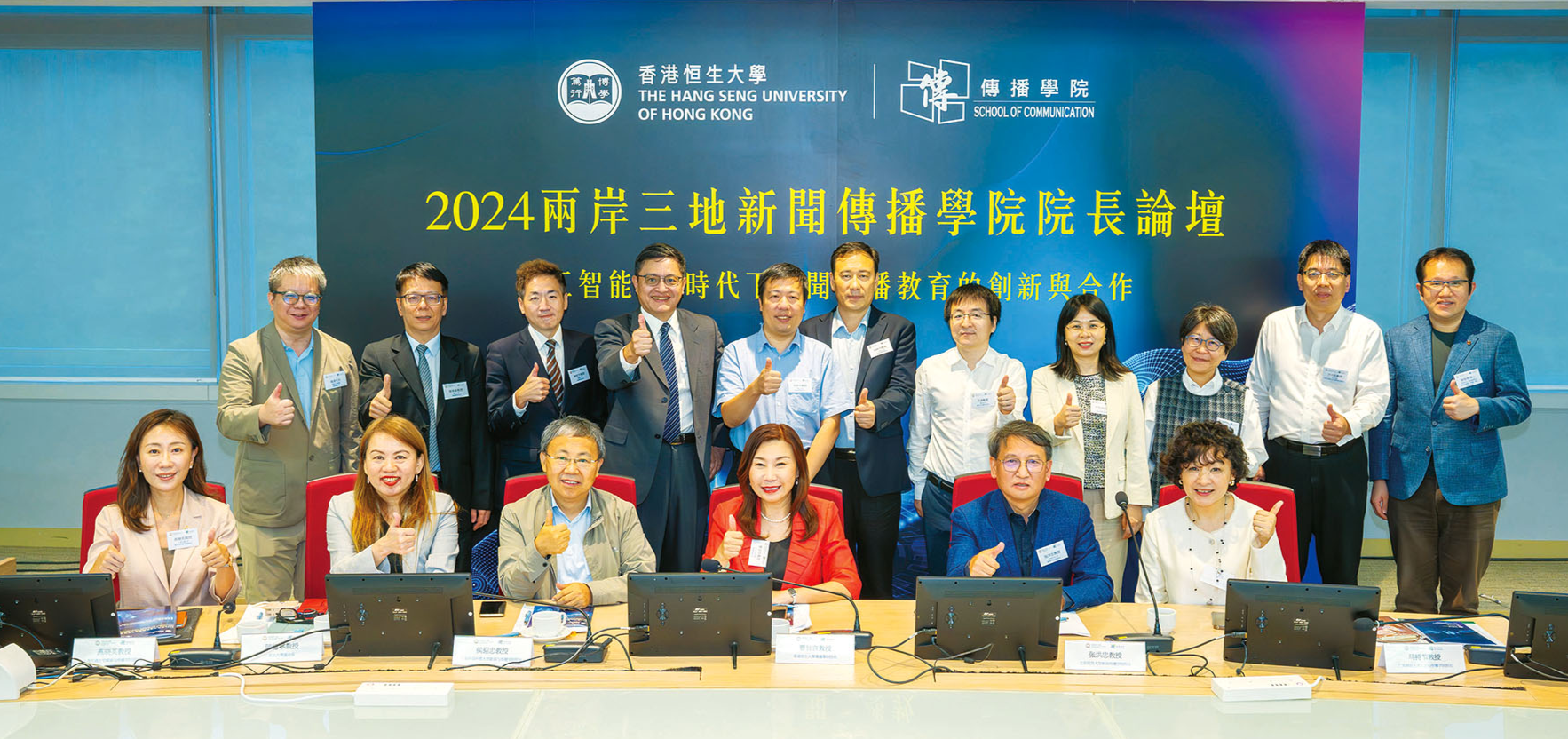
“We’re the first communication school in Hong Kong to launch the Forum of Deans of Schools of Journalism and Communication from (the Chinese mainland), Taiwan and Hong Kong, bringing together deans from leading universities to discuss the opportunities and challenges facing journalism and communication education,” says Tso.
She said the Deans’ Forum reflects SCOM’s commitment to academic leadership and regional engagement, while strengthening ties among journalism and communication schools. The forum also reflects SCOM’s growing role in promoting academic dialogue and research collaboration in journalism and communication. “This is a pioneering initiative launched by SCOM, and we’re proud to have made it happen,” Tso says.
The school has also signed memorandums of understanding with Jinan University and Guangdong University of Foreign Studies. In addition, HSUHK has established partnerships with leading universities, including Tsinghua University in Beijing and Fudan University in Shanghai, providing students with opportunities for academic exchange, resource sharing and further study.
All for students
SCOM has built a strong reputation among students, parents and educators for its commitment to nurturing future communication professionals. Beyond academic achievement, the school emphasizes helping students develop professionally and preparing them for careers in a rapidly evolving communication environment.
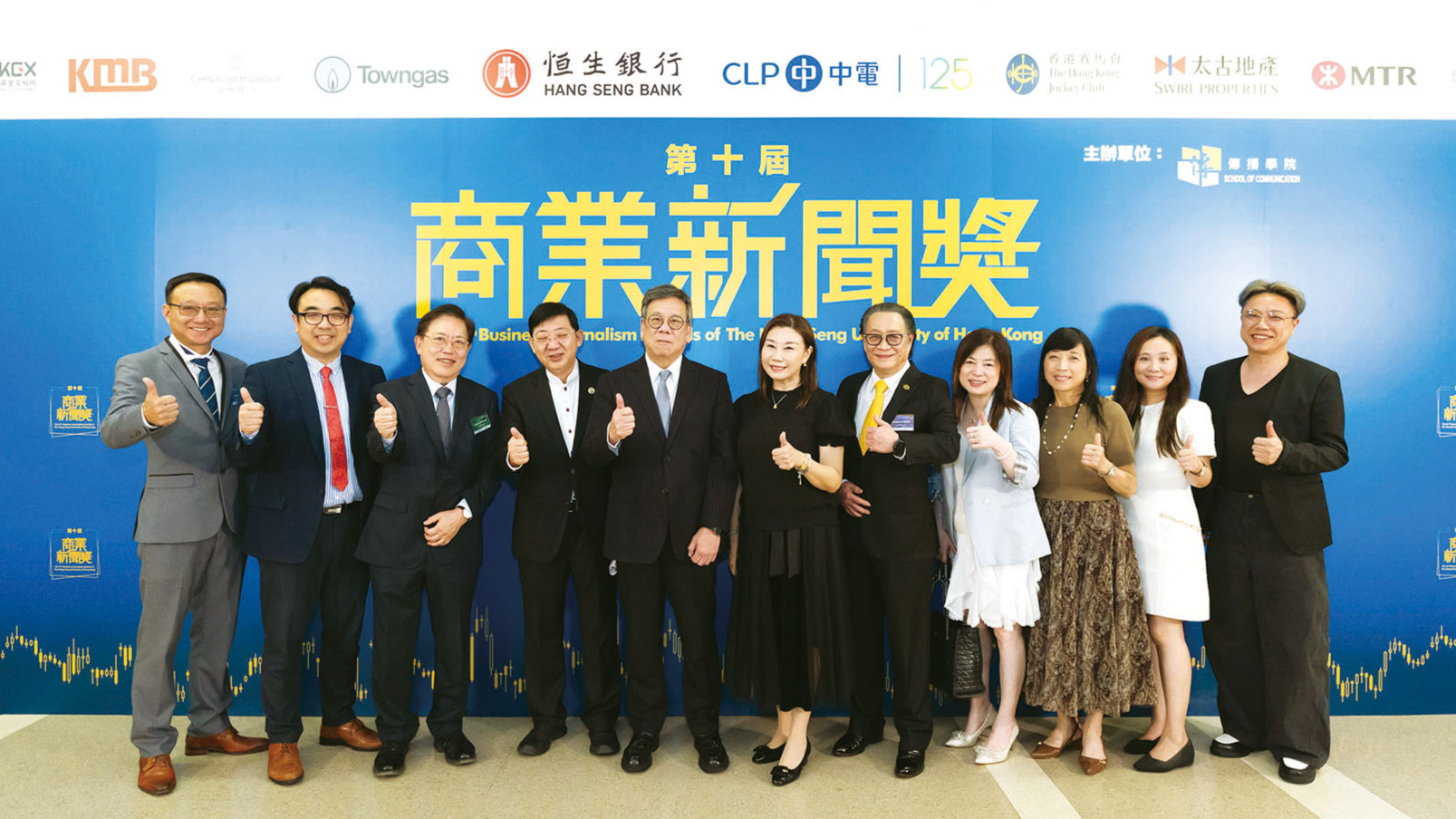
One of SCOM’s signature events is the HSUHK Business Journalism Awards, launched in 2016. The awards have become one of Hong Kong’s leading journalism awards, recognizing outstanding business journalists and providing a platform to celebrate professional excellence in the field.
“We receive more than 600 entries each year, which are judged by a panel comprising senior media executives, business and community leaders, academics, and professionals from a wide range of sectors. The diversity of the panel reflects our belief that excellence in business journalism should be evaluated from multiple professional perspectives,” says Tso. “For journalists, having their work recognized by such a diverse panel is particularly meaningful. We also hope the awards will bring outstanding journalism to the attention of the wider community.”
This commitment to students is also reflected in Enlightenment Post, the school’s student publication, which is published at least twice each semester. The publication provides students with hands-on experience in news reporting, interviewing, editing and publication management, allowing them to experience the full journalistic process in a real-world environment.
Equally important is the close relationship between teachers and students. A mentorship program pairs students with faculty mentors who provide not only academic guidance but also advice on personal development and career planning.
“Our commitment to students begins even before they join the university,” says Tso. “Through program briefings, school visits and admissions interviews, we hope prospective students can gain a clearer understanding of communication education and feel welcomed and supported throughout the admissions process.”
“Our teachers take the time to talk with prospective students through one-on-one admissions interviews because we genuinely want to understand each applicant. Through these conversations, we look for qualities such as curiosity, a keen sense of observation, strong communication skills and analytical ability.”
Tso encourages students to pursue their studies with ambition and a clear sense of purpose.
“We want them to understand that studying communication is not about becoming a celebrity or a star,” she says. “Communication professionals have an important role to play in every industry. We hope our students will embrace lifelong learning, continue to grow, value what they have and use their communication skills to make meaningful contributions wherever their careers take them.”
