

TEHRAN/JERUSALEM/LONDON – The Iranian Foreign Ministry on Thursday condemned the latest US strikes against several regions in Iran's southern coastal provinces and two bridges in the country's northeastern provinces.
In a statement, the ministry described the attacks on two bridges along the rail routes from Gorgan to Incheh Borun and Mashhad to Tehran as "flagrant war crimes."
It stressed that the US strikes within the past 48 hours, carried out under the "false pretext" of responding to earlier incidents involving ships crossing the Strait of Hormuz, were in blatant violation of the United Nations Charter and a recently signed memorandum of understanding (MoU) between the two countries on ending the war.
The ministry also accused the US of using the strikes to justify its "continued non-compliance" with the MoU.
It added that Iran is determined to punish the "aggressors" and will in no way let the US government's "breach of promises, bullying and vileness" affect Iran's rights and national interests.
In reaction to the US attacks, Iran's Parliament Speaker Mohammad Baqer Qalibaf said in a Thursday post on social media platform X, "The US has not learned yet that bullying and breach of promises are no longer without costs."
He warned that if the US hits Iran, it will receive blows, underlining that the Strait of Hormuz will only reopen with Iran's arrangements, and not by US threats.
The US Central Command said in a post on X early Thursday that its forces had completed an additional round of strikes against Iran to "further degrade Iran's ability to attack commercial shipping and innocent civilian mariners in the Strait of Hormuz," marking the second consecutive day of such action.
In retaliation, Iran's IRGC and army said they have struck US military bases and facilities in Kuwait, Bahrain, and Qatar.
Meanwhile, Hossein Kermanpour, head of the Iranian Health Ministry's public relations, said in a post on X that at least 14 people were killed and 78 others wounded in the US attacks against five Iranian provinces on Wednesday and Thursday.
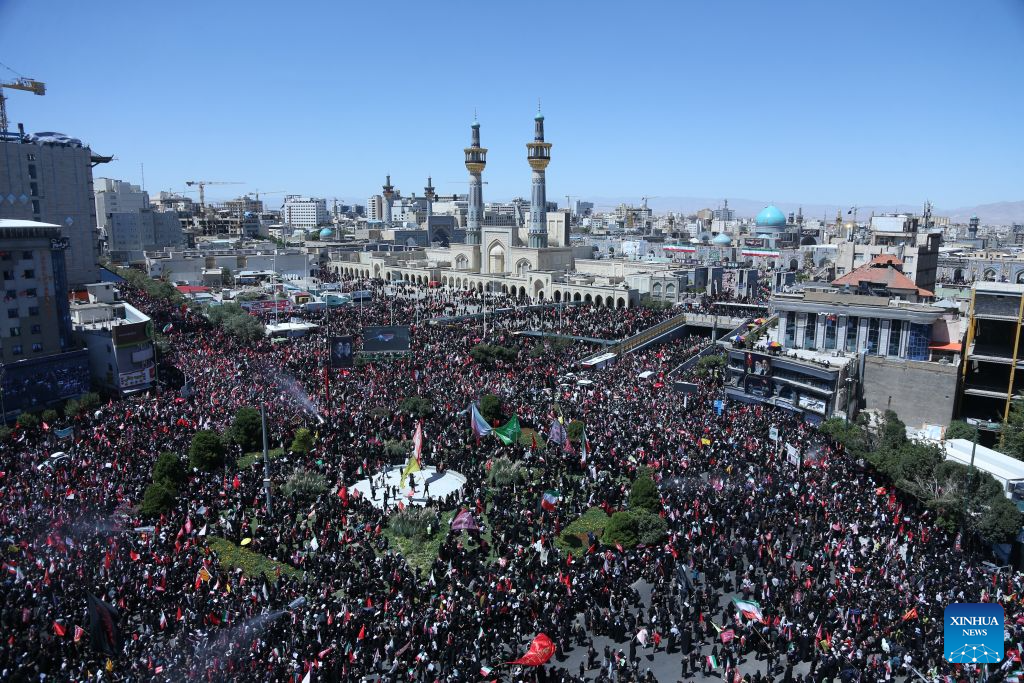
Two people were killed Thursday night in a shooting incident in the northeastern Iranian city of Mashhad, 17 km away from the holy shrine of Imam Reza, where Iran's late Supreme Leader Ali Khamenei would be laid to rest, the official news agency IRNA reported early Friday.
The incident occurred at around 22:00 local time (1830 GMT) in Sarafrazan neighborhood, IRNA quoted Amirollah Shamaqdari, deputy governor of Khorasan Razavi province for security affairs, as saying.
The cause of the incident and the victims' identity remain unknown, according to Shamaqdari.
Iran diplomat discusses developments with foreign officials
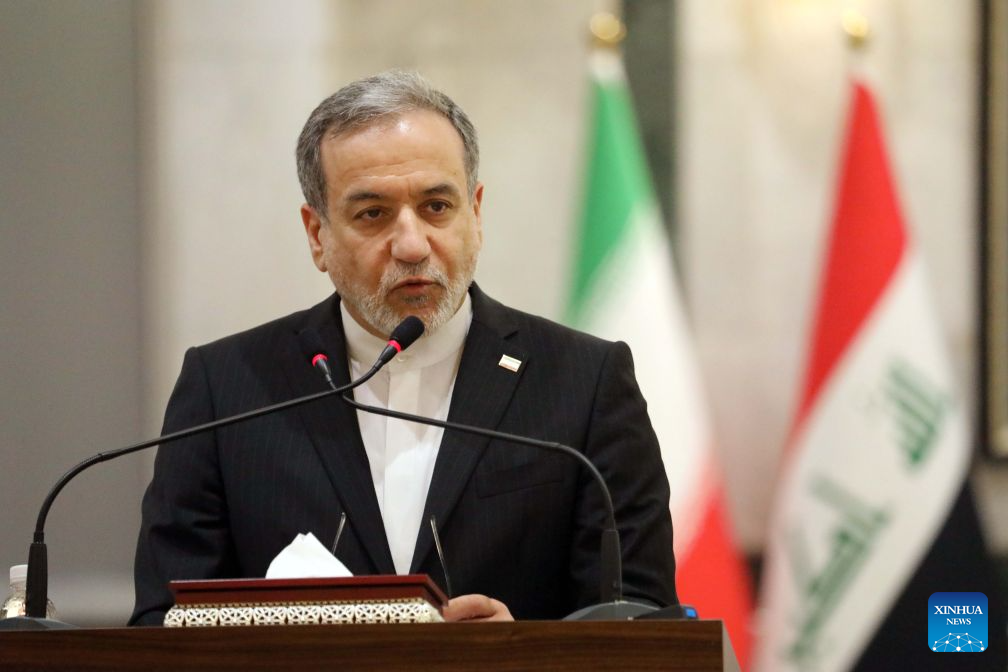
Iranian Foreign Minister Seyed Abbas Araghchi on Thursday discussed the latest regional developments with his Omani and Turkish counterparts as well as Pakistan's army chief in separate phone calls following renewed US strikes on Iran, the Iranian Foreign Ministry said.
In phone calls with Omani Foreign Minister Sayyid Badr bin Hamad Al Busaidi and Turkish Foreign Minister Hakan Fidan, Araghchi discussed the recent developments in the Strait of Hormuz and other issues of common concern, read a ministry statement.
They stressed the importance of pursuing diplomacy and maintaining contacts and coordination to address regional issues and prevent further escalation, the statement said.
In the phone call with Pakistan's Chief of Army Staff Asim Munir, Araghchi strongly condemned the recent US attacks on Iran, calling them flagrant violations of the UN Charter and the recently signed Iran-US peace memorandum of understanding (MoU), read another ministry statement.
Araghchi warned against any "adventurism" by the US military, reaffirming Iran's determination to defend its territorial integrity, sovereignty and national security, it said.
Oman against mandatory transit fees in Hormuz
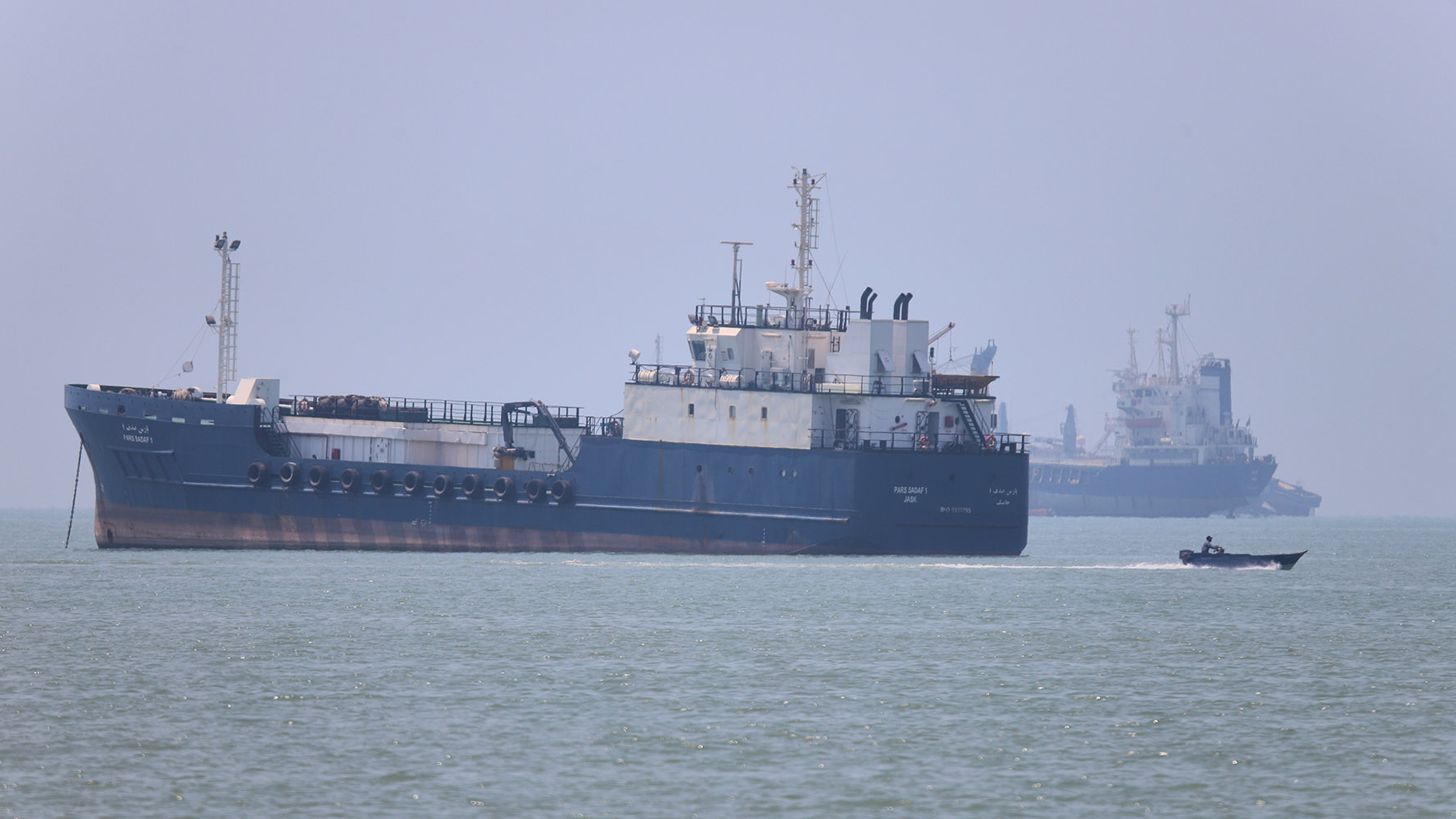
Oman does not support imposing transit fees on vessels passing through the Strait of Hormuz, but is open to exploring voluntary arrangements related to navigational support services, an Omani representative said here on Thursday.
Speaking during the 137th session of the International Maritime Organization (IMO) Council, the representative reaffirmed Oman's commitment to the principle of transit passage under international law.
The remarks came after US media, citing sources close to the issue, reported that Oman had recently submitted a proposal to the US and other Western countries. Under the proposal, shipping companies would voluntarily pay service fees for using the Strait of Hormuz, rather than being subject to mandatory transit tolls.
The proposal was reportedly modeled in part on voluntary contribution arrangements used in the Straits of Malacca and Singapore.
The Omani representative added that Oman would continue to work closely with the IMO, its member states and other partners to preserve safe and open sea lanes, protect life at sea, and strengthen the resilience and sustainability of global maritime supply chains and international trade.
Netanyahu vows to prevent Iran from getting nuclear weapons
Israeli Prime Minister Benjamin Netanyahu said on Thursday that Israel would not allow Iran to acquire nuclear weapons and would expand domestic arms production to reduce dependence on foreign purchases.
"Our policy is clear: with an agreement or without an agreement, Iran will not have nuclear weapons," Netanyahu said at an air force pilots' graduation ceremony.
If the US and Israel had not launched the strikes on Iran, "Iran would have armed itself," he said, referring to Israel's allegation that Iran was seeking nuclear weapons, which Iran had denied.
Netanyahu also announced plans to add 350 billion shekels (about $116 billion) to the defense budget over the next decade.
ALSO READ: Trump says MoU over after strikes
Also on Thursday, Netanyahu held a phone call with US President Donald Trump, during which the two agreed to continue coordination between their countries "on various fronts," Netanyahu's office said in a statement.
During the call, Trump briefed Netanyahu on US actions in the Gulf, the statement said, without elaborating.
Meanwhile, Netanyahu raised the "severity" of remarks by Turkish President Recep Tayyip Erdogan and his aides concerning Israel, the statement said, without specifying which remarks Netanyahu was referring to.
Israeli officials have recently criticized Erdogan for accusing Israel of undermining US-Iran diplomacy and for calling its government "war-addicted." Israel has also voiced concern over a possible US sale of F-35 fighter jets to Türkiye.
The phone call came as the US and Iran traded fresh attacks from Tuesday night through Thursday, marking a new round of escalation.
