

New insurance program aims to solve problem of care for elderly disabled people
For 36-year-old Zhao Zhiqiang, life stopped last November. That's when his 56-year-old father suffered a massive brain hemorrhage, leaving him nearly paralyzed, unable to speak, and dependent on Zhao's assistance for almost every bodily function.
With no savings for a professional caregiver and no other relatives to help, Zhao quit his job to provide round-the-clock care at their home in rural Kangxian county, Gansu province.
"I have no work and no income," Zhao told China Daily. "All I do every day is cook blended food, clean up feces, turn him over in bed, and guess why he is groaning. He can't tell me where it hurts."
READ MORE: China launches national long-term care insurance program
The family survives on a monthly welfare payment of about 2,000 yuan ($276). Zhao's wife lives apart with their two young daughters, aged 4 and 7, while his 83-year-old grandmother — still self-sufficient — also needs occasional assistance. His father's monthly medicine and supplies — including diapers and incontinence pads — run to almost 1,000 yuan, leaving the family with just enough to cover the bare minimum of food, and nothing more. "I desperately need a professional caregiver so I can go back to work," Zhao said.
His situation is indicative of China's growing predicament. With an aging population and shrinking family sizes, many disabled and incapacitated elderly are falling through the cracks. The result is what some families call the "one disabled, whole family paralyzed" trap that robs breadwinners of their livelihoods and leaves the most vulnerable without proper care.
In late March, China launched a national long-term care insurance program. Dubbed the "sixth insurance" the program is intended to fill the gap not covered by the social pillars of the pension, and medical, unemployment, work-related injury and maternity support. The scheme follows nearly a decade of pilot programs that covered more than 3.3 million people and cut caregiving costs by over 100 billion yuan ($14.5 billion). It aims to provide professional services and financial aid for people with long-term disabilities, and will be available in home-based, community and institutional settings.
The new system will be rolled out in stages and implemented nationwide by the end of 2028, covering all residents regardless of employment status. Funding comes from employers, individuals and government subsidies, with premiums capped at roughly 0.3 percent of wages. Beneficiaries will pay no deductible amounts, though annual reimbursements are limited to no more than 50 percent of the previous year's local per capita disposable income, according to guidelines issued by the general offices of the Communist Party of China Central Committee and the State Council.
Zhao said he had never heard of long-term care insurance until contacted by China Daily for this interview. But once he learned about it, his hopes were lifted.
"My final wish," he said, "is for the policy to be rolled out faster and cover us as early as possible, so we can get back to work and earn a living. But the policy must reach villages — not just county seats. And the carers must be properly trained — not just anyone off the street."
'Too weak to care'
In Jiangsu province's Suzhou, a pilot city since 2017, the program has already transformed daily life for thousands of families. The city has gone further than the national standard by including moderately disabled people — not just those with severe disabilities — a model that authorities hope to replicate nationwide.
Zhang Jian, 70, cares for his 96-year-old father, who has advanced Alzheimer's disease and can barely walk. Before long-term care insurance, Zhang and his sister juggled supervision 24-7, often canceling social engagements and sometimes losing patience.
"Bathing him required two people — me and my brother-in-law," Zhang said. "Friends kept inviting me out, but I had to say 'no' every time. I felt stuck at home, sometimes irritable. But you think: everyone gets old. It's our duty."
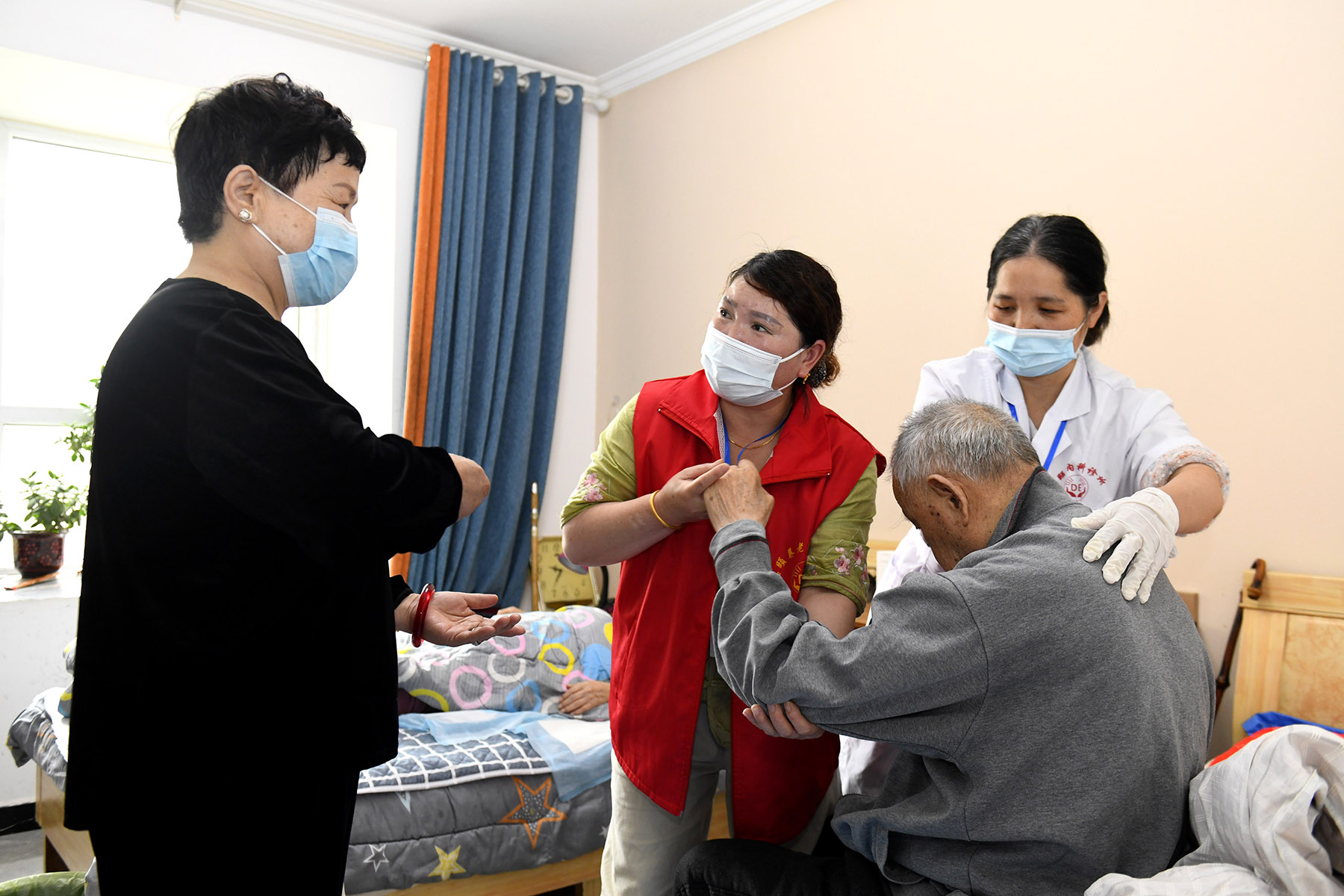
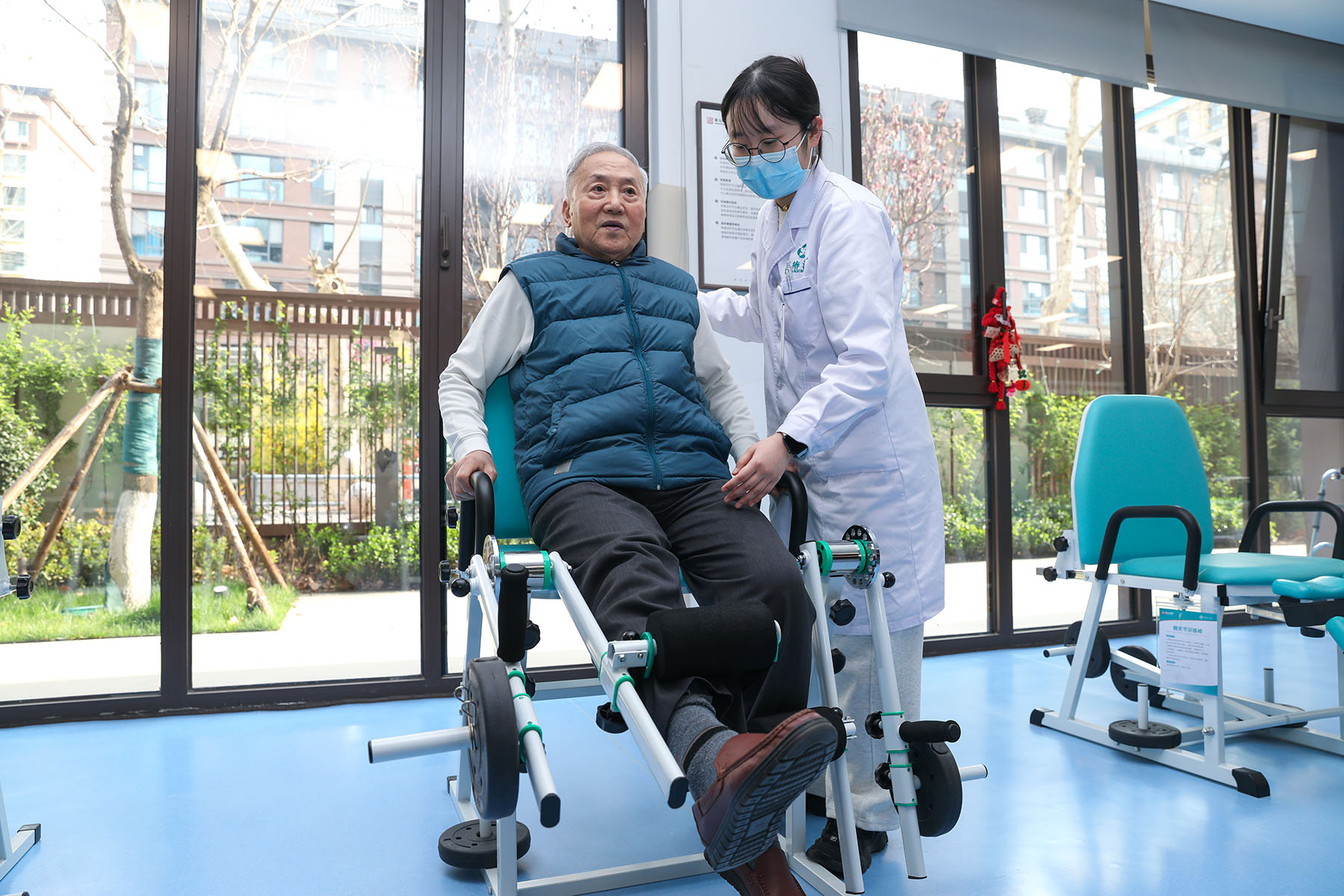
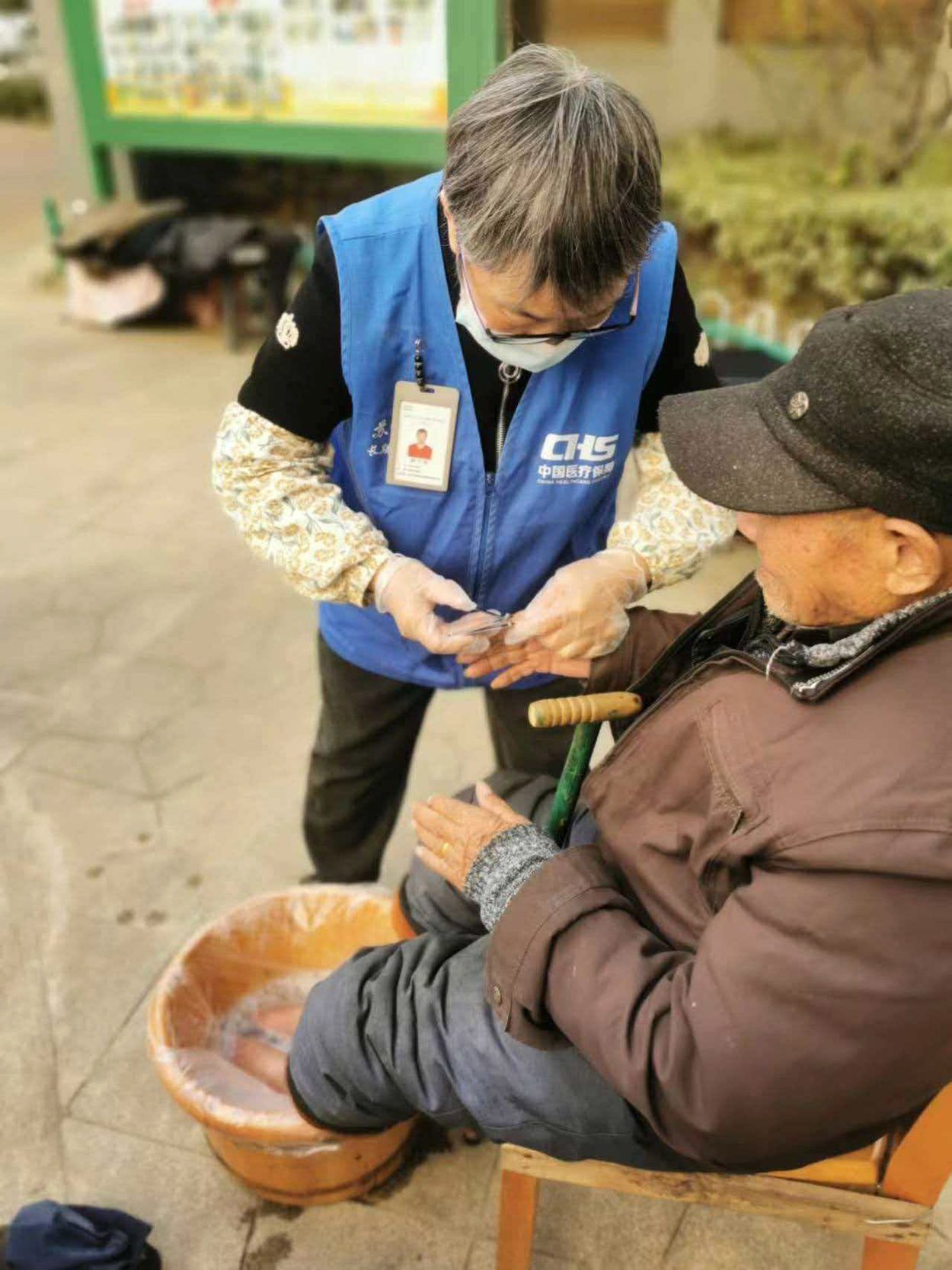
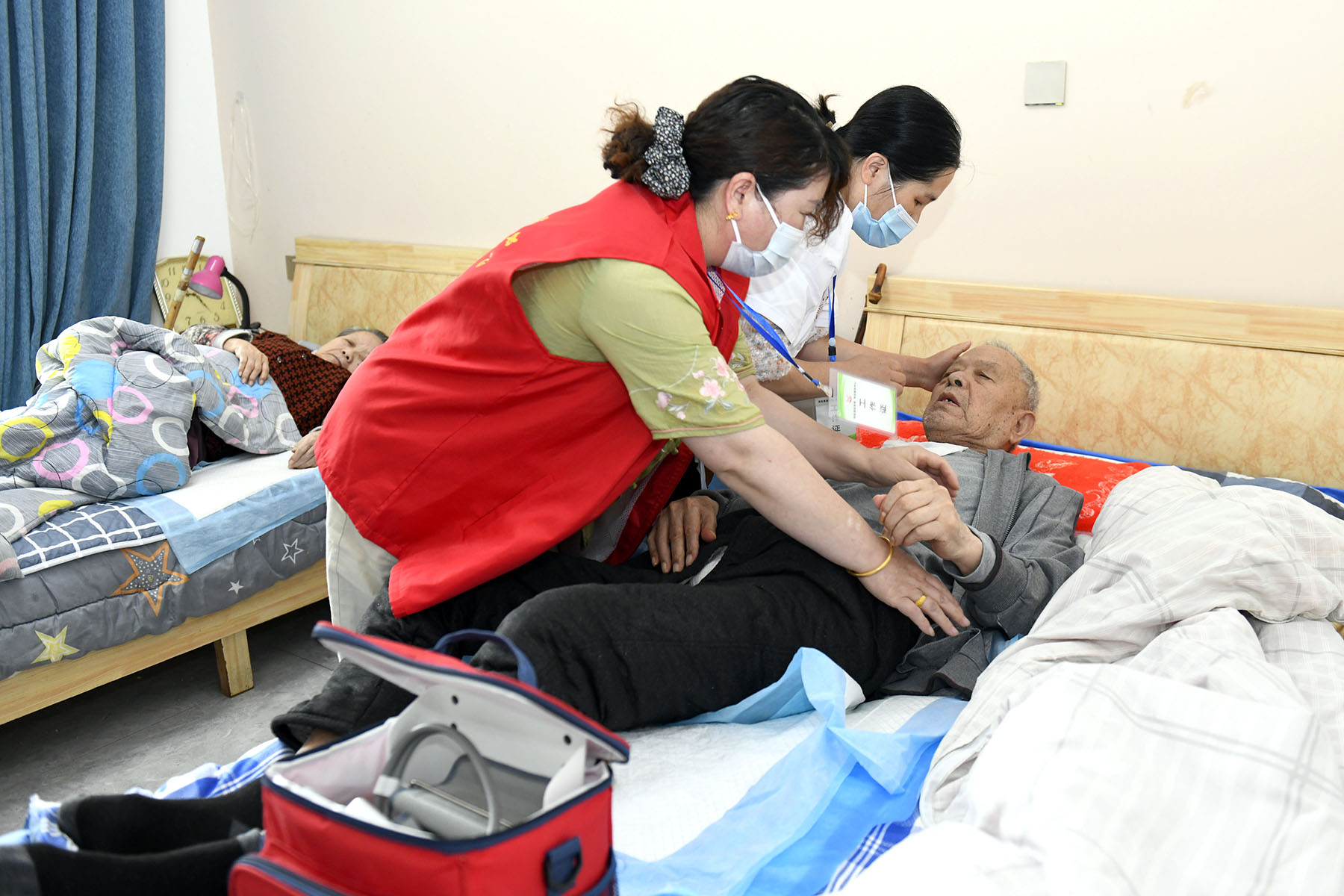
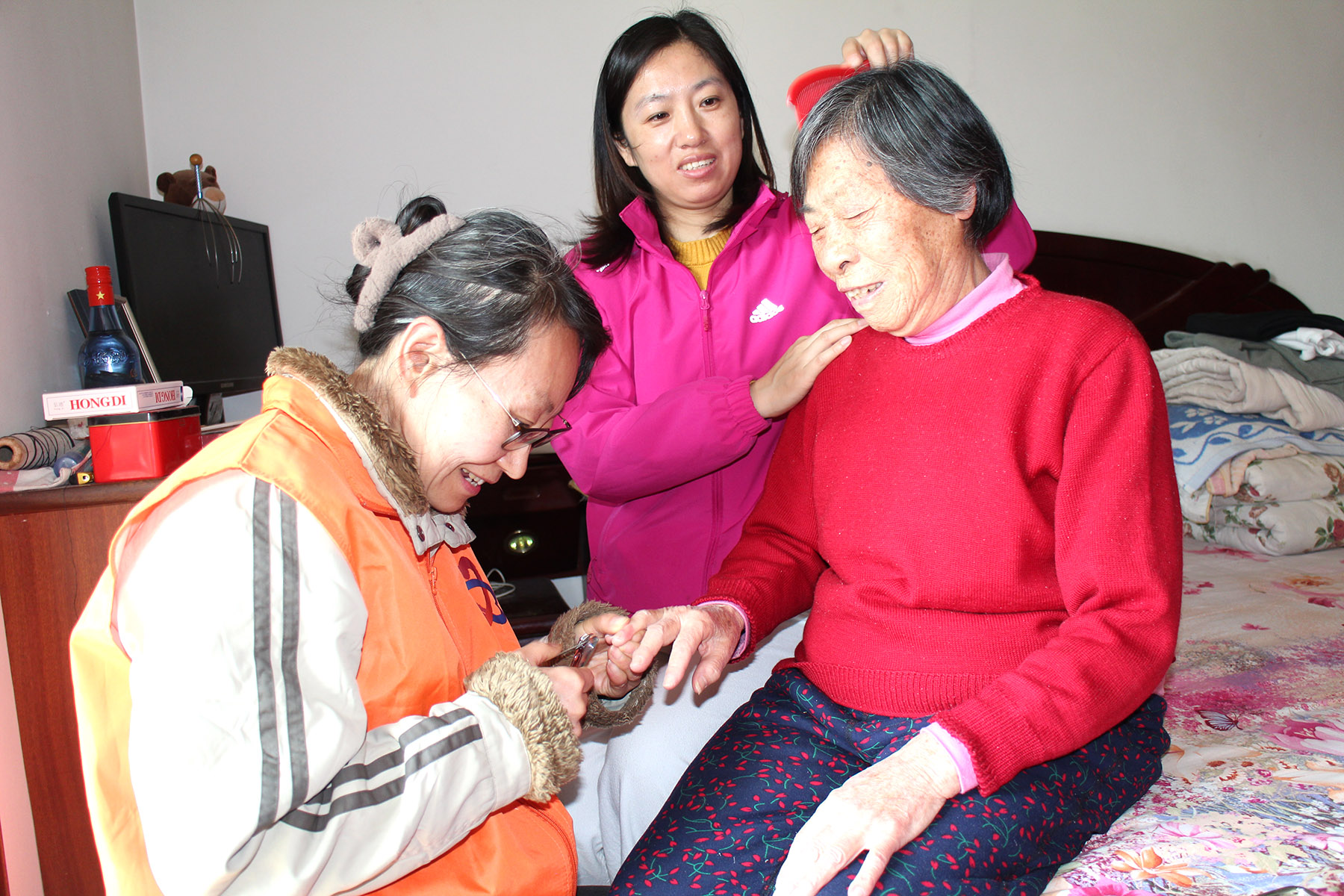
Since July 2025, a certified carer from Shanghai-headquartered provider Fortune Care has been at Zhang's home every morning from 8:30 to 10:30 — a time chosen because his father is most alert after waking. The carer measures the father's blood pressure, sends the readings by text message, massages the elderly man, helps him walk or sit outside in a wheelchair, and even manually removes feces when necessary.
"The carer does things even we children are reluctant to do," Zhang said. "I saw her put on gloves and help my father with his bowel movement without any hesitation. I was deeply grateful."
Zhang pays only 2.5 yuan per hour, or 5 yuan for each two-hour session — a fraction of the market rate. For moderately disabled care recipients like his father, the plan covers 13 home visits per month (18 for severe disability). Suzhou goes even further for people with dementia or intellectual disabilities, extending visits to 2.5 hours each because such cases require more time and patience.
Dong Hui is head of Puyuan Care Group, a nationwide long-term care provider operating in 46 cities with nearly 200 service stations and more than 6,000 carers serving 30,000 families.
She said the insurance solves three core problems of families: those who don't know how to care, have no time to care, or are physically too weak to care.
Professional carers, she said, use proper techniques for bed-to-chair transfers, bathing, and pressure-sore prevention — while also training family members while on the job.
"Before long-term care insurance, families had to choose between filial piety and earning a living," Dong said. "Now they have backup — a real safety net."
Human toll
Chen Lixiu, 52, a single mother from Dong'an county in Hunan province, knows that trade-off intimately. Her 76-year-old mother suffered a severe stroke in March and is now unable to speak, swallow, or move. Doctors said only conservative treatment is possible.
For two months, Chen has slept next to her mother, providing 24-hour care with no relief. Her father, nearly 80, is too frail to help. Her siblings have their own problems to deal with: one brother supports six people on a single salary, including his disabled son; one sister cares for her disabled husband; while another sister works away from home.
"I haven't gone back to my job," Chen said. "I was supposed to return after the May Day holiday. Now I have no income."
The physical toll is high. Chen must turn her mother every two hours to prevent bedsores — "a laborious job, and I'm not strong".
She prepares liquid food that is administered through a tube, worries about nutrition and choking, and cleans up urine and fecal matter multiple times a day. Her mother cannot tell her when she is hungry, thirsty, or in pain. "You just guess. You watch closely. It breaks your heart," Chen said.
Her brother pays for the medicine and supplies, which exceed 1,000 yuan per month. He has suggested stopping treatment, as the family can no longer afford it. However, Chen and her father refuse to give up although she sees no way out of the predicament.
"If I don't work, I have no income. With no income, I cannot sustain this long-term care," she said. "And I cannot keep burdening my son, who just started working and still has debts from our government-assisted housing."
Chen said she would welcome a professional carer at an affordable price, ideally providing home-based services so her father can see his wife every day.
"Long-term care insurance would solve two things: the caregiver problem — because most rural children of the elderly are working far away — and the financial pressure. With professional help and some reimbursement, we could work and the elderly would get proper care," she said.
Stopping fraud
To prevent the fraud that plagued some pilot schemes — including inflated disability ratings, fabricated service records, and identity theft — the new national program mandates surveillance technology.
Millimeter-wave radar sensors, as small as a computer mouse, use thermal sensing to detect a carer's presence and the service duration without capturing identifiable images, and preserving patient privacy. Bluetooth-enabled badges worn by carers transmit signals every 10 to 20 seconds; any departure from the patient's home triggers a back end alert.
Random "flight checks" by supervisors and quarterly satisfaction surveys further enforce the quality of care, said He Yue, Puyuan's national operations director.
Zhang, who cares for his father in Suzhou, said he welcomes the monitoring. "I am completely at ease," he said. "It doesn't feel like an invasion of privacy. It makes the service more standardized and gives me peace of mind."
Behind the technology are human carers like Xu Xinglan, 55, who has worked in long-term care for six years. She holds an elderly care certificate, a medical care certificate, and — as of May 2026 — a new "long-term carer" certification that requires passing both written and practical exams.
Xu recalled one of her most difficult patients: an elderly man with severe Alzheimer's who did not recognize his own family, screamed at them, and would hit anyone who tried to clean him. On her first visit, he was hostile and tried to strike her.
"I didn't get impatient," Xu said. "I crouched down, spoke softly, soothed him like a child. Even when he kicked or yelled, I understood — he was sick and couldn't control himself."
After months of daily visits, the man began to recognize Xu. He now greets her and sometimes says "thank you". His family, she said, marvels that he is closer to her than to his own children.
Workforce crunch
By the end of 2025, China's population aged 60 and above reached 323.38 million — about 23 percent of the total. Roughly 35 million of them need long-term care, according to official statistics.
The new insurance is expected to channel private capital and create new business models. Wang Wenjun, deputy head of the National Healthcare Security Administration, said pilot senior care programs have already attracted more than 60 billion yuan in private investment.
But a shortage of trained carers looms. Dong, head of Puyuan Care Group, said the industry suffers from "three lows and one high" — low pay, low social recognition, low professional skill, and high physical strain. Sixty percent of her carers are over 50, with an average age of 55. To maintain quality, the company caps hiring at age 60.
ALSO READ: Official: China's basic medical insurance covers 95% of population
"Young people are not willing to join," Dong said. "We need government-led vocational grading, better salaries, and university programs to cultivate a new generation of carers." She noted that the Suzhou government is already promoting a professional ranking system for long-term carers to raise the job's social status and attract younger workers.
For Zhao, who cares for his paralyzed father in Gansu, such long-term reforms cannot come soon enough.
He said he would happily pay 0.3 percent of his future wages for long-term care insurance — just like cooperative medical insurance."You put in a little when times are good, and when disaster strikes, the system has your back," he said.
Guo Yuhe contributed to this story.
Contact the writers at lilei@chinadaily.com.cn
