

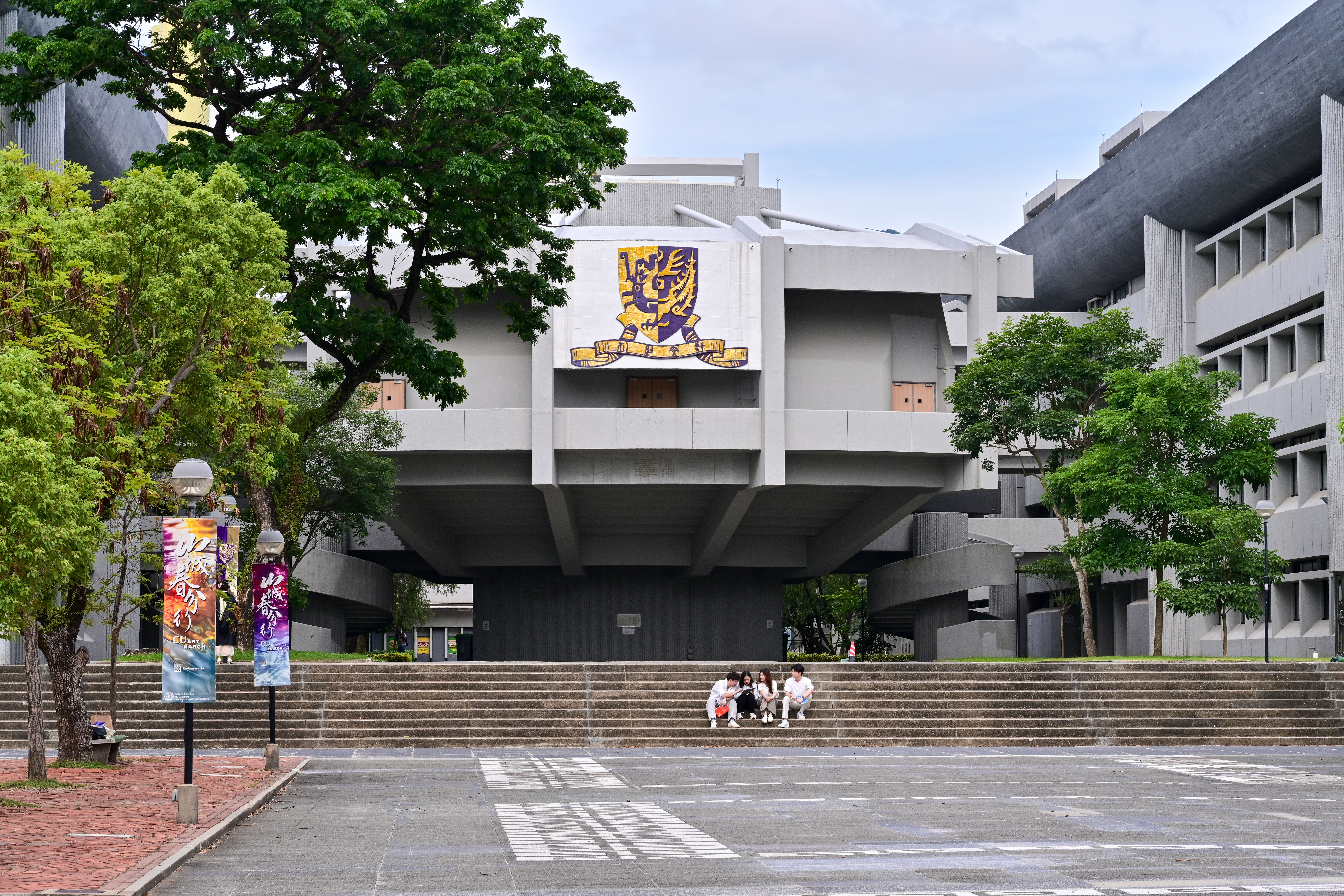
In response to a drastically altered job market driven by the artificial intelligence revolution, a multifaceted effort is underway: students, universities, employers, and the authorities are all racing to overcome the generation-wide challenge.
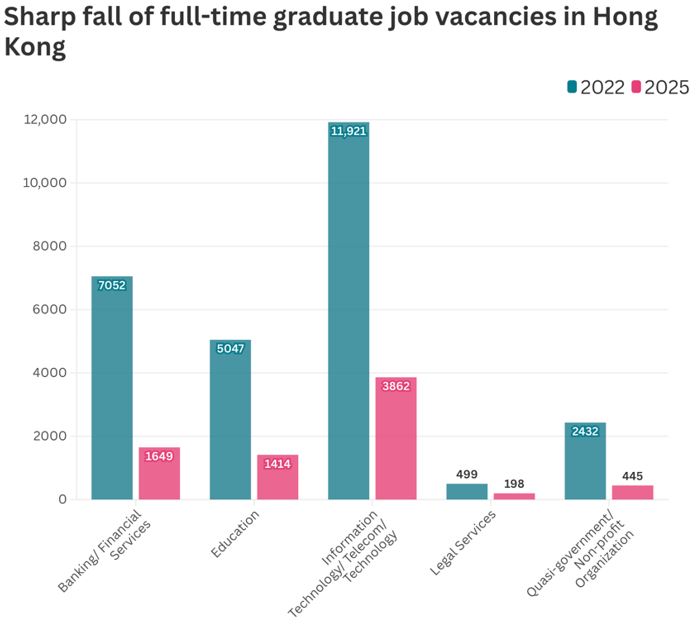
From 2022 to 2025, full-time job vacancies suitable for university graduates in the Hong Kong Special Administrative Region declined 60 percent, from 80,000 to 31,000. Among these, junior administrative positions — which are typically suitable for fresh graduates and highly susceptible to AI’s encroachment — saw a 90 percent drop, according to JIJIS, an online job information platform shared by Hong Kong’s eight publicly funded tertiary institutions.
At a recent Legislative Council meeting, Secretary for Labour and Welfare Chris Sun Yuk-han said his bureau is analyzing the impact of AI on Hong Kong’s overall labor market, industries and occupations. The findings will be incorporated into the mid-term update of the manpower projection, expected in the fourth quarter this year, to help guide future policies.
Faced with AI’s rise, universities have started an urgent transformation of their teaching approaches. One notable example is Lingnan University and its flagship Department of Translation.
“This is a very serious problem,” said Andrew Yao Cho-fai, chairman of the Lingnan University Council and a local lawmaker. “Pure translation positions are no longer needed now, so translation students must learn interdisciplinary content, specifically AI translation.”
According to Yao, Lingnan University is enhancing traditional disciplines by integrating an AI component, known as “AI+”. He acknowledged that such restructuring presents extra challenges; for example, professors need time to adapt to AI for both teaching and research.
Other universities in Hong Kong have also integrated AI courses into their curriculums, either as mandatory requirements or as recommended electives.
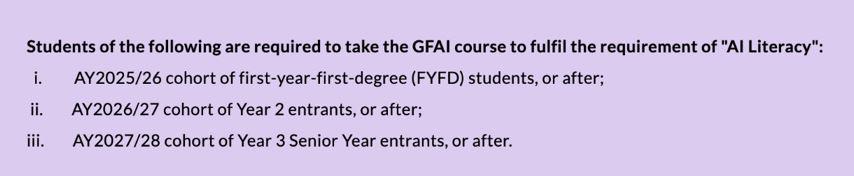
The Hong Kong University of Science and Technology offers online courses with AI literacy certificates, encouraging students to cultivate practical skills at varied levels. Meanwhile, the University of Hong Kong and Hong Kong Baptist University have made AI literacy courses prerequisites for graduation.
However, student feedback remains skeptical. A freshman studying journalism at Hong Kong Baptist University, who only gave his surname, Li, said his AI course was “almost useless”, citing its “basic and shallow” content that does not meet the job market’s demands.
Berry Sun, 22, a Chinese medicine student graduating from Hong Kong Baptist University this month, said many of her classmates were worried about unemployment after graduation.
Globally, similar trends are taking shape. The 2025 IDC Employee Experience survey, conducted by the global analyst firm International Data Corp, revealed that around two-thirds of enterprises are cutting entry-level hiring in view of AI adoption.
ALSO READ: HK education chief urges teachers to grasp tech changes as AI advances
As AI becomes more prevalent, the traditional divide between the humanities and STEM subjects is expected to narrow or even vanish, leaving only one distinction: those who use AI and those who do not, Yao said.
Iris Mai, a senior university student studying film, said she believes that human synesthesia and cognitive complexity remain beyond the reach of algorithms.
Although the film industry may face disruption, Mai said that the deep emotional resonance shared among directors, actors, and audiences is something AI can never replicate.
Bridging the gap
Priscilla Leung Mei-fun, a lawmaker and a professor at City University of Hong Kong’s School of Law, said that the priority now is to train graduates to “gatekeep” the accuracy of AI-generated content.
She added that the modern workplace expects fresh graduates to possess advanced AI capabilities and “take on the responsibility of reviewing and overseeing AI-generated outcomes”.
In a more proactive approach, an AI-focused education blueprint was unveiled earlier this month to guide the city’s primary and secondary schools in integrating AI into their future curriculums.
This includes mandated training hours on AI for teachers, the provision of at least 50,000 training slots annually for educators and administrators to keep abreast of AI technology, along with one-off funding for campuses to upgrade their AI-related infrastructure and expenditures.
Yao said he believes that the most valuable human skills are cultivated during their university years, such as teamwork, professional ethics, and the art of interpersonal communication.
Similarly, Leung said that personality, social skills, and genuine capabilities are now decisive factors for employment.
The Chinese medicine graduate, Sun, said she plans to continue with her postgraduate studies, aiming to hone her skills and better prepare herself for the “mighty enemy” she has to work with.
Roys Zhang contributed to the story.
Contact the writers at gangwen@chinadailyhk.com
