

The Hong Kong Special Administrative Region’s role in the global economy has long been a subject of debate. Since the late 1990s, Hong Kong has been known as a connector, and the term “superconnector” began to gain currency in 2013, describing the city’s ability to bridge the Chinese mainland and the rest of the world through its unique blend of East-West culture and hybrid institutions. Later, the notion of “super value-adder” emerged, highlighting Hong Kong’s capacity to provide professional services, financial regulation and arbitration that added depth to cross-boundary cooperation.
 Yet as innovation lagged, this positioning risked reducing Hong Kong to a high-end outsourcing hub rather than a genuine growth engine. More recently, the idea of Hong Kong as a “super partner” has been promoted, underscoring its role in the Guangdong-Hong Kong-Macao Greater Bay Area and national strategies. But without initiative, Hong Kong risks being a “partner invited” rather than a “partner leading”. The city’s unique qualities are being diluted as Shanghai builds its international financial center and Shenzhen rises as a technology powerhouse. Western political pressures further complicate the picture. To remain competitive, Hong Kong must break free from passive frameworks and articulate a new identity.
International precedents show the power of proactive positioning. In the 1970s, Singapore launched its industrialization agenda, building Jurong Industrial Estate and aligning education with talent development. Shenzhen in the 1980s pioneered the special economic zone, combining institutional innovation with industrial planning to become today’s innovation capital. In the following decade, London actively promoted fintech and creative industries, sustaining its global-city status. These examples demonstrate that cities that initiate new agendas and drive implementation can maintain leadership in global competition.
In an era of geopolitical realignment and technological revolution, Hong Kong’s ability to become a “super initiator” will determine whether it can reclaim an irreplaceable role in both national strategy and the global stage. ... Only by embracing this role can Hong Kong maintain its advantage, demonstrate leadership and contribute new solutions to the world
Hong Kong must now embrace the role of “super initiator”. This means not only serving as a bridge or partner but actively proposing new socioeconomic agendas, designing policy frameworks and mobilizing resources for execution. The city should leverage its international status to advance initiatives aligned with both local and national interests, echoing President Xi Jinping’s four global initiatives on development, security, civilization, and governance. Under the Global Development Initiative, Hong Kong can champion green finance, digital connectivity, and social inclusion projects, positioning itself as a hub for sustainable growth. Under the Global Security Initiative, the city can strengthen public health, disaster preparedness, and international arbitration, showcasing nontraditional security cooperation. Under the Global Civilization Initiative, by hosting forums on civilizational dialogue and promoting creative industries and educational exchange, Hong Kong can revitalize its East-West cultural advantage. Under the Global Governance Initiative, establishing international think tanks, NGOs, and multilateral governance forums would allow Hong Kong to serve as a laboratory for institutional innovation. Through these measures, the city could evolve from an international financial center into a global-initiative implementation center, simultaneously advancing China’s vision and enhancing its own global standing.
To embody the “super initiator” role, Hong Kong must propose concrete agendas and deliver results. Green finance and carbon markets are a natural starting point. Establishing a regional carbon-trading platform that integrates international standards with mainland markets could make Hong Kong Asia’s green finance hub.
Digital governance and smart cities are another area of potential. Hong Kong can advocate cross-boundary data cooperation and smart-city development, setting benchmarks in privacy and regulation. The HKSAR government has invested billions of dollars in various smart-city projects but without integrated planning. Acting as initiator, Hong Kong could frame cross-boundary cooperation and export Hong Kong smart-city solutions to Belt and Road Initiative markets. Cultural creativity and social memory also remain a definite strength.
A cultural Greater Bay Area initiative could revive Hong Kong’s film, design and arts industries by integrating community memory and education. In the 1990s, Hong Kong cinema commanded nearly 10 percent of global box-office receipts; revitalization remains possible if regional resources are harnessed. Education and talent mobility are equally critical. Proposing a Greater Bay Area talent passport would facilitate cross-border education and professional exchange. With the region’s population projected to reach 86 million by 2035, such a system would secure Hong Kong’s competitive edge.
Hong Kong’s evolving identity — from connector to value-adder to partner — reflects shifting functions and challenges. Today, the “super initiator” concept offers a new path: not merely a passive bridge or partner, but an active creator of agendas, designer of frameworks, and driver of execution. If Hong Kong can harness Greater Bay Area government and market forces to lead national level projects, it will transform rhetoric into practice. Such a Hong Kong would no longer be a passive intermediary but a proactive leader; no longer a provider of added value but a creator of new agendas. In an era of geopolitical realignment and technological revolution, Hong Kong’s ability to become a “super initiator” will determine whether it can reclaim an irreplaceable role in both national strategy and the global stage. This is not just a rhetorical flourish but a mission of institutional and policy innovation. Only by embracing this role can Hong Kong maintain its advantage, demonstrate leadership and contribute new solutions to the world.
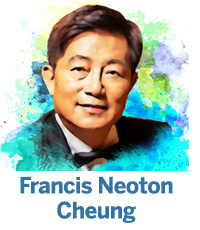
The author is chairman of Doctoral Exchange, a Hong Kong-based think tank.
The views do not necessarily reflect those of China Daily.
