

From the perspective of Hong Kong residents, the selection of Lai Ka-ying as an astronaut for the Shenzhou XXIII spaceflight mission has achieved the boldest dream of the city’s participation in the space exploration program of the motherland. The story of Lai is one of inspiration.
 Gaining the trust and strong support of central government, we are confident that no innovation and technology dream is too high to achieve in the special administrative region. It is a great honor for Lai to contribute to the advancement of the nation’s manned space programs. She is a model patriot. Now we realize, deep in our bones, that we should follow Lai’s example to serve our nation.
Lai’s space journey started in 2022. China began selecting its fourth generation of astronauts in October 2022 and announced the completion of the process in June 2024. The selected astronauts included eight spacecraft pilots and two science payload specialists. Both payload specialists were selected from Hong Kong and Macao, marking the first time that residents from the two special administrative regions have joined the astronaut team of the motherland. Lai is the chosen one of our time.
In response to the news, Chief Executive John Lee Ka-chiu said the inclusion of Lai was “an extremely inspiring and uplifting development” and called it “a glorious milestone in the history of Hong Kong”. He also thanked the central government for including Lai in the selection, describing it as a show of support for Hong Kong’s scientific and technological development. The Macao SAR government said the central government’s move sent a powerful message of encouragement to young people in the city, according to a China Daily report on June 12, 2024.
Both special administrative regions have framed the selection as a blessing for their innovation and technology-oriented high-quality economic development. Lai’s selection as a payload specialist has evoked the aspiration that Hong Kong has the potential to become an innovation and technology hub if it can gain full support from the central government and mobilize support from various sectors of the community. The Macao government stated that it was committed to promoting the city’s aerospace technology and its integration with other sectors to facilitate Macao’s high-quality economic development.
Lai’s space journey has dispelled pessimism that Hong Kong would never become an innovation and technology hub. Her unprecedented mission has encouraged Hong Kong’s innovation and technology sector to scale new heights. According to Secretary for Innovation, Technology and Industry Sun Dong, Hong Kong is accelerating the development of an international innovation and technology hub. Local universities have made significant contributions to national missions, including the Hong Kong Polytechnic University’s assistance in Chang’e 6’s far side lunar sampling. The HKSAR government has granted over $100 million to support six space-related projects, including the Multi-Spectral Imaging Carbon Observatory, nicknamed “eye for space”, aboard the Tiangong Space Station. As Lee has pointed out, Lai’s participation in the spaceflight mission demonstrates the country’s recognition of Hong Kong and its trust and support for the city, as well as confidence in the city’s innovation and technology capabilities.
To align with the nation’s 15th Five-Year Plan and better serve the development needs of the motherland, the HKSAR has developed targeted strategic roadmaps to ensure the city evolves from a traditional superconnector into a more proactive “super value-adder”.
One of the strategies is to develop Hong Kong into an international innovation and technology hub. By leveraging world-class universities and pioneering the cross-border Northern Metropolis corridor, Hong Kong is tasked with accelerating the commercialization of emerging industries such as artificial intelligence, biotechnology and green technology. What is often overlooked is the aerospace industry. Our think tank hopes Lai’s mission will encourage more businesses to invest in this emerging sector.
The HKSAR government has actively funded aerospace research and development, committing millions to support local university projects tied directly to China’s space programs. The Chinese University of Hong Kong has successfully co-developed advanced Earth observation satellites with custom artificial intelligence models. The Hong Kong Space Robotics and Energy Centre has also developed technologies supporting the Chang’e 8 lunar mission, while the Macau University of Science and Technology has a partnership with the Chinese Academy of Sciences to analyze deep-space and lunar data.
By leveraging world-class universities and pioneering the cross-border Northern Metropolis corridor, Hong Kong is tasked with accelerating the commercialization of emerging industries such as artificial intelligence, biotechnology and green technology. What is often overlooked is the aerospace industry. Our think tank hopes Lai’s mission will encourage more businesses to invest in this emerging sector
Equally noteworthy are Lai’s efforts in meeting the demanding requirements and completing rigorous training at the China Astronaut Research and Training Center. Involving tremendous dedication, Lai overcame immense challenges and completed the training program in just over one year. Young people in the city should learn from her perseverance. As a mother of three children, Lai has also shown the psychological fortitude to endure a long separation from her family. Although the requirements for the physiological and psychological conditions of payload specialists may not be as stringent as those for professional astronauts, payload specialists are still required to master their own areas of work and undertake training in other skills.
Also noteworthy is that a Macao resident was among the final 10 astronauts chosen for the spaceflight training program. We hope the Macao payload specialist will soon participate in the next spaceflight mission. Both special administrative regions possess the unique advantages of strong national support and close connections to the world. Brazil, a Portuguese-speaking country, hosts the largest aerospace industry in the Southern Hemisphere, and Macao could explore the possibility of cooperation with Brazil’s aerospace industry.
Our think tank hopes Lai’s space journey will boost the development of aerospace industries in both special administrative regions and inspire more young people in these two cities to devote themselves to innovation and technology, thereby contributing to the nation’s scientific and technological self-reliance and strength. We wish Lai the very best of luck.
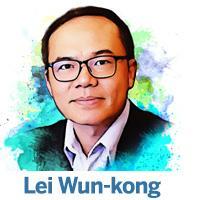
Lei Wun-kong is a legislative councilor in Macao, president of the Association of Legal Promotion of Macau, and a senior consultant at the Chinese Dream Think Tank.
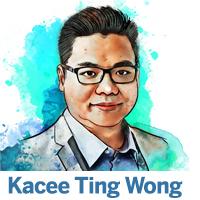
Kacee Ting Wong is a barrister, part-time researcher at the Shenzhen University Hong Kong and Macao Basic Law Research Center, chairman of the Chinese Dream Think Tank, and a district councilor.
The views do not necessarily reflect those of China Daily.
