

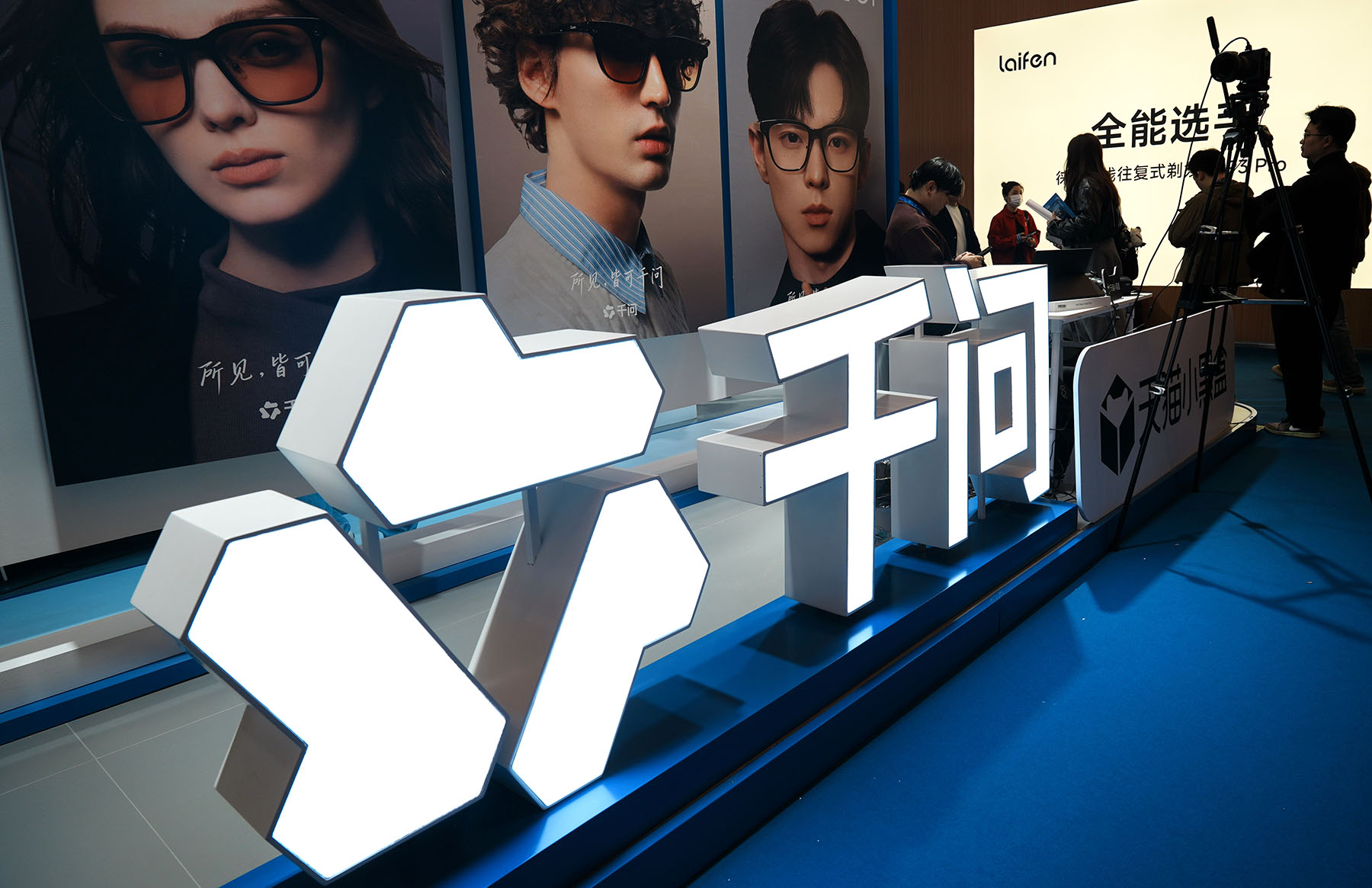
Chinese tech company Alibaba Group said on Monday it has fully integrated its artificial intelligence chatbot Qwen with its super e-commerce platform Taobao, allowing users to search for products, compare items and complete purchases through natural language conversations.
The move marks a major step from Chinese tech firms toward turning AI chatbots into full-scale shopping gateways and intensifying the global race in AI commercialization, especially when there are only a few days ahead of China's annual 618 shopping festival.
Under the new move, users can open the Qwen app and ask the AI assistant to recommend products, compare prices and place orders directly on Taobao. Within the Taobao app itself, users can also access Qwen, offering functions such as AI-powered virtual try-ons, discount calculations and automatic low-price deal hunting.
READ MORE: Alibaba's Qwen leads global open-source AI community with 700 million downloads
In a trial, China Daily found that the Qwen app was able to handle multi-turn conversations and refine recommendations based on evolving user preferences, signaling how AI systems are moving beyond chat interfaces into tools capable of executing real commercial transactions and services.
In March, ByteDance began testing the integration of its Doubao AI chatbot with Douyin e-commerce, enabling users to complete purchases and payments directly inside the Doubao app without jumping to the short-video platform.
The timing is significant. China's annual 618 shopping festival, one of the country's largest online retail events, is about to begin, with both Alibaba and ByteDance positioning AI as the front door to online shopping.
According to QuestMobile data for the first quarter, ByteDance's Doubao had 345 million monthly active users, compared with 166 million for Qwen. The gap has increased pressure on Alibaba to secure a foothold in AI-driven shopping by tightly integrating Qwen with Taobao's vast product ecosystem, helping prevent users from drifting toward rival AI platforms.
The integration also marks a broader restructuring inside Alibaba aimed at accelerating AI commercialization. In March, the company established the Alibaba token hub business group to unify AI model development, platform services and consumer applications under a more coordinated strategy.
Alibaba has been laying the groundwork for AI commerce for months. During this year's Spring Festival holiday, it launched a heavily promoted campaign offering billions of yuan in subsidies, allowing users to order items such as milk tea through AI voice commands for as little as 1 fen (0.15 cent).
According to the 2026 Government Work Report delivered at this year's two sessions, China will "advance and expand the AI Plus Initiative", and for the first time, the country will "create new forms of smart economy".
ALSO READ: Shopping gala boosts market vitality
The country will also promote faster application of new-generation intelligent terminals and AI agents and encourage large-scale commercial application of AI in key sectors and fields, so as to foster new forms and models of AI-native business, the report said.
Lu Ming, an economist and a member of the 14th National Committee of the Chinese People's Political Consultative Conference, said AI-powered products and services are lowering the cost of making purchasing decisions by simplifying interactions between users and digital platforms in China.
"AI is breaking the traditional boundaries of consumer groups and geographic regions. It is evolving from a chat tool into an assistant that can actually complete tasks," Lu said. "To some extent, AI is also driving consumption by expanding user groups."
Contact the writers at chengyu@chinadaily.com.cn
