

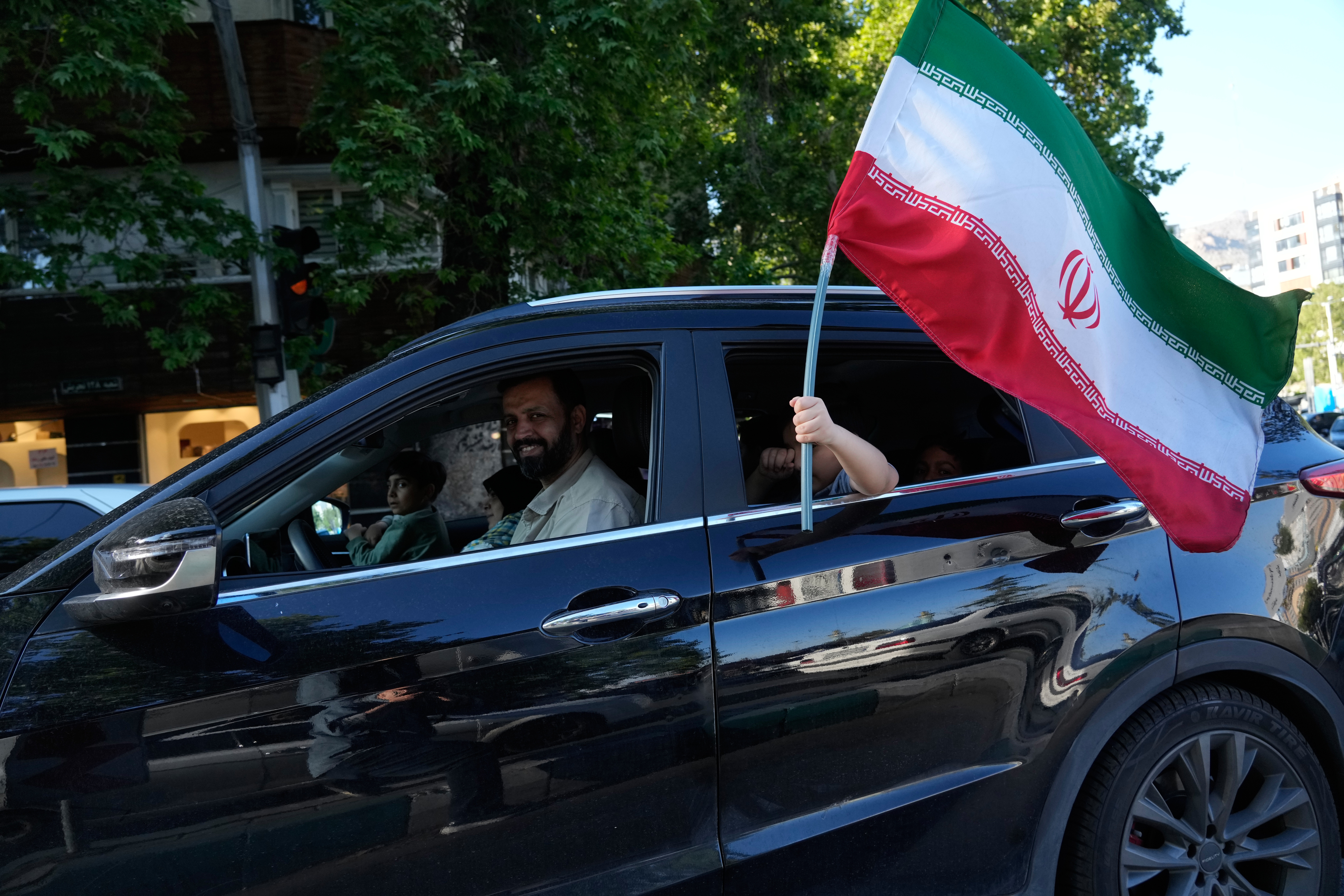
WASHINGTON/TEHRAN/BAGHDAD/JERUSALEM – US Secretary of State Marco Rubio said Tuesday the US military campaign against Iran, which was jointly launched with Israel on Feb 28, is "over."
"The operation is over, Epic Fury, as the president notified Congress. We're done with that stage of it," Rubio said at a White House briefing.
"We're now on to this Project Freedom," a military operation the Pentagon launched Monday to guide stranded commercial vessels out of the Strait of Hormuz, Rubio went ahead, noting Washington's priority now was reopening the crucial global energy waterway.
The announcement is seen as the Trump administration's attempt to sidestep the War Powers Resolution, which requires the president to seek congressional authorization to continue military hostilities after 60 days.
Rubio repeated President Donald Trump's claim that the 1973 law that limits the president's war power "is 100 percent unconstitutional."
The Trump administration notified Congress last week that hostilities against Iran had been "terminated" as it reached a 60-day legal threshold.
However, Trump has not ruled out resuming military strikes amid stalled talks. Rubio said that Iran now has the opportunity to "make it clear" that they do not want a nuclear weapon, which he said is key to a peace deal with Washington.
Iran would "hold the world hostage" with a nuclear weapon, Rubio warned, accusing Tehran of trying to develop "long-range delivery missiles" and build underground facilities for uranium enrichment activity.
"Someone has to do something about it," he stressed.
ALSO READ: Iran taps allies, neighbors as tensions linger
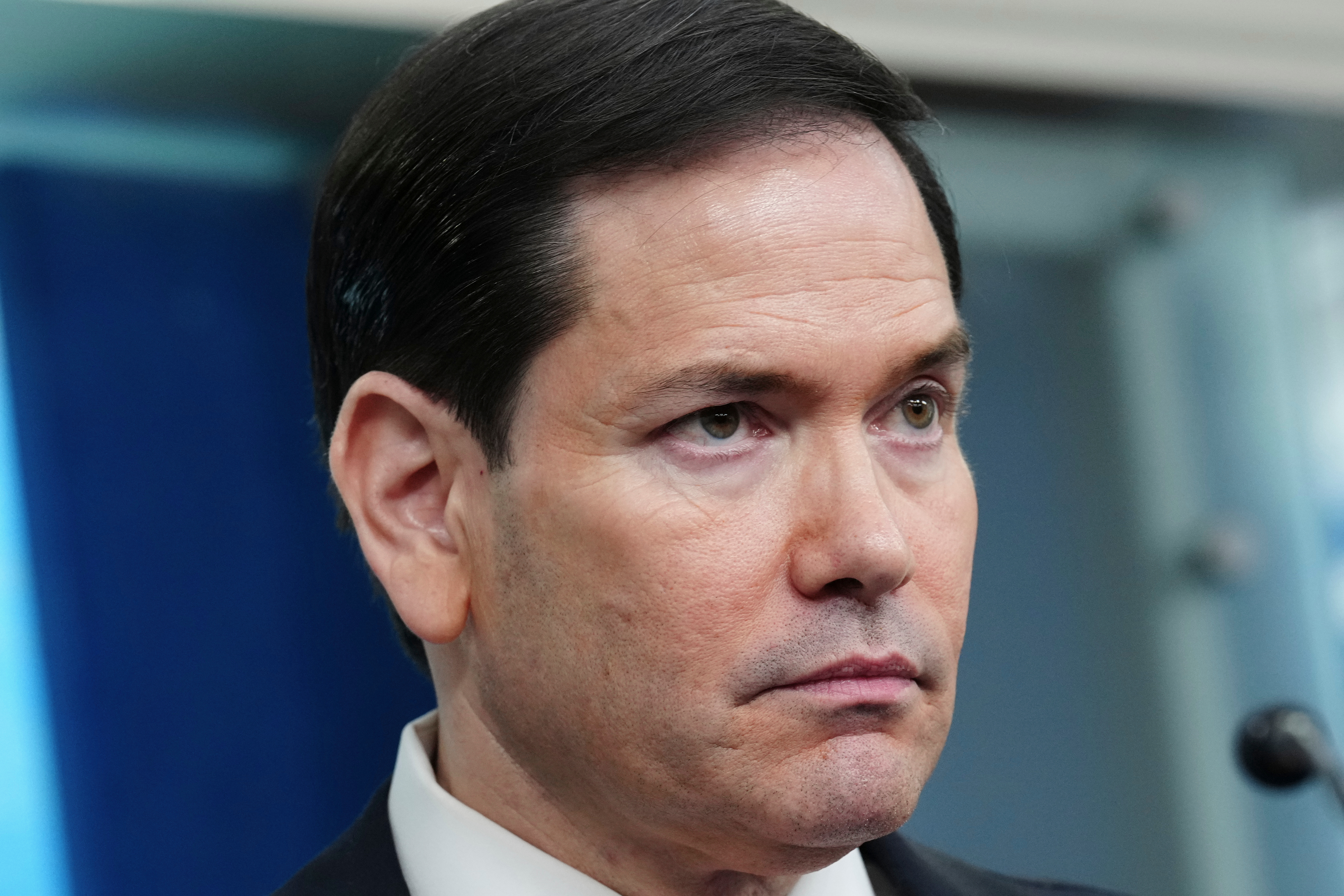
Rubio also said that the US will not allow Iran's control of the Hormuz Strait to be "normalized" after the two sides exchanged fire in the crucial global energy waterway one day earlier.
"They're trying to make this some new normal," Rubio said at a White House news briefing. "Under no circumstances can we ever allow them to normalize the fact that they get to blow up commercial ships and put mines in the water."
"Our preference is for these straits to be opened to the way they're supposed to be opened, back to the way it was," Rubio added, stressing that Iran "cannot be allowed to dictate who uses this vital waterway."
Pause to Project Freedom
Trump said Tuesday that Project Freedom, the US military operation aimed at guiding ships out of the Strait of Hormuz, will be paused to see whether a peace deal can be reached between Washington and Tehran.
"While the Blockade will remain in full force and effect, Project Freedom (The Movement of Ships through the Strait of Hormuz) will be paused for a short period of time to see whether or not the Agreement can be finalized and signed," Trump wrote on his social media platform Truth Social.
Trump said the decision was based on the request of Pakistan and other countries, as well as the "great progress ... made toward a complete and final agreement with representatives of Iran."
'Talks within international law framework'
Iranian President Masoud Pezeshkian held a phone call on Tuesday with Iraqi Prime Minister-Designate Ali al-Zaidi, during which Pezeshkian said Iran is ready for dialogue within the framework of international law, but will not acquiesce to force.
Pezeshkian said that "our problem is that on the one hand, the United States is pursuing a policy of maximum pressure against our country, and on the other hand, it expects Iran to come to the negotiating table and ultimately surrender to its unilateral demands ... such an equation is impossible," read a statement published by Pezeshkian's office.
He noted that Iran fundamentally does not consider war and insecurity to be favorable options.
Pezeshkian stressed that Iran must not deprive itself of nuclear technology, saying the US speaks in a way as if Iran must not have a nuclear industry, and imposes extra pressure on the country by putting forward excessive demands.
He added that in all previous negotiations, Iran was fully ready to provide within the framework of international regulations and global monitoring whatever deemed necessary under international norms to ensure the peaceful nature of its nuclear activities.
New system to regulate shipping through Hormuz
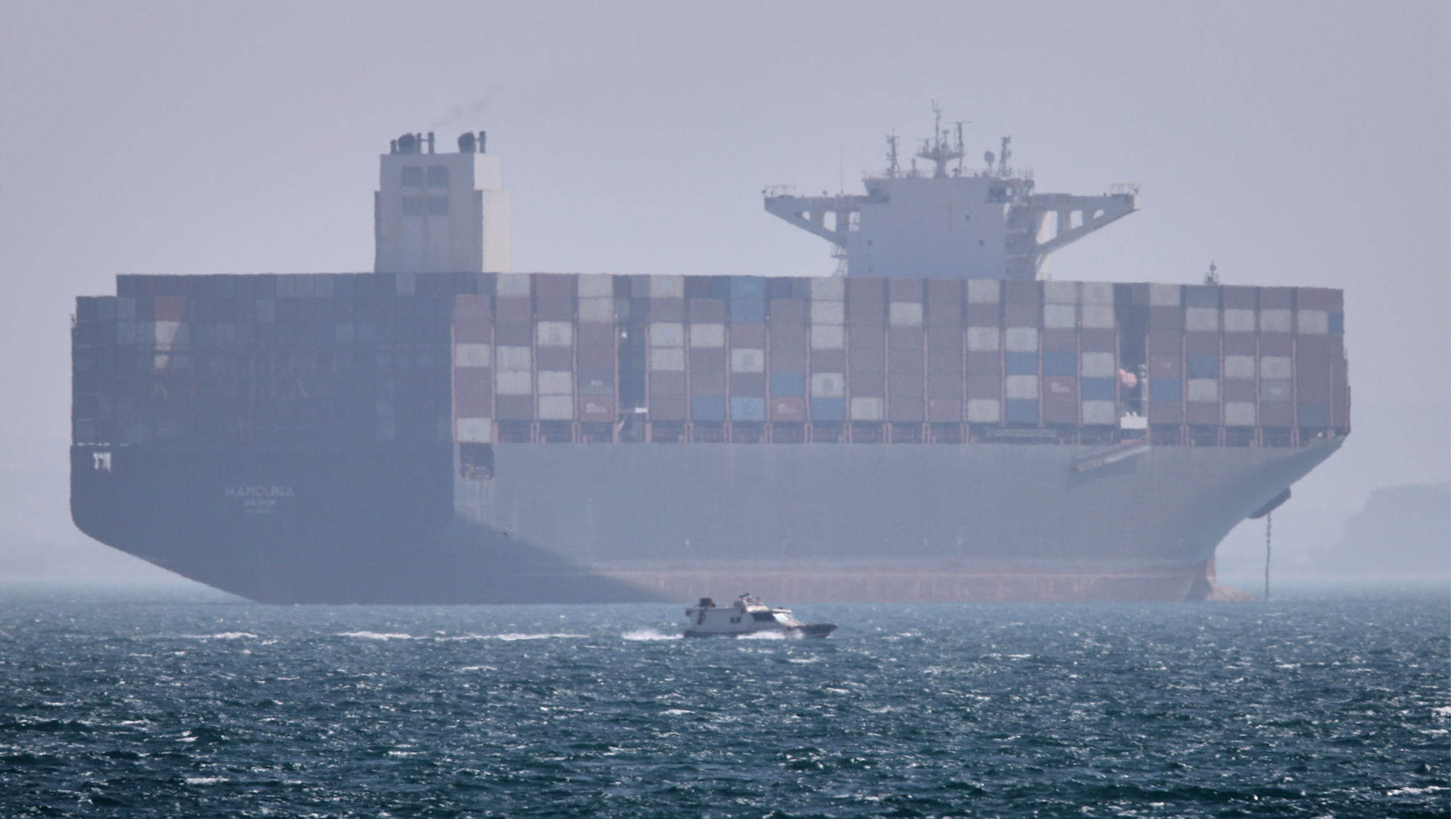
Iran has launched a new system to control ship traffic through the Strait of Hormuz, state media reported Tuesday, continuing a maritime standoff that now involves a US blockade and threats of military action.
Under the new rules, all ships planning to pass through the narrow waterway must receive permission via email from Iranian authorities, according to state-run Press TV. Iran is calling the initiative a "sovereign governance system."
Ships would be required to adjust their operations accordingly and obtain permission before entering the waterway, Press TV reported. It described the initiative as a "sovereign governance system" now in effect in the strategic chokepoint.
ALSO READ: Iran warns US army against entering Strait of Hormuz
Also on Tuesday, Iran's Islamic Revolution Guard Corps (IRGC) Navy reiterated its warning to all vessels seeking to transit the Strait of Hormuz to solely take the corridor previously announced by the country.
It issued the warning in a post on social media platform X, stressing that any deviation by vessels to other routes will face the IRGC Navy's "decisive" action.
Meanwhile, Iran's semi-official Fars news agency on Tuesday cited an unidentified informed source as saying that two US commercial vessels have been stuck in the southern part of the Strait of Hormuz near Oman's coast, with no way forward or back.
Iran 'hasn't attacked UAE recently'
Iran's main military command, Khatam al-Anbiya Central Headquarters, said on Tuesday the country's armed forces have carried out no missile or drone operation against the United Arab Emirates (UAE) over the past days, the semi-official Fars news agency reported.
Headquarters spokesman Ebrahim Zolfaghari made the announcement, stressing that if Iran had taken such actions, "we would announce it decisively and explicitly."
He rejected a report by the UAE that accused Iran of launching drone and missile attacks against the country, calling on the UAE's officials and statesmen not to let their country fall into the trap laid by the US and Israel.
Zolfaghari also urged them not to wage a "media invasion" against Iran and hurl "unjustified accusations" against the country, noting that the UAE has become one of the main bases of the US and Israel in the West Asia region and is home to a major part of their troops and military equipment.
'Ready for deployment'
Israel's new air force commander, Omer Tischler, said Tuesday that the military is prepared to deploy its full air power eastward toward Iran if necessary, amid heightened regional tensions.
"We are closely monitoring what is happening in Iran and are prepared to take the entire Air Force eastward if we are required to do so," Tischler said during a change-of-command ceremony broadcast on major Israeli television networks.
Israel Defense Forces Chief of Staff Eyal Zamir said during the ceremony that the military "maintains high readiness" and is "prepared to forcefully respond" if Iran targets Israel in the wake of recent escalation in the Gulf.
'Arbitrary de-verification'
Social media platform X has removed the blue verification badge from the account of Iranian Foreign Ministry spokesman Esmaeil Baghaei.
In a post on X on Tuesday, Baghaei said the move amounted to an "arbitrary de-verification" and accused the platform of "selective censorship."
"X has now removed the blue check from Iran's MFA Spokesperson's account -- after stripping the Ministry and Minister's verified badges -- despite our full Premium+ payments," he wrote.
He added that the action reflected "X's pattern of selective censorship and American digital piracy," aimed at "suppressing information" about US actions toward Iran.
