

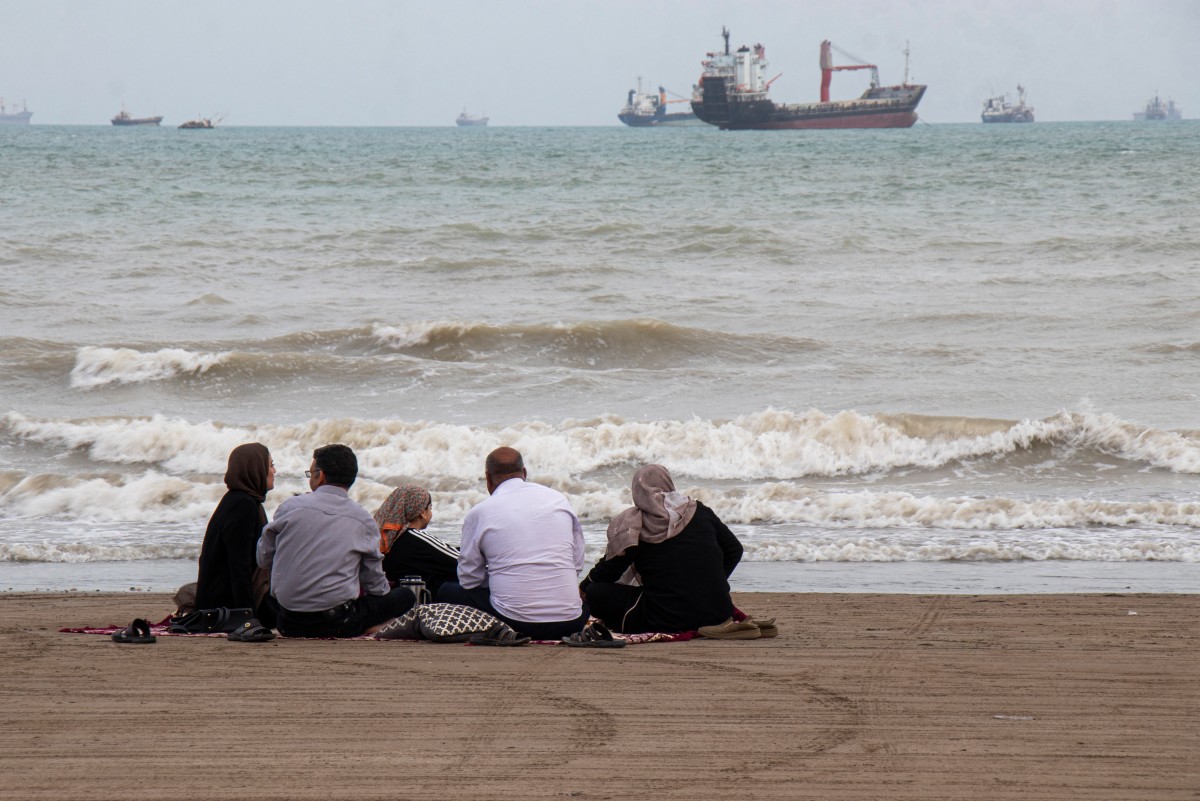
TEHRAN/WASHINGTON - The continued US maritime "piracy and banditry" in the form of naval blockade against Iran will soon be met with "practical and unprecedented military action“, state-run Press TV reported on Wednesday.
Iran's armed forces maintain that "patience has limits”, and a "punishing response" will be necessary if the United States continues its "illegal" naval blockade in the Strait of Hormuz, it said, citing a high-ranking security source.
According to the source, if the US "obstinacy and delusions" continue, and Iran's conditions are rejected, the "enemy" should soon expect a different kind of response to the naval blockade, "which is akin to maritime banditry".
Meanwhile, in reaction to the US seizures of Iranian ships in international waters, Iran's permanent representative to the United Nations Amir Saeid Iravani has said such actions constitute "illegal coercion and interference in legal trade", the semi-official Tasnim news agency reported Wednesday.
Iravani made the remarks in a letter addressed to the UN and Security Council, describing the US seizures of Iranian vessels as "maritime piracy".
US Attorney for the District of Columbia Jeanine Pirro, in a recent post on X, explicitly confessed to the US seizures of two vessels named M.T. Majestic and M.T. Tiffany and "stealing" of 3.8 million barrels of Iranian oil carried by them.
ALSO READ: UN urges Hormuz reopening
The United States imposed its anti-Iran blockade on the Strait of Hormuz after post-ceasefire negotiations with Tehran in Pakistan's capital Islamabad on April 11 and 12 failed to lead to an agreement.
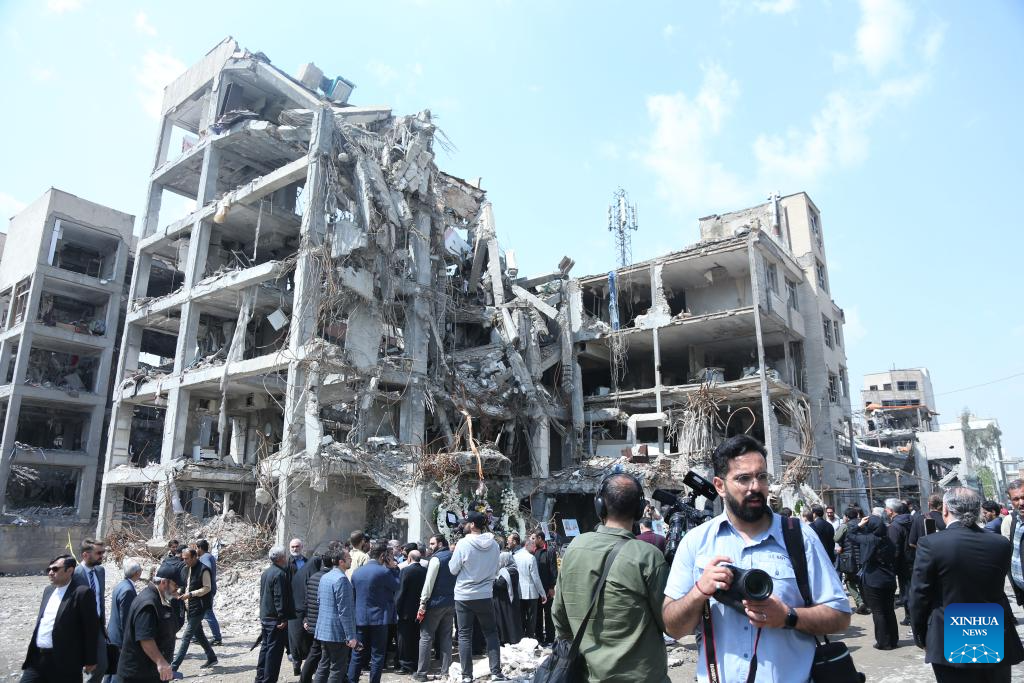
The ceasefire between Iran, the United States and Israel took effect on April 8 following 40 days of fighting, which started on Feb 28 when the United States and Israel launched joint attacks on Tehran and other Iranian cities, killing Iran's then-Supreme Leader Ali Khamenei, senior commanders, and civilians.
Iran responded with waves of missile and drone strikes targeting Israel and US bases and assets in the Middle East, and tightened its grip on the Strait of Hormuz.
Blockade to stay until nuclear deal reached
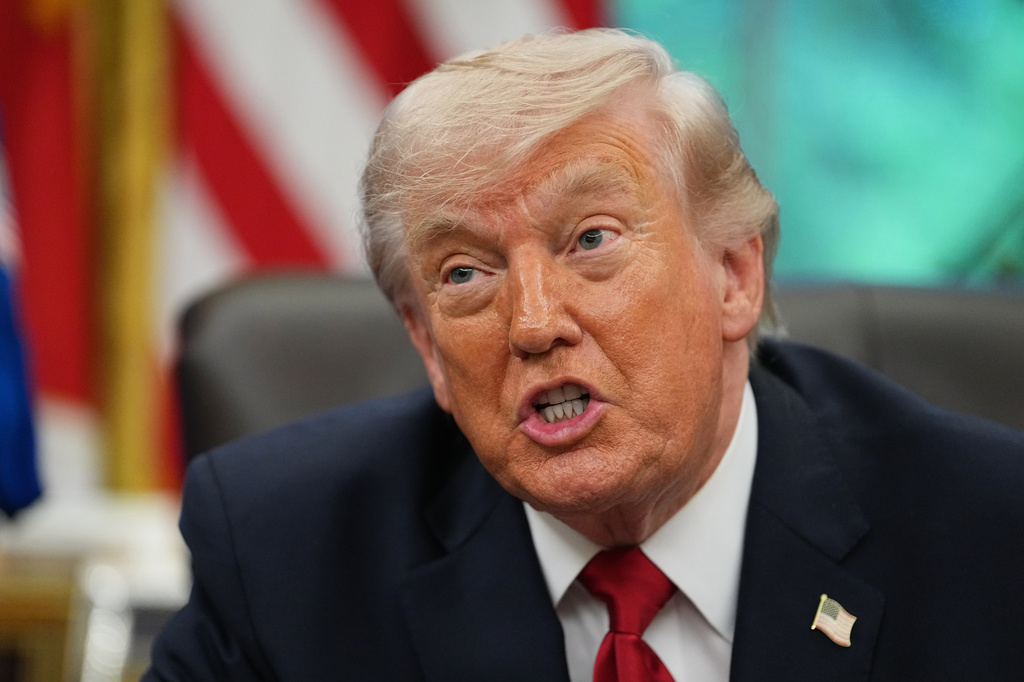
In a phone interview with US online media Axios on Wednesday, US President Donald Trump said he will keep Iran under the US naval blockade until Tehran agrees to a deal with Washington on its nuclear program.
"The blockade is somewhat more effective than the bombing," Trump said, stressing that Iran cannot have a nuclear weapon.
The president claimed that Iran wants to reach a deal in order to lift the blockade.
"They want to settle. They don't want me to keep the blockade. I don't want to (lift the blockade), because I don't want them to have a nuclear weapon," Trump said.
For now, Trump sees continuing the blockade as his primary source of leverage, but he would consider military action if Iran still will not cave, according to the Axios report.
US Central Command has prepared a plan for a "short and powerful" wave of strikes on Iran in hopes of breaking the negotiating deadlock, Axios reported, citing three sources with knowledge.
New coalition to secure Hormuz shipping
Meanwhile, the White House is asking other countries to join a US-led international coalition aimed at enabling ships to navigate the Strait of Hormuz, The Wall Street Journal (WSJ) reported.
The so-called "Maritime Freedom Construct" (MFC) was spelled out in an internal State Department cable sent to US embassies on Tuesday, urging US diplomats to press foreign governments into signing up, according to the WSJ report.
The MFC would be a joint effort between the State Department and US Central Command, according to the cable. The US State Department "will serve as the diplomatic operations hub" while the command "will provide real-time maritime domain awareness" for commercial shipping and coordinate information sharing between partner militaries, said the report.
The new coalition would share information, coordinate diplomatically and enforce sanctions, said the report, citing the cable, which also instructs US officials to ask foreign counterparts whether they would like to be a "diplomatic and/or military partner".
"Your participation will strengthen our collective ability to restore freedom of navigation and protect the global economy," the cable reads. "Collective action is essential to demonstrate unified resolve and impose meaningful costs on Iranian obstruction of transit through the Strait."
Fourty-two vessels intercepted
In a statement posted on social media X, US Central Commander Brad Cooper said the US military has intercepted 42 vessels as part of its blockade to prevent maritime commerce from entering or exiting Iranian ports.
"Today, U.S. forces achieved a significant milestone after successfully redirecting the 42nd commercial vessel attempting to violate the blockade," Cooper said.
He highlighted that the 41 tankers currently stranded as a result of the blockade hold an estimated 69 million barrels of oil, which is over $6 billion in potential revenue, further crippling Iran's ability to profit from its oil exports.
Iran conflict 'has cost $25 billion so far'
In another development, the cost of the ongoing US conflict with Iran is estimated to be $25 billion so far, acting Pentagon Comptroller Jules Hurst III told the House Armed Services Committee.
"Approximately, of this day, we're spending about 25 billion dollars on Operation Epic Fury," Hurst said as he testified alongside Defense Secretary Pete Hegseth and Chairman of the Joint Chiefs of Staff Dan Caine.
Hurst added that most of those costs were from munitions and included operations, maintenance and equipment replacements.
According to previous media reports, Pentagon officials told lawmakers in a closed-door briefing on March 11 that the Trump administration spent more than $11.3 billion in the first six days of the conflict.
'Similar timetable' for ending Iran, Ukraine conflicts
Following a phone conversation with Russian President Vladimir Putin, Trump told reporters at the White House that conflicts in Iran and Ukraine could end "on a similar timetable".
The phone talks with Putin were "very good" and mainly focused on the years-long Russia-Ukraine conflict but also "a little bit about Iran", Trump said.
"Which war would end first? Maybe they're on a similar timetable," Trump added.
ALSO READ: WSJ: Trump plans extended blockade of Iran
Meanwhile, Russian presidential aide Yuri Ushakov said after the phone conversation that Putin viewed Trump's decision to extend the ceasefire as the right move, as it will help stabilize the situation, adding that Putin drew attention to the inevitable, extremely dire consequences not only for Iran and its neighbors, but also for the entire international community should the United States and Israel resort to force again.
Russia remains firmly determined to fully support diplomatic efforts aimed at finding a peaceful settlement to the crisis, and has put forward a number of proposals intended to resolve differences over the Iranian nuclear program, said the presidential aide.
Ushakov noted that to this end, Moscow will maintain active contacts with Iranian representatives, leaders of Persian Gulf states, as well as with Israel and the US negotiating team.
Putin also strongly condemned the assassination attempt against Trump at the White House Correspondents' Association Dinner, stressing in particular the unacceptability of any form of politically motivated violence, according to Ushakov.
Iran's currency against US dollar drops to record low
Separately, the Iranian rial plummeted to a record low against the US dollar on Wednesday, according to the Iranian Students' News Agency (ISNA).
On Wednesday, the dollar traded above 1,810,000 rials in the domestic free market, accelerating a decline that has begun since two days ago, featuring an increase of over 230,000 rials, ISNA reported.
According to the report, the rial depreciated sharply despite a relative stability in the domestic market.
It attributed the slide mainly to the increased local demand for major foreign currencies, adding the euro traded above 2,080,000 rials in the market, and the United Arab Emirates' dirham was priced at 500,000 rials.
US aircraft carrier to leave Middle East
The US aircraft carrier USS Gerald R. Ford will leave the Middle East and begin sailing for home in the coming days, the Washington Post reported Wednesday.
The move is "an expected relief for roughly 4,500 sailors who have been deployed for 10 months - but a loss of significant firepower as peace talks between the United States and Iran stagnate", said the report.
The Ford Carrier Strike Group began its latest deployment on June 24, departing from the US state of Virginia for the US European Command area of responsibility, later deploying to Latin America for counter-narcotics operations and then to the Middle East as tensions with Iran escalated.
It is one of three carriers operating in the Middle East region, alongside USS George H.W. Bush and USS Abraham Lincoln.
