

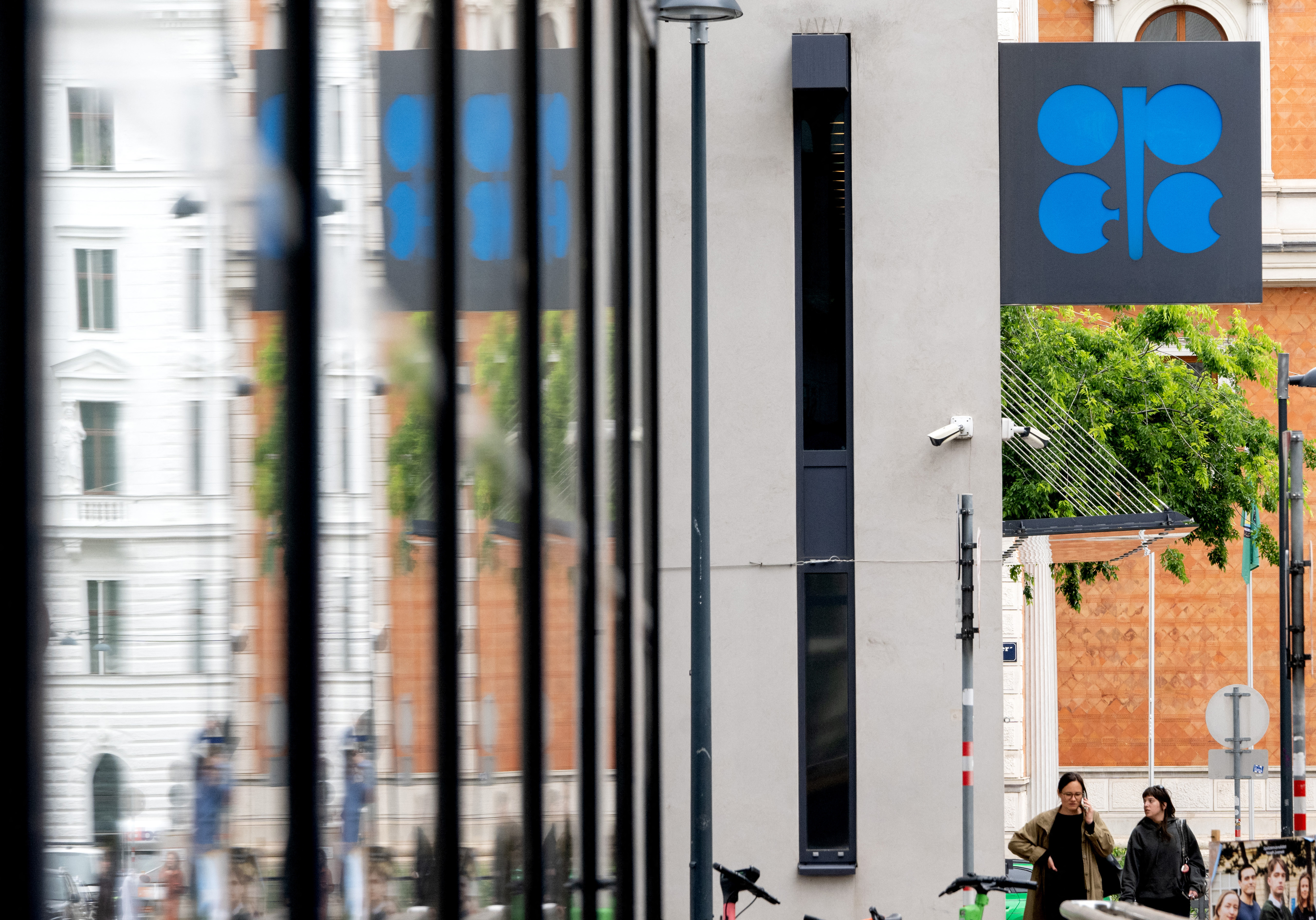
DUBAI - The United Arab Emirates said on Tuesday that it will withdraw from the Organization of the Petroleum Exporting Countries (OPEC) and the wider OPEC+ alliance, with effect from May 1, 2026, the Emirates News Agency (WAM) reported.
The decision reflects the UAE's long-term strategic and economic vision and evolving energy profile, including accelerated investment in domestic energy production, and reinforces its commitment to a responsible, reliable, and forward-looking role in global energy markets, WAM reported.
It follows a comprehensive review of the UAE's production policy and its current and future capacity, and is based on the UAE's national interest and commitment to contributing effectively to meeting the market's pressing needs, it reported.
The UAE said it will continue to act as a responsible and reliable energy supplier, bringing additional production to the market in a gradual and measured manner in line with demand and market conditions.
It also reaffirmed its commitment to investing across the energy value chain, including oil and gas, renewables and low-carbon solutions, and to working with partners to ensure stable global supply.
ALSO READ: OPEC+ to ramp up oil output in May amid global energy crisis
OPEC was founded in 1960 by Iran, Iraq, Kuwait, Saudi Arabia, and Venezuela to coordinate production policies and protect the interests of major oil exporters by ensuring stable revenues for members.
The UAE joined OPEC in 1967, and its departure will leave the group with 11 members. The wider OPEC+ alliance includes an additional 10 non-OPEC producers.
Writing on social media platform X, Foreign Ministry Communications Director Afra Mahash Al Hameli said the UAE's decision to leave OPEC is a "sovereign, strategic choice" based on the country's long-term economic vision.
"The UAE's decision to exit OPEC is a sovereign, strategic choice grounded in its long-term economic vision," Al Hameli. She said the move would give the country greater flexibility in using its energy capacity, strengthen national development, reinforce market confidence, and support global energy stability.
Al Hameli said the UAE would continue working closely with partners, deepen bilateral and multilateral cooperation, and contribute to stable and well-functioning markets after leaving the group.
Later on Tuesday, UAE Industry Minister and Abu Dhabi National Oil Company (ADNOC) CEO Sultan Ahmed Al Jaber met with Qatar's Minister of State for Energy Affairs and QatarEnergy CEO Saad Sherida Al Kaabi in Qatar.
READ MORE: OPEC maintains oil demand forecasts for 2026, 2027
During the meeting, the two reviewed bilateral relations and energy cooperation between the UAE and Qatar and discussed ways to further strengthen ties, ADNOC said in a post on social media.
Qatar exited from OPEC in 2019, which was widely seen at the time as a rebuke of the Saudi-dominated organization.
