

On landmark visit, Cheng calls for closer cross-Strait ties, lasting peace to benefit future generations
Cheng Li-wun, chairwoman of the Chinese Kuomintang party, called for stronger cross-Strait cooperation and lasting peace during her April 8 visit to Nanjing, the capital of Jiangsu province, and Shanghai earlier, stressing the need to benefit future generations.
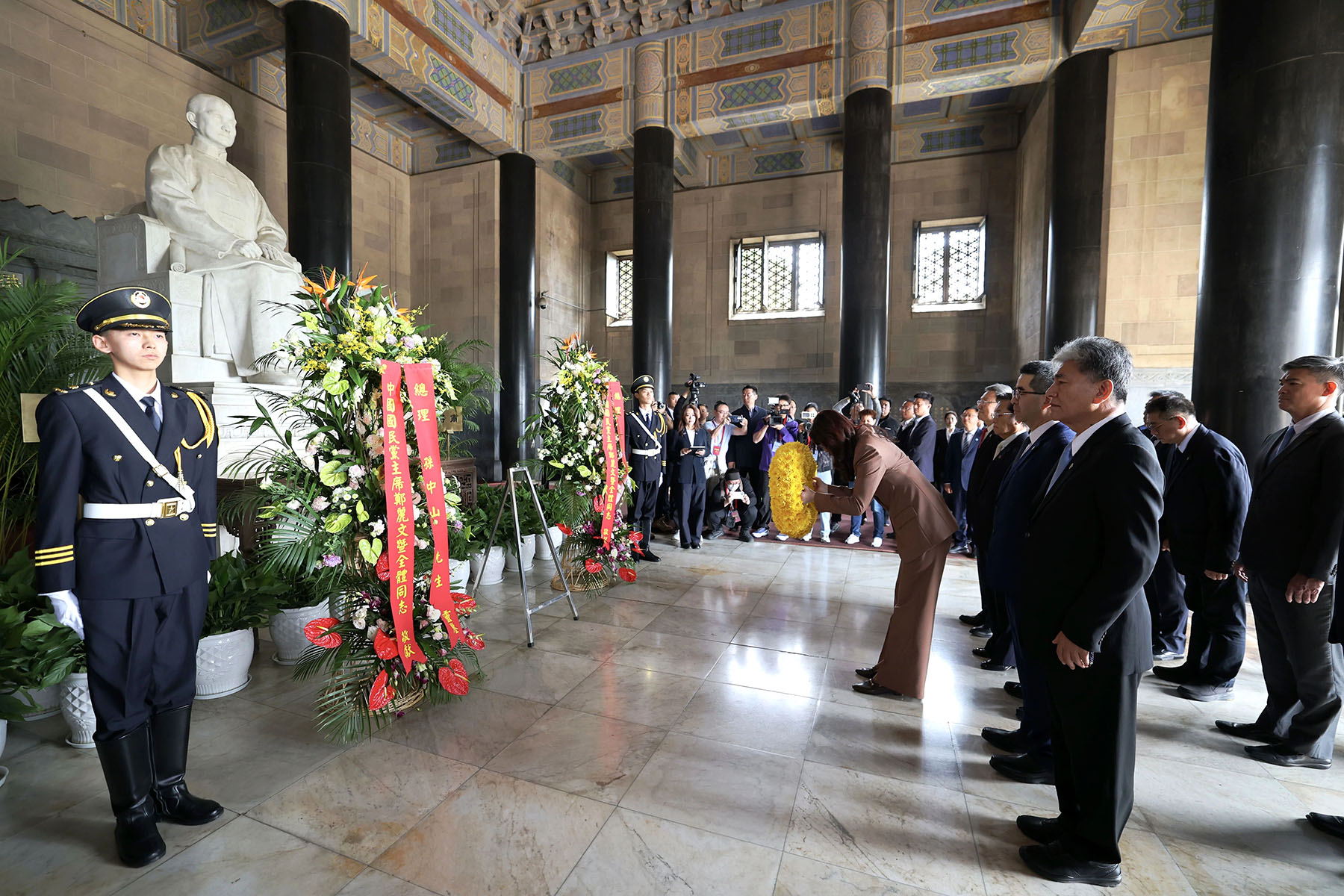
Following a tradition for KMT leaders visiting the Chinese mainland, Cheng led a delegation to pay tribute at the Sun Yat-sen Mausoleum in Nanjing on the morning of April 8.
After ascending 392 steps, she presented a wreath. Members of the delegation, including three KMT vice-chairpersons — Lee Chien-lung, Chang Jung-kung and Hsiao Hsu-tsen — bowed three times and observed a moment of silence. The delegation then visited the chamber housing Sun’s coffin.
Cheng’s trip marked the first such visit by a KMT chairperson in a decade. The visit is considered an important part of promoting cross-Strait peace and dialogue.
This year marks the 160th anniversary of the birth of Sun Yat-sen, a founding figure of the KMT who played a key role in overthrowing imperial rule in China. He died in 1925 and was laid to rest at the Nanjing mausoleum in 1929.
Speaking to the media after the memorial ceremony, Cheng said the visit aimed to “plant the seeds of peace” not only for Chinese people on both sides of the Taiwan Strait, but for humanity as a whole.
She called on individuals to nurture and sustain these seeds in daily life so they can grow and flourish, providing a foundation for future generations.
Cheng said that pursuing peace is a historical responsibility and obligation of the KMT.
“We have witnessed progress and development on the mainland that far exceed expectations,” she said, calling for both sides of the Taiwan Strait to advance reconciliation and unity while contributing to regional prosperity and stability.
On April 7, Cheng and her delegation arrived in Shanghai, where Song Tao, head of the Taiwan Work Office of the Communist Party of China Central Committee, welcomed them at the airport. Cheng and the delegation traveled to Nanjing later that day.
In Shanghai, they experienced drone delivery services at the headquarters of Meituan, a leading on-demand delivery platform on the mainland, and later visited the Yangpu Riverside, a revitalized public space transformed from former industrial sites.
During a Shanghai-Taiwan youth cultural exchange event in a book garden at the Yangpu Riverside, young people from Taiwan who are studying or starting businesses on the mainland shared their experiences with Cheng.
Cheng noted that smoother, barrier-free cross-Strait communication would allow young people to connect with like-minded peers and pursue opportunities on a broader stage with greater potential.
Zhu Fenglian, a spokeswoman for the State Council Taiwan Affairs Office, said at a news conference on the same day that the visit by Cheng’s delegation reflects engagement and dialogue based on the shared political foundation of upholding the 1992 Consensus and opposing “Taiwan independence”.
“The visit aligns with mainstream public opinion on the island that calls for peace, development, exchange and cooperation, and it will receive affirmation and support from the people of Taiwan,” Zhu said.
At the invitation of the CPC Central Committee and Xi Jinping, general secretary of the CPC Central Committee, Cheng and the delegation are scheduled to visit Beijing after the Shanghai and Jiangsu trips. Cheng’s visit will run until April 12.
Contact the writers at lishangyi@chinadaily.com.cn
