

An exhibition follows Lijiang's Mu family, showing how border leadership shaped a shared national story, Yang Feiyue reports.
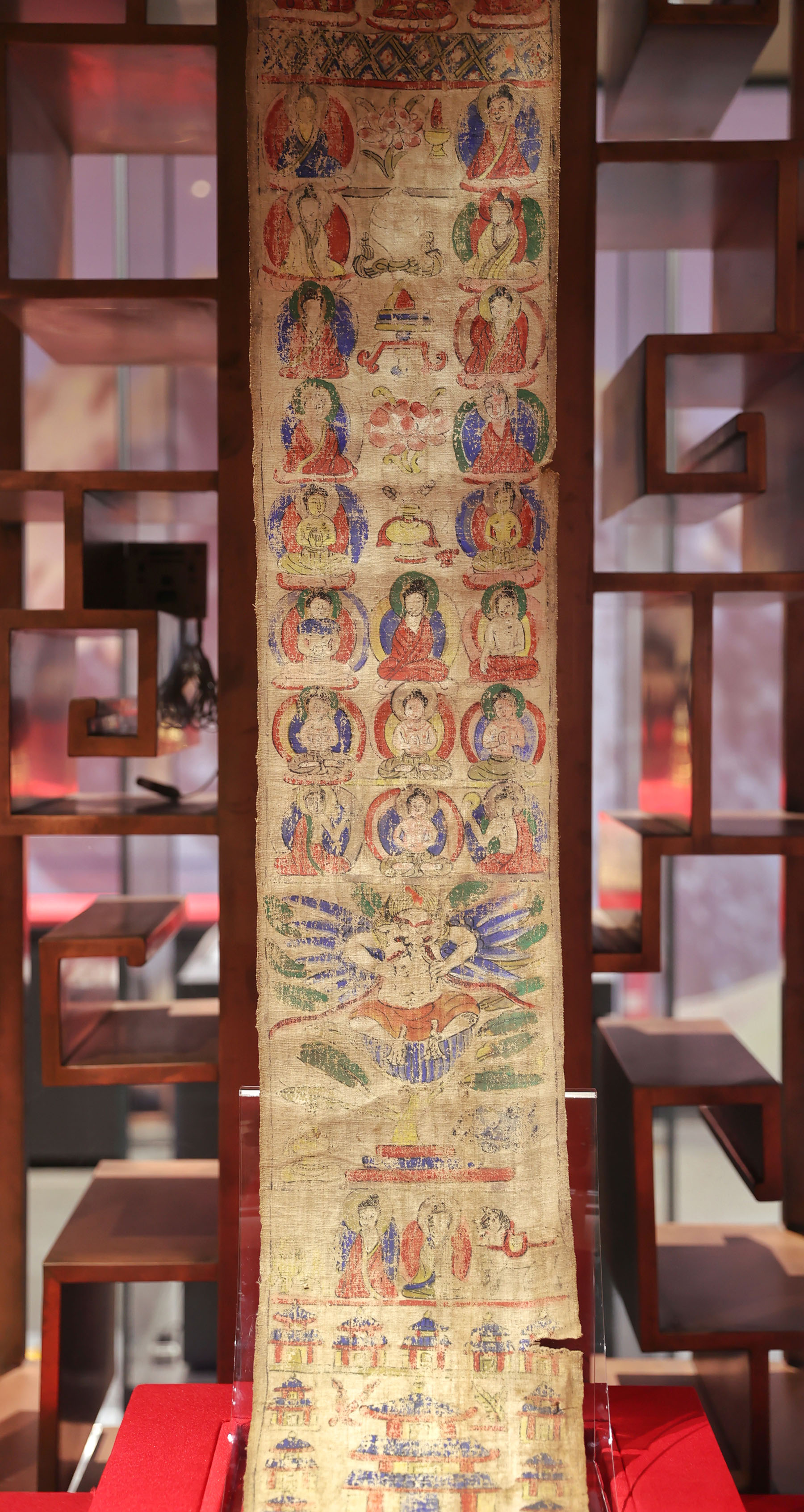
In a softly lit gallery inside Prince Kung's Palace Museum, a thin, timeworn manuscript lies open beneath glass. Its pages, slightly curled at the edges, carry rows of carefully brushed characters — names, dates and lines of descent that stretch across centuries.
At first glance, it appears to be a family genealogy. Look closer, and it reveals something larger: a record of frontier governance, cultural exchange, and the gradual weaving of a regional story into a national narrative.
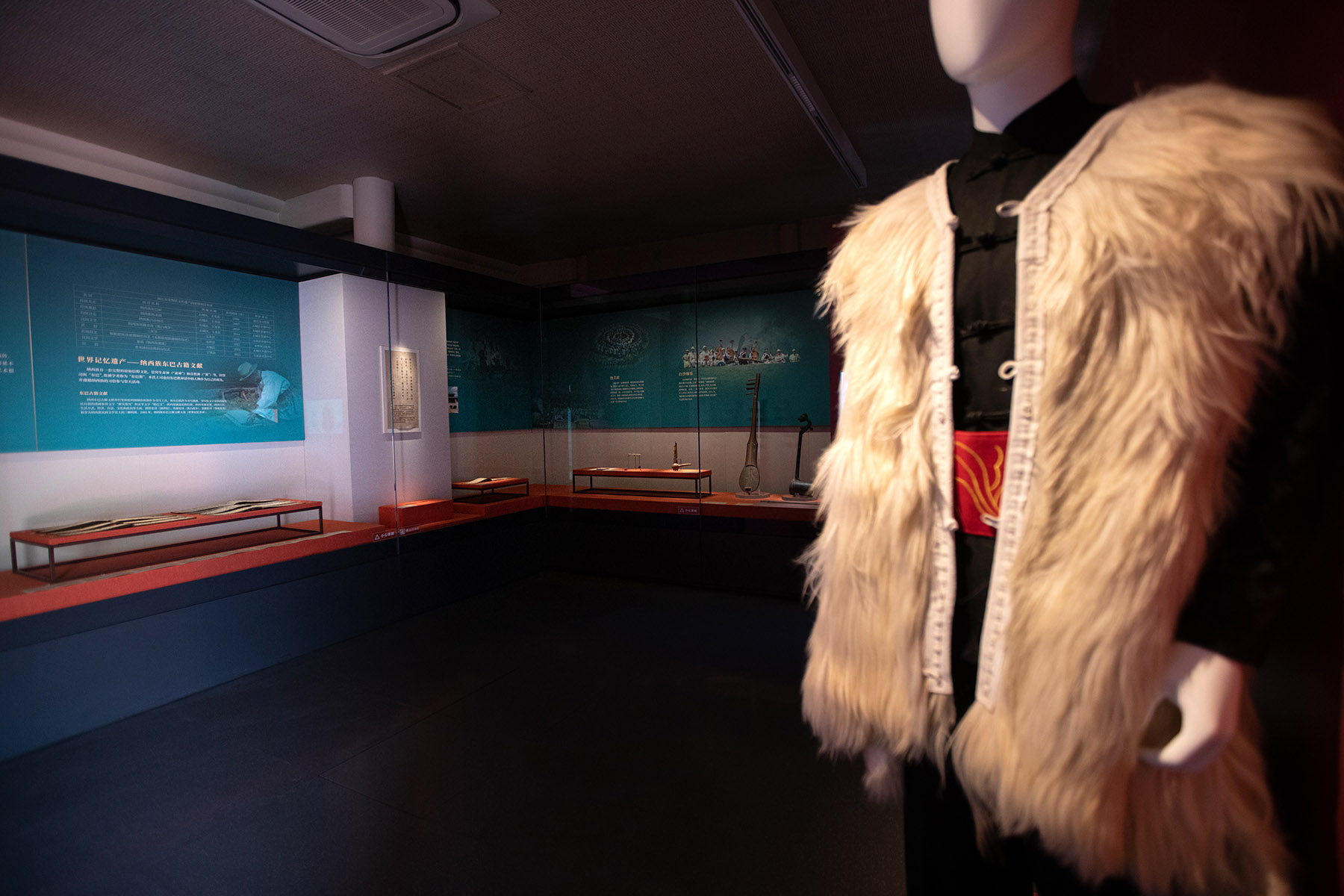
This document, known as the Mu Genealogy, anchors Enduring Legacy of Harmony and Beauty: Exhibition on the History and Culture of the Mufu Mansion in Lijiang. The exhibition brings the history of Lijiang, Southwest China's Yunnan province, to the capital.
More than 70 objects and documents, drawn from 10 museums and libraries across Beijing and Yunnan, trace the rise of the Mu family, hereditary rulers of the Naxi people, and the society they shaped over nearly five centuries.
READ MORE: Irresistible lightness of being
Jointly organized by the museum and the Lijiang municipal government, the exhibition marks the first large-scale, systematic presentation in Beijing dedicated to the Mufu Mansion and Mu chieftains.
"This is the first time that such a wide range of artifacts and archival materials related to the Mu chieftains and the Mufu Mansion have been brought together in a systematic way," says Zhang Ai, director of the Prince Kung's Palace Museum's exhibition department. "Together, they allow us to present a fuller picture of their history and cultural legacy."
In 1382, as the founding forces of the Ming Dynasty (1368-1644) consolidated control over Yunnan, a Naxi leader named Ajia Ade pledged allegiance to the Ming court. He was granted the surname Mu by Ming emperor Zhu Yuanzhang. His descendants would go on to govern Lijiang for generations as hereditary officials.
The exhibition opens with imperial documents that illuminate this relationship. Among them are two versions of the Huang Ming Enlun Lu, a collection of edicts praising successive Mu chieftains for maintaining stability and loyalty along the frontier.
"These documents record the imperial court's recognition of the Mu family's role in safeguarding the border and promoting harmony," Zhang explains.
"They show how the central government and local rulers worked in tandem," she adds.
Alongside these records, the genealogy manuscript traces 18 generations of the Mu lineage across more than three centuries until the Qing Dynasty (1644-1911) replaced hereditary chieftains with centrally appointed officials.
For curators, the pairing of official records and family archives reveals a governing model rooted in alignment. The Mu chieftains were not isolated regional rulers, but active participants in a wider political and cultural system.
Writing and ritual
Beyond governance, the exhibition also sheds light on a different dimension of the Mu legacy that was shaped by learning, literature and cultural aspiration.
Historical accounts describe the Mu rulers as "learned in poetry and observant of propriety", a distinction rare among frontier leaders. Several members of the lineage, known as the "Six Lords of the Mu Family", were accomplished writers who maintained close ties with scholars from the Central Plains.
"What is especially remarkable is that the Mu chieftains were not only loyal to the state, but also deeply engaged in cultural life. They valued literature, etiquette and education, and were highly regarded for this," says Lin Yucen from the museum's exhibition department.
One telling episode involves renowned Ming-era traveler Xu Xiake. Encouraged by an associate of the chieftain Mu Zeng, Xu journeyed to Lijiang late in life, completing his final travels there and forming a cross-cultural friendship.
Lin sees such encounters as part of a broader pattern. "Through these interactions, cultural ideas were not just introduced to Lijiang, but were reinterpreted and enriched by local traditions."
This exchange extended far beyond literary circles. Situated at a crossroads linking Yunnan, Sichuan province and the Xizang autonomous region, Lijiang has long been a hub for the movement of people, goods and ideas.
Under the Mu chieftains, relatively inclusive policies toward ethnic groups and religions fostered a society in which Han, Naxi, Tibetan and Bai communities coexisted and interacted over generations.
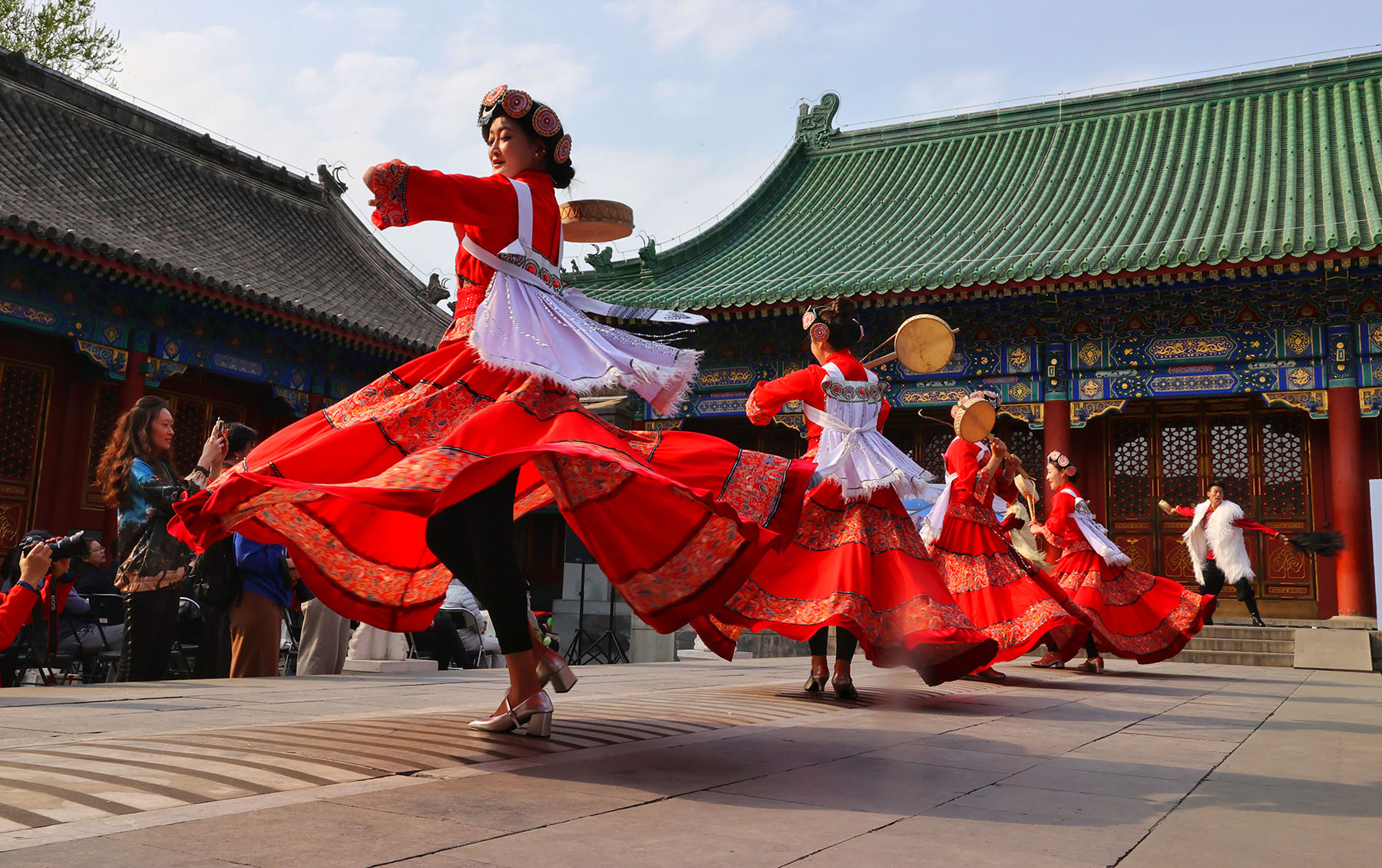
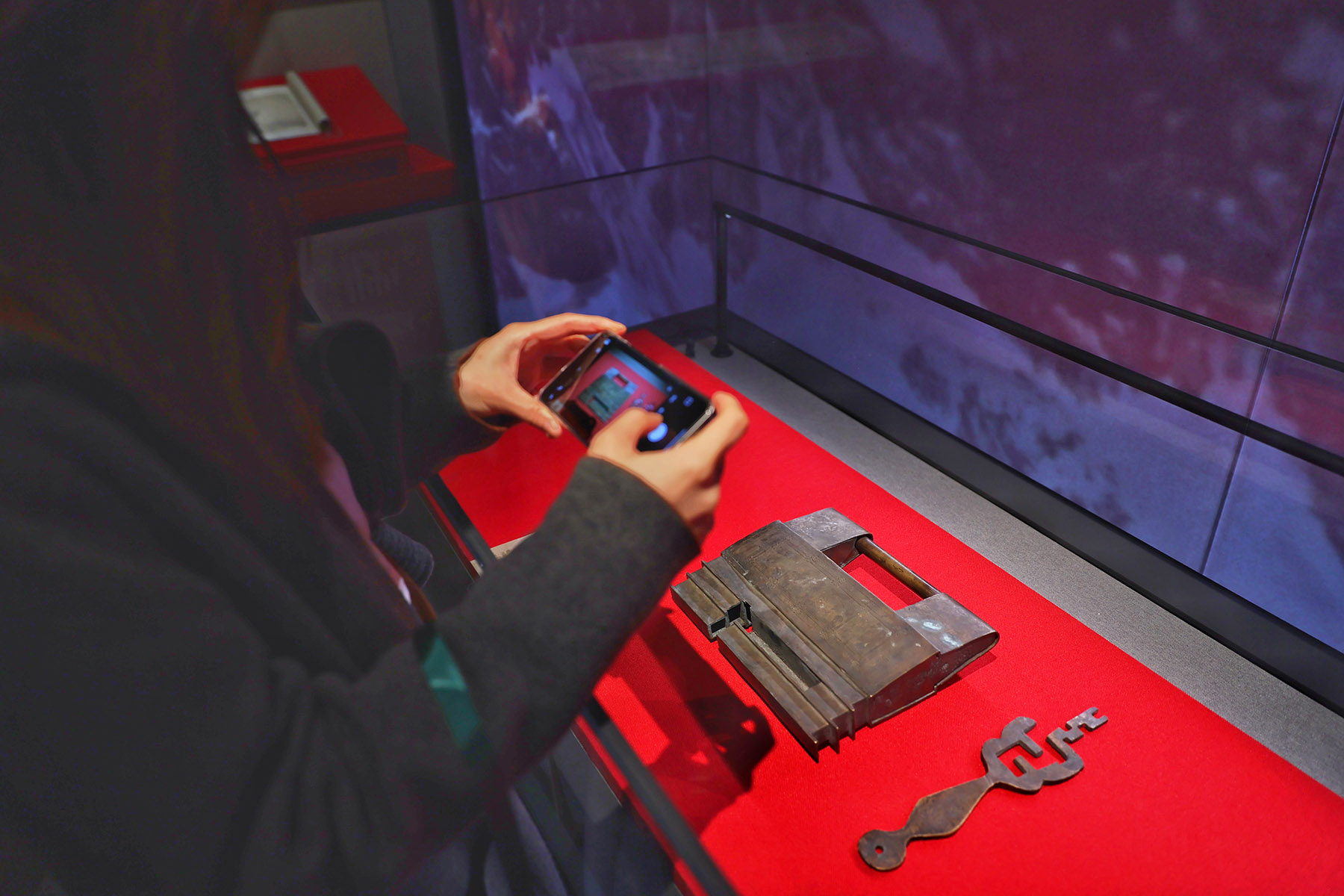
In the exhibition, this layered history is reflected in everyday objects, from silver ornaments to copperware and craft items that blend local traditions with outside influences.
"During the Mu family's rule, artisans from the Central Plains were invited to Lijiang, contributing to the development of local handicrafts," Zhang notes.
"At the same time, Naxi culture continued to evolve, forming a rich and distinctive cultural landscape," she says.
For Mu Xinyu, deputy district head of the Old Town of Lijiang, this layered history remains deeply relevant.
"Over more than 300 years, the Mu chieftains not only maintained stability on the frontier, but also promoted exchanges and interactions among different ethnic groups," he says.
"This played an important role in shaping a shared cultural identity," he adds.
The exhibition's final section turns to the built environment that embodies this history.
The Mufu Mansion, located in the heart of the Old Town of Lijiang, once served as the political and ceremonial center of Mu rule. Its architectural layout, along with the broader urban design of the Old Town, reflects centuries of governance and cultural interaction.
In 1997, the site was inscribed on the UNESCO World Heritage List, recognizing a living example of a multiethnic cultural landscape.
To evoke that environment, the exhibition re-creates a courtyard inspired by Lijiang, where seasonal flowers and spatial design echo the atmosphere of the southwestern town.
"The meeting of the Mufu Mansion and Prince Kung's Mansion here in Beijing is a celebration of cultural diversity and harmony," says Gao Ping, vice-mayor of Lijiang.
"It allows more people to understand the historical and cultural value of Lijiang."
Dialogue across distance
The exhibition's title, Harmony and Beauty, underscores its central message: preserving cultural heritage while fostering a shared sense of community among China's ethnic groups, according to the exhibition's organizers.
It also draws attention to the inscription, Tianyu Liufang, at the entrance to the Mufu Mansion. In Naxi, it phonetically encourages people to "go and study", while in Chinese, it evokes the image of nourishing rain sustaining all living things.
For the curatorial team, these layered meanings reflect the exhibition's broader ambition.
ALSO READ: Livestreaming showcases village's ancient traditions
"We hope that through these artifacts and stories, visitors can better understand how different cultures have interacted and developed together over time," Zhang Ai says.
As visitors move through the galleries, the story unfolds through fragments of documents, objects, images, and spaces that form a cohesive picture.
For Lin, continuity is the point.
"We are trying to connect the past with the present — to show how the history of the Mu chieftains continues to resonate in Lijiang today," he says.
Contact the writer at yangfeiyue@chinadaily.com.cn
