

Dietary imbalance, lack of nutritional education are fueling obesity risk
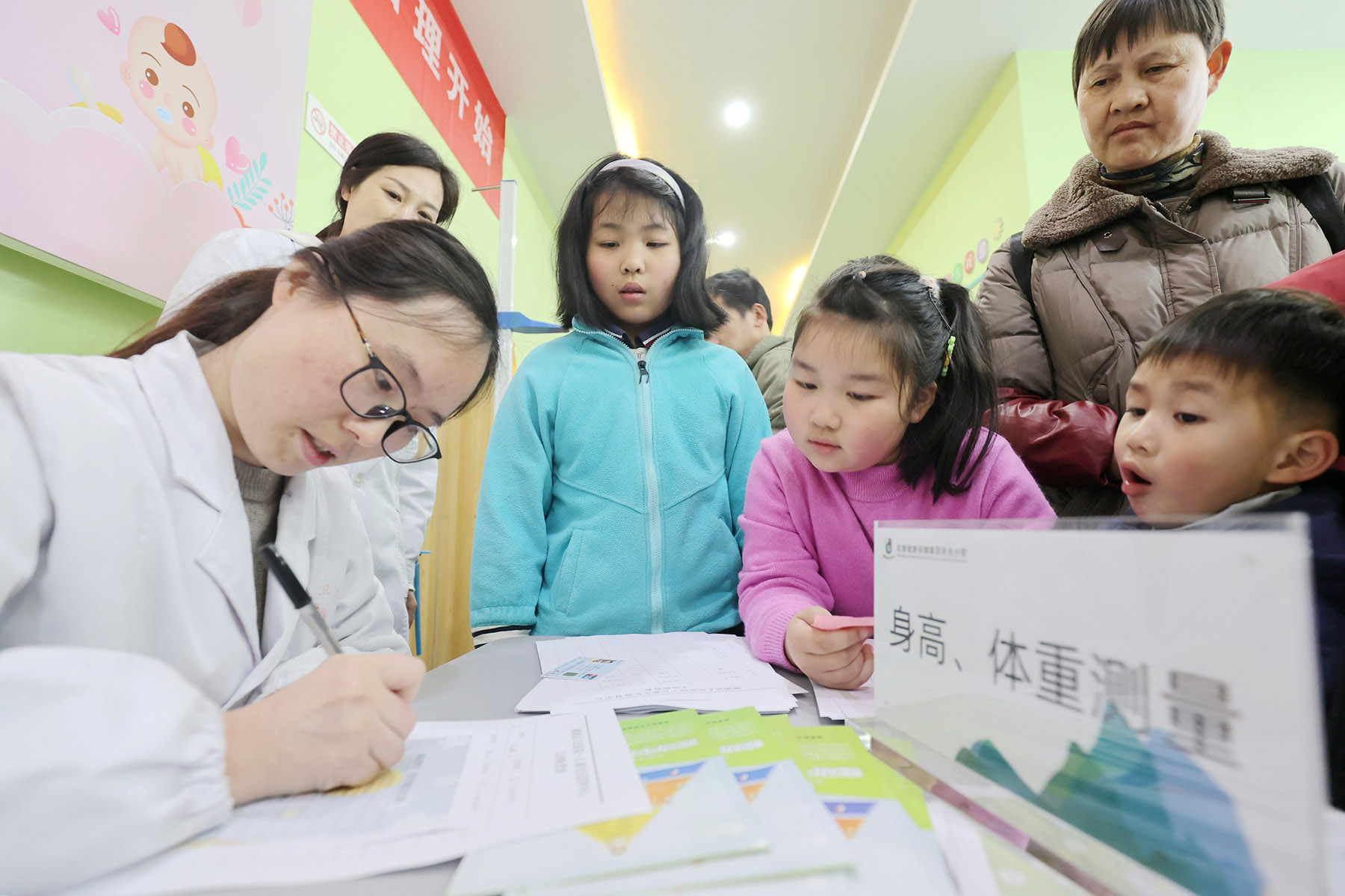
On a pale morning in a village outside Wuhan, Hubei province, 13-year-old Qian Wei stood in the concrete schoolyard while a health worker wrapped a measuring tape around his waist.
Minutes earlier, the middle school student had been running laps with his classmates and shooting basketballs during recess. Sweat still clung to his temples.
"I exercise every day," he said. But the tape measure suggested something different.
Despite his daily workouts, Qian's waist-to-height ratio placed him in the category of central obesity, a form of abdominal fat linked to elevated risks of diabetes and heart disease later in life.
READ MORE: Nutrition project gives rural kids enough food for thought
"I thought only very fat kids had health problems," he said. "I didn't think it could be me."
Unlike general weight gain, central obesity often hides in plain sight. A child can look relatively lean yet carry metabolically dangerous fat deep around the organs.
Qian is far from alone. A nationwide survey of 121,912 rural students aged 8 to 15 — conducted under China's Nutrition Improvement Program for Rural Compulsory Education Students and published in the Chinese Journal of Epidemiology — found that 20.6 percent had elevated waist-to-height ratios.
Using waist-circumference criteria, 17.2 percent met the threshold for central obesity, while another 16.6 percent fell into an elevated normal range.
"Central obesity in rural children is no longer rare," said Zhang Qian, a researcher at the National Institute for Nutrition and Health at the Chinese Center for Disease Control and Prevention. "It deserves urgent attention because it predicts long-term metabolic risk more sensitively than body mass index," she said.
What surprised Zhang's team was not only the prevalence — but the pattern behind it.
Using latent class analysis, a statistical method that identifies hidden subgroups within large populations, the researchers identified five distinct diet and exercise patterns among the students.
Contrary to common assumptions, the highest central-obesity risk did not cluster among the least active children.
Instead, it appeared among children who were physically active but frequently consumed sugar-sweetened beverages and fried foods.
"The frequent beverage and fried-food intake with high activity pattern was positively associated with central obesity risk,"Zhang said.
"Exercise does not automatically offset unhealthy dietary choices."
After adjusting for age, sex and region, children who were active but regularly consumed sugary drinks and fried snacks had significantly higher odds of central obesity than active peers who consumed such foods less often.
"This finding is important," Zhang said."Public perception often assumes that if a child is active, dietary risk becomes less important. Our data do not support that assumption."
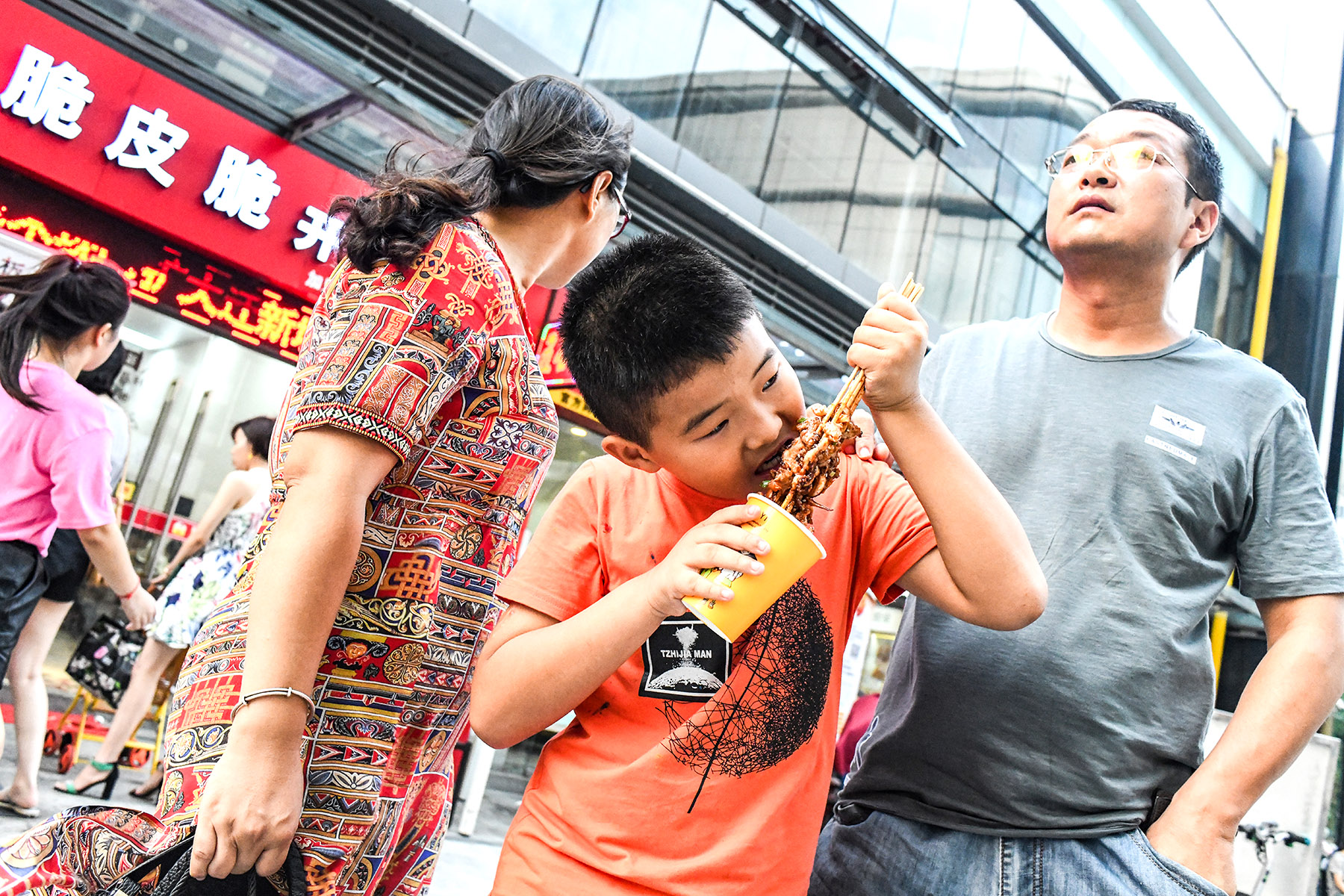
Sugary drinks, fried snacks
In Qian's village, school lunches — subsidized under China's national Rural Nutrition Improvement Program — typically include rice, vegetables and modest portions of meat.
But once classes end, children spill into narrow village lanes lined with family-run shops. Refrigerators hum with brightly colored sodas. Plastic jars hold fried snacks dusted with chili powder.
"I get hungry easily," Qian said. "After basketball, I always want something cold and sweet to drink."
Qian Guoping, who runs one of the small stores near the school gate, said sugary drinks are among her best-selling items. "They're not expensive — 3 yuan ($0.15) to 5 yuan. After sports, the kids come in groups."
Some parents wonder "if exercise is supposed to keep children healthy, why do some active kids still gain abdominal fat?"
Gu Zhongyi, a nutritionist and science communicator, said the answer often lies in what happens after the exercise ends.
"Physical activity can stimulate appetite and thirst," he said. "If the available options are high-sugar drinks or fried snacks, children may easily consume more calories than they burned."
A child might burn 150 to 200 calories during half an hour of running, he said. A single bottle of sweetened soda can contain roughly the same amount.
Because liquid calories provide little sense of fullness, children may drink them quickly without reducing their overall food intake.
Nutritional scientists refer to this dynamic as compensatory eating, increased calorie consumption following physical exertion. "Exercise is beneficial,"Gu said. "But it cannot cancel out a high-sugar diet."

Scarcity to surplus
The rural waistline problem reflects a deeper transformation in China's food landscape.
For decades, the country's primary nutritional concern in poor rural regions was undernutrition. Stunting and micronutrient deficiencies were widespread.
"Ten or 15 years ago, the main question was whether children were eating enough," said Qian Zhijin, the village Party secretary.
The national nutrition program, launched in 2011, significantly improved dietary intake among rural students. Between 2012 and 2019, stunting rates declined sharply.
But rising incomes and expanding supply chains have also brought ultra-processed snacks and sugary beverages into remote villages.
"We are witnessing a nutrition transition," Qian said. "Undernutrition has decreased, but overnutrition and dietary imbalance are increasing."
The new study suggests that how children eat may matter as much as what they eat. Students who reported regular meal times and adequate protein intake were less likely to show signs of central obesity.
"It suggests that not only the quantity but also the rhythm and structure of eating are important," Zhang said.
The paradox of the active yet metabolically at-risk child also reflects broader social dynamics.
Yu Chengpu, dean of the School of Sociology and Anthropology at Sun Yat-sen University, argues that contemporary health governance increasingly frames disease risk as a matter of individual self-management, even as food environments change rapidly.
People are encouraged to regulate their own bodies, exercise more and practice discipline, as they navigate markets saturated with inexpensive, calorie-dense foods.
Applied to rural children, the contradiction becomes clear: they are told to move more, and many do. But their post-exercise choices unfold in a marketplace optimized for sugar, salt and fat.

Limits of 'move more'
Public health messaging in China has long emphasized physical activity. School posters urge students to "strengthen the body". Morning calisthenics remain mandatory in many campuses.
Anthropologist Susan Greenhalgh, professor emerita at Harvard University who specializes in the intersections of science, governance, and society in contemporary China, has traced how this emphasis on exercise became central to China's obesity discourse.
In her research, she has documented how beverage companies supported scientific exchanges and exercise-focused school programs beginning in the late 1990s.
"Coca-Cola succeeded in redirecting China's obesity science and policy to emphasize physical activity," Greenhalgh wrote in an analysis of institutional ties.
Framing obesity primarily as a matter of "energy balance" — calories in versus calories out — aligns neatly with corporate interests.
The new rural study does not examine corporate influence. But its findings complicate the assumption that promoting activity alone can neutralize dietary risk.
At Wanyue Middle School, a physical education teacher surnamed Chen said the school strictly follows national activity guidelines.
"We make sure students exercise every day," he said. "Running, stretching and basketball."
ALSO READ: China issues national dietary guidelines to curb rising obesity
Asked about sugary beverages, he sighed. "We can advise them not to drink too much," he said. "But outside school, we cannot control everything."
Some public health scholars argue that broader measures — clearer labeling, marketing restrictions or taxes on sugar-sweetened beverages — may eventually be necessary.
As the final bell rang, Qian Wei joined his classmates for another round of drills. He moved quickly across the court, laughing, shoulders loose with adolescent energy.
Nothing about him suggested illness. Yet according to national screening data, his waist measurement signals elevated metabolic risk.
"I'll try to drink less soda," he said. "But after running, I really feel like I need it, especially in summer."
Contact the writers at weiwangyu@chinadaily.com.cn
