

BYD, Farizon and even startups like Windrose Technology eyeing up continent
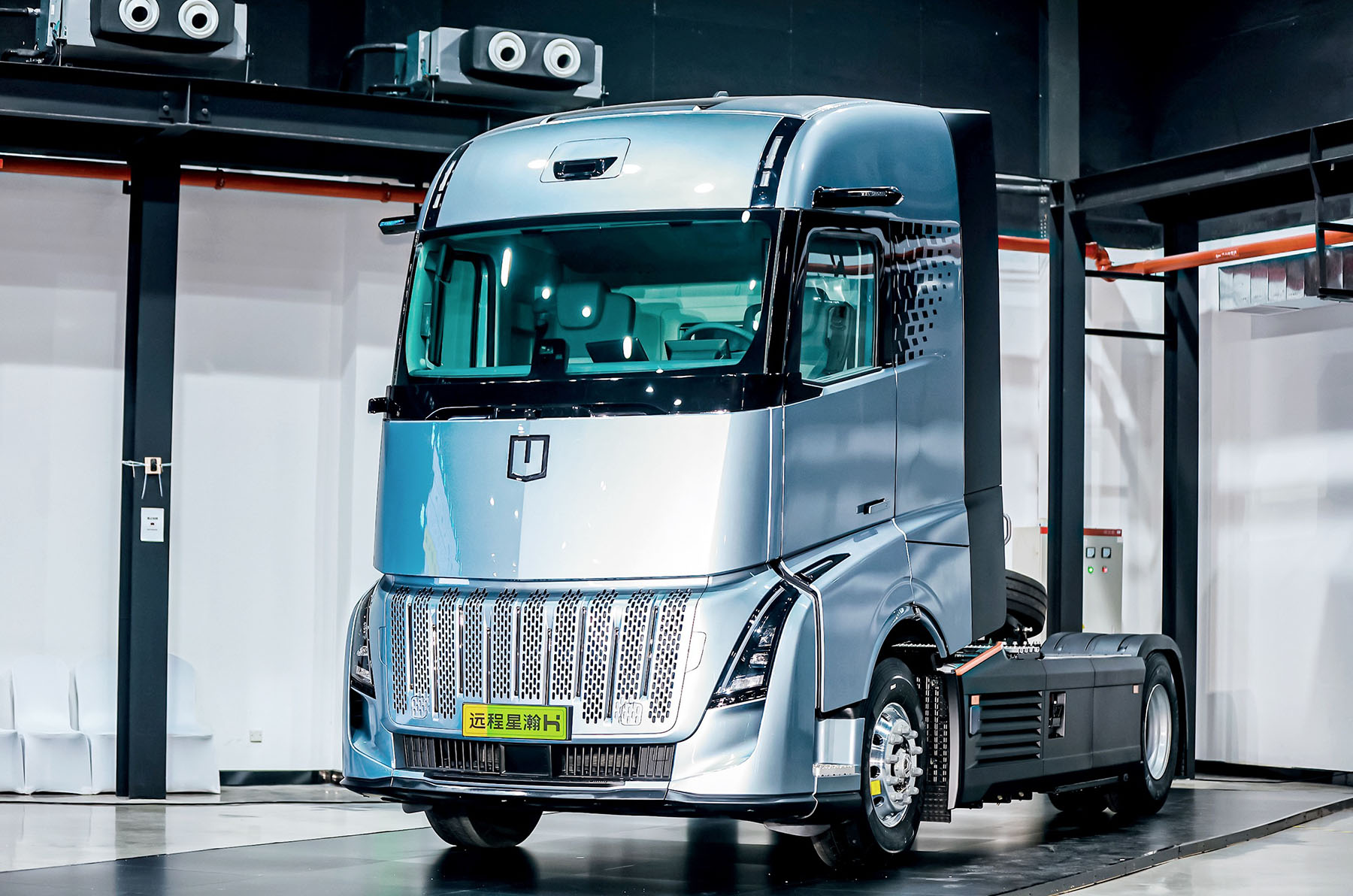
Chinese manufacturers are accelerating expansion into Europe's electric heavy-duty truck market, supported by competitive pricing and advanced electrification technologies, as the continent's low-emission freight transition gathers pace.
More than six Chinese manufacturers are planning to launch electric heavy-duty truck sales in Europe in 2026, ranging from established players such as BYD and Farizon, Geely's commercial vehicle brand, to startups including Windrose Technology and SuperPanther, according to Reuters.
The latest push reflects efforts by Chinese electric truckmakers to leverage their domestic strengths in cost, supply chains and product performance in Europe. Electric freight trucks accounted for 4.2 percent of total truck sales in the European Union in 2025, up from 2.3 percent in 2024, though diesel models still dominate the market.
READ MORE: Freight transport steers toward green solutions
Prices remain a major barrier to wider adoption, with electric trucks costing about three times as much as the 100,000-euro ($115,190) average for a diesel truck. At the same time, European industry groups are urging measures such as reduced road tolls for electric heavy-duty trucks and stronger zero-emission freight requirements to boost demand.
"Europe's electric heavy-duty truck market is still in an early stage of development, with limited scale and a slow pace of commercialization. In a segment where costs fall only as volumes rise, that has kept prices high and slowed wider adoption," said Zhang Xiang, a fellow at the Research Center of Automobile Industry Innovation of the North China University of Technology.
This dynamic has created an opening for Chinese manufacturers. Industry executives said that some Chinese entrants could price electric heavy-duty trucks up to 30 percent below the European average of about 320,000 euros.
That pricing edge is supported by China's large domestic market, where zero-emission heavy-duty trucks account for 29 percent of sales, as well as by the country's lower-cost EV and battery supply chain.
Zhang said China has built a relatively complete industry chain in batteries, motors and electronic control systems, providing a foundation for both cost control and product development.
He added that Chinese electric heavy-duty trucks are showing competitiveness in range, safety and overall performance.
One example is Windrose's E700 electric truck, which has drawn interest in Europe with its 670-kilometer driving range and a 35-minute charging time. A Belgian logistics firm awaiting delivery of Windrose trucks said the charging speed is more than twice that of most electric trucks currently available in Europe, and described China's technology advantage in the segment as being about three years ahead of European rivals.
Development efficiency is another strength. Phil Dunne, a managing director at strategy consultancy Grant Thornton Stax, said the typical global development cycle for an electric truck is about seven years. By comparison, Windrose took three years to develop the E700 and secure regulatory approval in China, Europe and the United States.
Chinese truckmakers are also moving beyond exports and accelerating localization in Europe. BYD plans to produce trucks at its bus factory in Hungary, while Windrose plans to assemble electric trucks in Belgium and establish research, development and after-sales functions there.
Other Chinese brands are pursuing contract manufacturing and service network partnerships in countries including Austria and Germany to improve local support and service coverage.
ALSO READ: Hydrogen vehicles in focus at import expo
For instance, China National Heavy Duty Truck Group, or Sinotruk, has started local assembly cooperation in Austria. These efforts are helping Chinese truckmakers speed up market entry and build customer confidence.
However, challenges remain. European fleet operators still tend to favor established truck brands, while tariffs, quotas, local regulations and certification requirements continue to pose barriers to market entry, Zhang said. Fleet buyers are cost-sensitive but competitive pricing, together with improving product performance, could gradually ease resistance to newer Chinese brands.
Zhang added that, beyond near-term sales, Europe's higher standards could help Chinese truckmakers strengthen international brand recognition, build experience in localized manufacturing, compliance and customer service, and support broader expansion into overseas markets.
Contact the writers at wangyuchen@chinadaily.com.cn
