

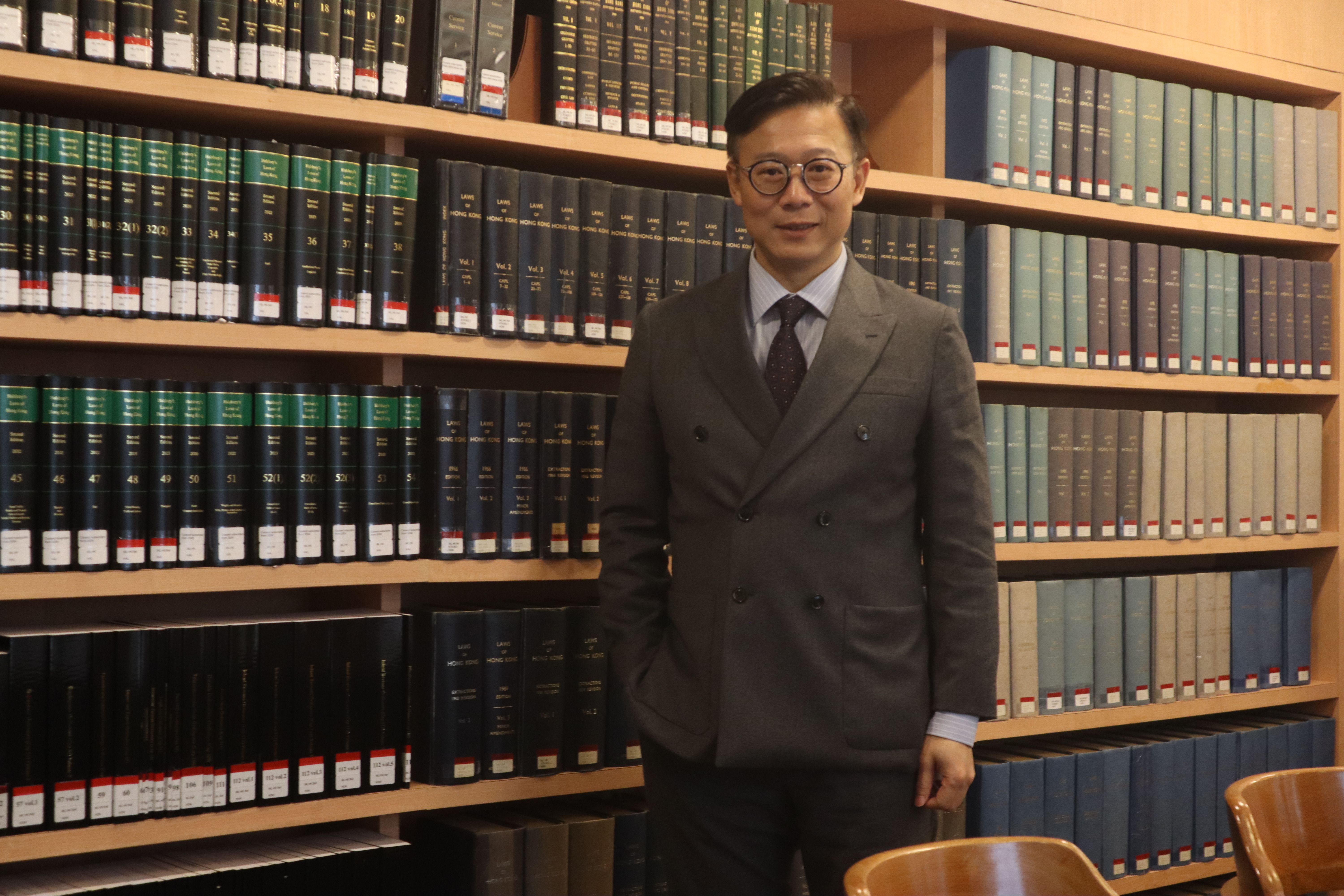
As Chinese mainland companies accelerate their push overseas, supporting the growing demand for cross-border legal, financial, accounting and dispute-resolution services represents not just a responsibility in serving the country’s needs that Hong Kong must not shy away from, but also a strategic opportunity for the special administrative region itself.
This is according to Deputy Secretary for Justice Horace Cheung Kwok-kwan, who spoke with China Daily in an exclusive interview on Tuesday.
 For decades, the city’s long-established professional services sector largely defined its role as a bridge between the Chinese mainland and developed economies. But as the global economic landscape evolves and businesses diversify their international exposure to reduce reliance on any single market, opportunities are no longer confined to Europe and the United States, said Cheung, who sees the global expansion of mainland businesses as becoming an “overwhelming trend”.
“Helping mainland companies expand across a far broader range of regions is therefore increasingly seen as a ‘blue ocean’ — a largely untapped market where Hong Kong’s professional services sector has all the elements required to make a difference,” he said. “Such an undertaking would not only allow the city to better serve national development, but also provide a strong shot in the arm for the SAR.”
Chinese lawmakers approved the outline of the 15th Five-Year Plan (2026-2030) for national economic and social development at the closing meeting of the fourth session of the 14th National People’s Congress on Thursday.
Hong Kong Chief Executive John Lee Ka-chiu said on Thursday that the blueprint and action agenda facilitates the SAR’s better integration into and service of the overall national development.
He underscored the Task Force on Supporting Mainland Enterprises in Going Global to connect the robust productivity of the Chinese mainland, Hong Kong’s world-renowned professional services and the keen demand from global buyers. “Hong Kong will facilitate the efforts of quality enterprises in going global and bringing in international capital, steadfastly advancing high-quality development of the economy,” Lee said.
The Hong Kong SAR government launched the Task Force on Supporting Mainland Enterprises in Going Global in October, followed by the establishment of the Professional Services GoGlobal Platform. These initiatives are highlighted in the SAR’s 2026-27 Budget.
Citing a phrase often heard within China’s business community — “If you don’t go global, you’re out; but if you rush abroad blindly, you could still end up out” — Cheung said expanding overseas has never been easy for Chinese companies, but the environment today, represented by geopolitical storms, the restructuring of global supply chains and rising protectionism, is arguably more complicated than ever before.
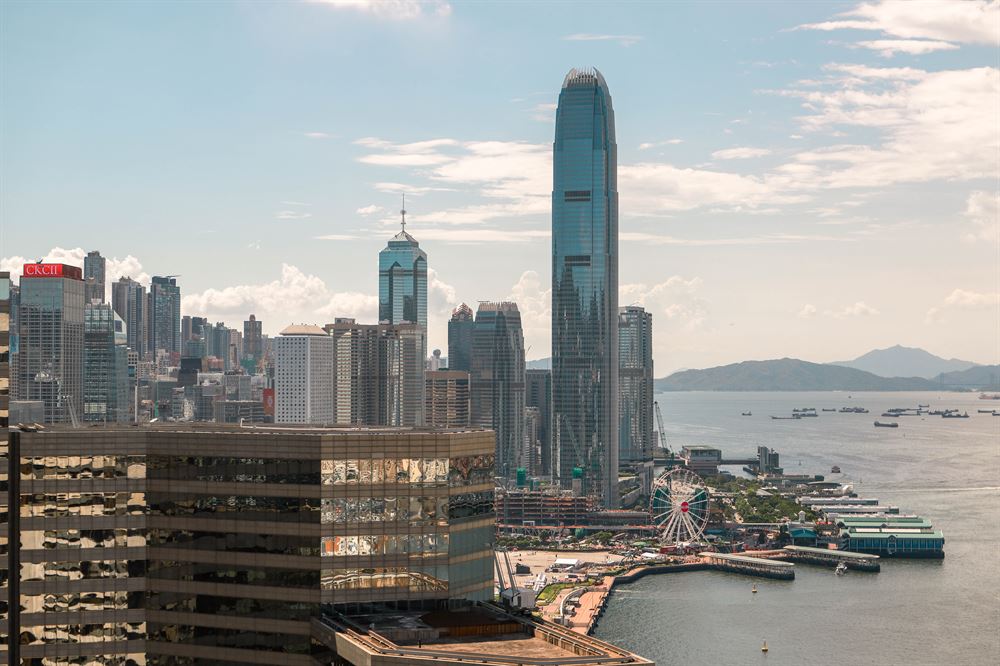
Cases in point include protracted disputes over Hong Kong SAR-headquartered CK Hutchison’s ports in Panama, and Nexperia, a Netherlands-based chipmaker owned by China’s Wingtech, as well as the TikTok six-year ownership saga.
Corporate governance structures and dispute-resolution mechanisms thus need to be built into the strategy from the start of the journey, and this is where international professional services come in, Cheung said.
Riding high on its vision of being a “gold-standard matchmaker”, facilitating precise connections between mainland enterprises and the city’s professional services, the Professional Services GoGlobal Platform is working on a curated list of professional service providers, which enables companies to identify advisers based on verified experience in particular industries and overseas jurisdictions, instead of relying on word-of-mouth recommendations or fragmented information online.
According to Cheung, the platform expects to consolidate and publish a list of reputable law firms in the coming months. The list will be updated on an annual basis and expanded to cover an extensive pool of specialized and precise professional services providers spanning across finance, accounting, consulting, and marketing tailored to the industry types and target markets of enterprises venturing overseas, with a range of choices of professional services providers suitable for businesses of all sizes.
ALSO READ: Forging global symbiosis
In December, the platform released its inaugural edition of a collection of over 50 success stories about Hong Kong’s professional services supporting mainland enterprises going global for reference.
Cheung said different firms face very different priorities when embarking on a global journey. Some are looking to raise new capital, as illustrated by Chinese battery manufacturer CATL’s Hong Kong listing in May last year, while others are focused on building supply chains abroad, and entering new markets to manage issues such as intellectual property transfer.
For small- and medium-sized enterprises, Cheung pointed to the ongoing work to set up a digital platform, where mainland SMEs can search for Hong Kong-based service providers, conduct virtual consultations and establish partnerships without needing a physical presence in the city.
Cheung said the platform also looks to take a more proactive approach by bringing together professionals from across sectors to build closer ties with mainland businesses. In December, Cheung led a delegation of over 40 representatives from cross-professional sectors to exchange views with representatives from around 70 enterprises and industry associations in Qianhai, Shenzhen.
Efforts will also be directed toward strengthening links with professional service providers overseas, essentially paving the way for mainland businesses venturing across borders, he said.
