

Chinese Foreign Minister Wang Yi has called for an immediate ceasefire in the Middle East, saying the international community broadly agrees that the fighting must stop, and urging all sides to press the parties involved to halt military operations.
Wang made the remarks during a phone call with Egyptian Foreign Minister Badr Abdelatty on Thursday.
Wang, who is also a member of the Political Bureau of the Communist Party of China Central Committee, warned that prolonging the conflict would only bring greater suffering to the people in the region, deal a heavy blow to regional economies and further undermine international and regional security and stability.
READ MORE: Chinese envoy urges US, Israel to cease military operations against Iran
Wang said China and Egypt, as responsible countries, both advocate resolving regional issues through dialogue and consultation and oppose the frequent use of force.
China is willing to maintain communication and coordination with regional countries, including Egypt, and continue to play a constructive role in promoting peace, he added.
Abdelatty said Egypt is deeply concerned about the ongoing conflict and appreciates China's balanced and fair position as well as the role it has played. Egypt is ready to maintain close communication with China and work together to help ease tensions as soon as possible, he said.
Meanwhile, the United States (US) and Iran both signaled that there will be no quick end to the ongoing conflict in the Middle East, which was triggered by joint US and Israeli strikes against Iran nearly two weeks ago, killing nearly 2,000 people so far and throwing the entire Gulf region, global energy markets and international shipping into disarray.
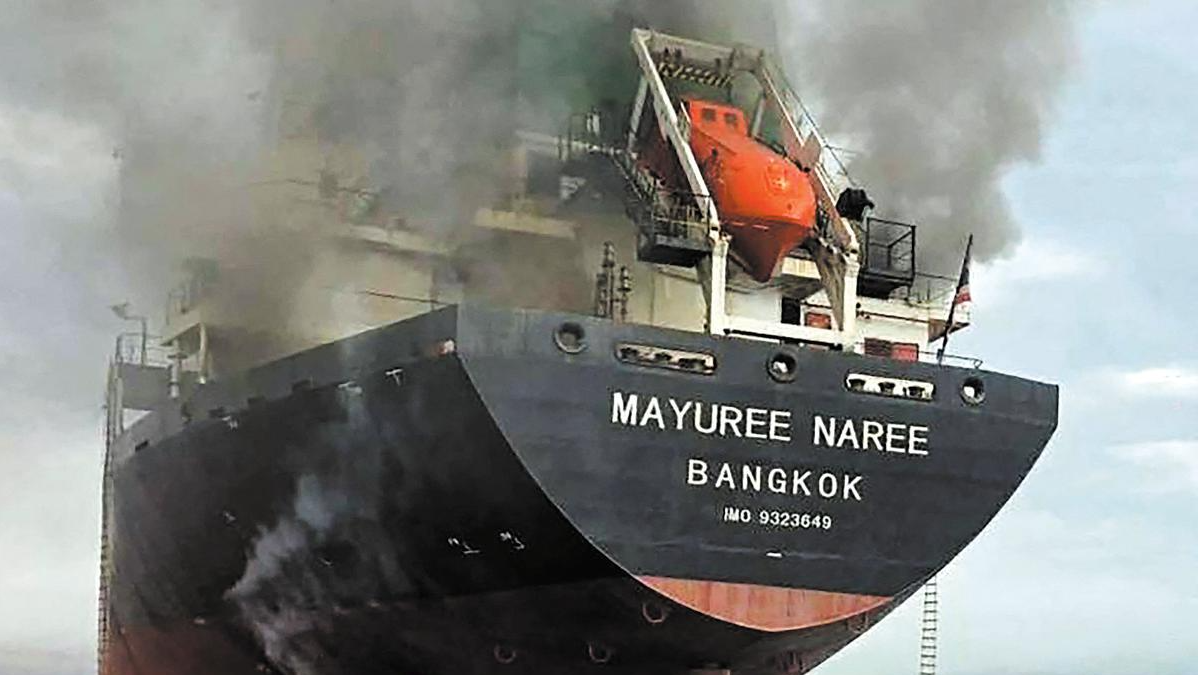
Despite what the US described as the most intense wave of airstrikes since the war began on Feb 28, Iran launched a new round of attacks on Gulf energy targets on Thursday. The strikes came hours after two oil tankers were hit off the coast of Iraq, sending crude prices surging amid a record release of emergency oil reserves by the International Energy Agency (IEA).
Iranian authorities reported over 1,300 fatalities on their side, while Israel has confirmed 12 deaths. The US has lost seven soldiers, with another eight suffering serious injuries.
In a message posted on social media on Wednesday night, Iranian President Masoud Pezeshkian said the war could only be resolved through a clear set of conditions. "The only way to end this war … is recognizing Iran's legitimate rights, payment of reparations, and firm international guarantees against future aggression," he wrote.
However, US President Donald Trump said on Wednesday that the US has already won the conflict and that US forces would "finish the job".
READ MORE: Chinese envoy urges global community to push for Lebanese-Israeli ceasefire
Earlier on Wednesday, Iran's military vowed to launch strikes against US and Israeli economic interests in the region, including banks, while an Iranian news agency listed tech giants as possible "future targets", prompting some international companies to evacuate staff members.
The Strait of Hormuz, through which one-fifth of the world's oil supplies pass, has effectively been closed after Iran vowed not to allow even a single liter of oil to be exported from the Gulf as long as the US-Israeli offensive continued.
Oil prices surged past $100 a barrel on Thursday, despite the IEA authorizing a record release of strategic crude reserves, pledging to make 400 million barrels available from stockpiles of member nations. IEA member countries currently hold more than 1.2 billion barrels of emergency oil stocks, with an additional 600 million barrels in industry stocks held under government obligation. The previous largest collective emergency stock release by the IEA was 182.7 million barrels after Russia launched its special military operation in Ukraine in 2022.
Contact the writers at cuihaipei@chinadaily.com.cn
