

Deputy Financial Secretary Michael Wong Wai-lun has recently unveiled a pragmatic yet compassionate resettlement plan for Wang Fuk Court residents displaced by the disastrous fire last November. His proposal avoids rebuilding on the original site, instead, it offers affected families immediate access to available housing units. This approach balances residents’ urgent needs with practical policy consideration. In principle, I support the plan — it demonstrates responsibility in a time of crisis. Yet, one crucial piece of the puzzle remains missing.
 Many Wang Fuk Court residents hope to remain within their familiar neighborhood. If the government were to acquire Wang Chi House, keep it intact in structure, and adapt it for resettlement — supplemented with appropriate community facilities — it would create an additional option. Such an arrangement would preserve community networks, ease the psychological strain of relocation, and highlight the human touch in policymaking.
A community is more than bricks and mortar; it is a repository of shared emotions. Offering residents the choice to “stay in the neighborhood” would reduce social fragmentation and reinforce residents’ sense of belonging. Retaining Hung Chi House could fill the gap in the current plan.
From a fiscal perspective, converting the original Wang Fuk Court site into public open space could be offset by rezoning part of the district’s waterfront public open space for private housing. With a planning parameter of keeping the original 1 million square feet, and assuming an accommodation value of HK$6,000 ($768) per square foot, future land sales could yield well over HK$6 billion.
This “one-to-one reinstatement” approach balances public and private needs while safeguarding government revenue. It maintains the overall provision of public open space while leveraging market mechanisms to replenish fiscal resources — a win‑win outcome.
The acquisition of Wang Fuk Court units involves the use of donated funds. Before deploying this money, the special administrative region government should formally seek donors’ consent. This is not merely courteous; it is both a legal and moral obligation. Transparency in the use of such donations ensures public trust and avoids controversy. Charitable contributions embody social confidence. By consulting, the government could strengthen confidence in its stewardship. Procedural justice often matters more than financial sums.
Some worry that this arrangement may set a precedent, burdening future governments in similar cases. Such concerns are understandable, but each individual case is unique.
Wang Fuk Court is distinctive for its tight knit community and deep emotional ties. Defining this as a special arrangement under exceptional circumstances would prevent unnecessary generalization.
Wang Fuk Court is more than a resettlement case; it reflects Hong Kong’s approach to public policy. If the city can demonstrate adaptability and empathy in such situations, it will enhance its international image and showcase its governance capacity
Flexibility in public policy is a hallmark of effective governance. To reject solutions for fear of precedent is to miss opportunities. Wang Fuk Court should be treated as a one‑off case, not a universal template.
International experience offers guidance. After the Hanshin earthquake in 1995, Japan pursued “community‑based in-situ reconstruction”, preserving neighborhood networks wherever possible. Following Taiwan’s 921 earthquake in 1999, authorities adopted participatory planning, allowing residents to co‑design resettlement schemes. These examples show that integrating community sentiment into disaster recovery reduces conflict and enhances acceptance.
If the government’s plan incorporates the acquisition and retention of Hung Chi House, it would align with such global best practice and reflect greater policy wisdom. Public policy is often seen as cold and technocratic. Yet when infused with community sentiment, it gains warmth and humanity. The Wang Fuk Court case is not merely about housing — it is about community continuity. By adding a “stay in the neighborhood” option, the government can demonstrate genuine care. This blend of pragmatism and compassion represents the highest form of policymaking — solving problems while uniting people.
If Hung Chi House is added to the resettlement plan, the government would achieve a more complete balance — addressing residents’ emotional needs, fiscal considerations, and social fairness. Such an arrangement would not only resolve the immediate crisis but also build long‑term trust.
Trust is the cornerstone of governance. By showing flexibility, transparency, and humanity in this case, the government can lay a stronger foundation for future policymaking.
Wang Fuk Court is more than a resettlement case; it reflects Hong Kong’s approach to public policy. If the city can demonstrate adaptability and empathy in such situations, it will enhance its international image and showcase its governance capacity.
The vision should go beyond “problem‑solving”. Each policy design should accumulate social trust and shape Hong Kong as a city of pragmatism and compassion. That is how Hong Kong can sustain its unique edge in global competition.
To conclude, Wong’s proposal already shows sincerity and wisdom. Yet the plan still requires “finishing touches”. The acquisition and retention of Hung Chi House, flexible land‑use conversion, and transparent use of donations are indispensable elements. With these additions, the Wang Fuk Court resettlement would not merely be crisis management — it could become a model of policymaking that balances pragmatism with humanity.
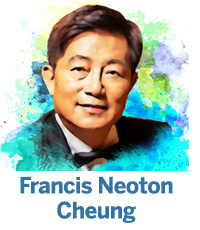
The author is chairman of Doctoral Exchange, a Hong Kong-based think tank.
The views do not necessarily reflect those of China Daily.
