

Survey shows support for cooperation on health research, reducing poverty
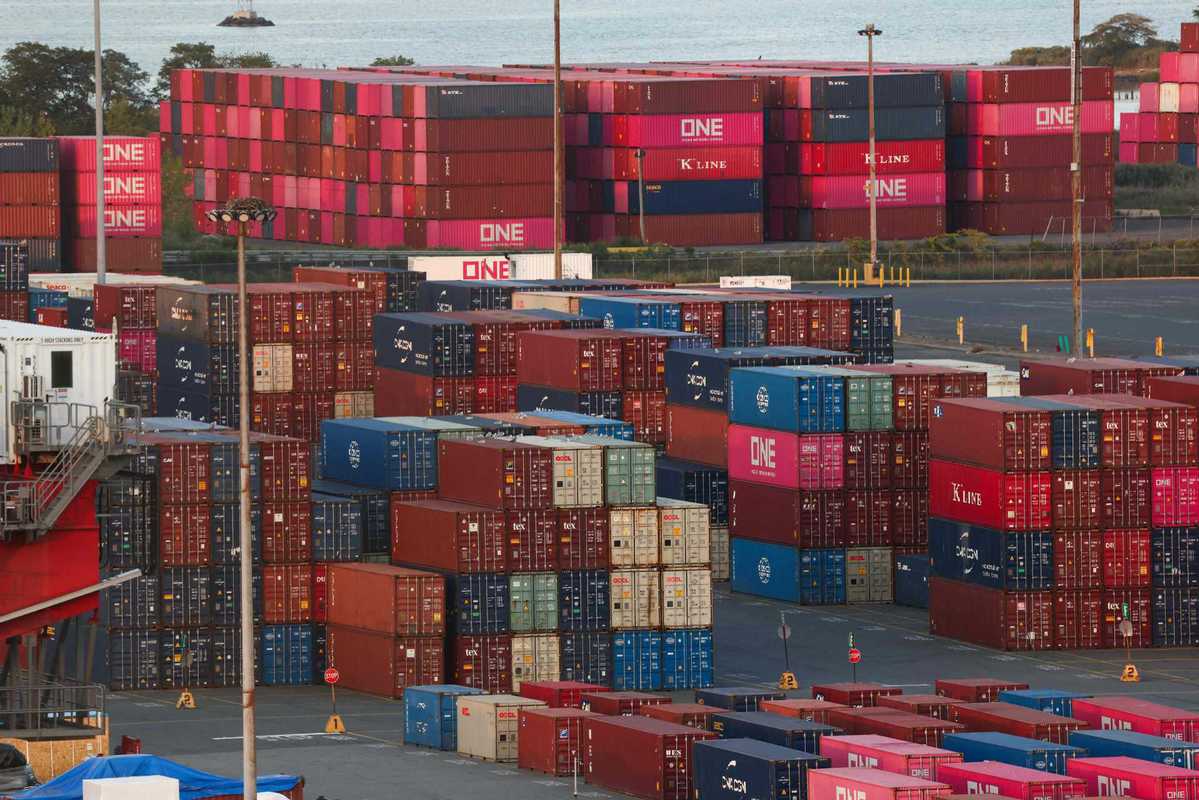
Nearly half of surveyed US people say the current tariffs on Chinese goods are too high, and even though many remain divided over how much the United States should trade with China, they still support working with the world's second-largest economy on a range of practical issues, according to a new Council on Foreign Relations and Morning Consult survey.
The survey results, published on Thursday, gained added weight after the US Supreme Court ruled 6-3 on Friday that the International Emergency Economic Powers Act, or IEEPA, does not authorize the president to impose sweeping tariffs.
Following the ruling, US President Donald Trump invoked Section 122 of the Trade Act of 1974 to impose a temporary 10 percent, later increased to 15 percent, universal tariff for up to 150 days.
READ MORE: China calls on US to revoke tariffs, refrain from imposing new ones
Fresh tariffs of 10 percent came into effect on Tuesday, according to the US Customs and Border Protection. The Financial Times quoted a White House official as saying the increase up to 15 percent would come later.
The survey, conducted from Jan 7 to 8 among a nationally representative sample of 2,203 adults, found that 49 percent of surveyed US adults believe current tariffs on China are too high, while only 6 percent consider them too low.
At their peak in April 2025, tariffs on China hit a record 135 percent, but they have since come down to an effective rate of 24 percent as of January, noted the survey report, citing the Yale Budget Lab data.
Other sources, such as the Center for Strategic and International Studies, noted that the IEEPA tariffs against China currently stand at 20 percent for most products, but the US maintains several other sectoral tariffs that, in combination with the IEEPA tariffs, are estimated to stand at 47.5 percent.
The polling results reveal that political affiliations significantly influence public sentiment toward these tariffs, with 67 percent of Democrats believing that tariffs imposed on China are "too high", while 46 percent of Republicans perceive the current rates as "about right".
Furthermore, the CFR survey indicates that Trump's newly proposed universal 15 percent tariffs are likely to clash with a public that already sees tariff hikes as a cost-of-living concern.
In the poll, the public expressed considerable anxiety about the potential consequences of further escalation.
Three-fifths of respondents agree that even a modest 10 percent increase in tariffs on China would hurt consumers, the middle class, small businesses, and their own household finances and the broader economy.
The survey results also show that the US people are more consistent in supporting cooperation with China on specific problems such as reducing global poverty, strengthening and modernizing manufacturing for mutual economic growth, and collaborating on global health research.
Tech innovation
When asked about "joining forces to drive technological innovation that benefits both countries and the world", and about "expanding educational exchanges and partnerships to foster greater understanding and opportunity",65 percent of the respondents expressed their strong or somewhat support for these efforts.
"This could be because Americans consistently favor easing tensions with China," Inu Manak, CFR's senior fellow for international trade, and Allison J. Smith, associate director of geoeconomics, wrote about the driving force for Sino-US cooperation in the survey report.
They wrote that a national tracking poll by Morning Consult shows that 75 percent of respondents would like the US and China to reduce military and economic tensions.
ALSO READ: Trump’s 10% global levy takes effect as US rebuilds tariff wall
The analysis indicates that age is a primary driver of how China is perceived, as younger adults were less inclined to view China as an enemy or rival than older US people.
According to the poll, 38 percent of individuals aged between 18 and 34, and 28 percent of those aged 35-44, described China as a friend or ally, compared with 23 percent of those aged 45-64 and 11 percent of those aged 65 and above.
This generational gap extends to national security, as 56 percent of young adults are comfortable importing essential national security products from China, a sharp contrast to the 22 percent of seniors who feel the same.
Contact the writers at huanxinzhao@chinadailyusa.com
