

My latest book, The Economics and Psychology of Happiness, is subtitled “The LIFE framework and Sustainable Development”. LIFE stands for Love, Insight, Fortitude, and Engagement. It applies not only to individuals but also to corporates and countries. With ample Love, Insight, Fortitude, and Engagement, all can realize their full potential.
 For a country, Love is caring for the well-being of all countrymen without distinction. That requires the leadership putting themselves in the shoes of other countrymen. China has done exactly this. Witness how the Communist Party of China led the fight to eradicate extreme poverty. China launched its comprehensive battle against poverty in November 2015. By the end of 2020, through five years of hard work, China had succeeded in eliminating extreme poverty. China committed to “Two Assurances and Three Guarantees”: No one would suffer from inadequate food and clothing; everyone will have access to education, basic medical services, and safe housing with drinking water and electricity. To ensure that those who emerge from poverty will not fall back into the grip of poverty, China spared no effort to build the necessary infrastructure for self-reliance. Even the most remote villages now have clean water and electric power. With transportation greatly improved over the years through extensive roads and railways that are complemented by bridges and tunnels, plus greatly improved communication and broadband coverage, rural businesses and consumers can benefit from e-commerce.
Insight tells us how to love. The Chinese leadership sees the big picture and always has long-term thinking. Insight also means an ability to take advantage of all factors that one can capitalize on, and an ability to learn from mistakes. This is reflected in China’s Five-Year Plans. Blessed with Insight, China has managed to bring water from the water-rich south to the arid north, and to bring electric power from low-cost generation locations in the west to the high demand areas in the east and the south. With huge advances in power generation, power transmission, and power storage capability, China is now generating more than twice as much electric power as the United States. By 2025, the country had already built 46 ultra-high-voltage transmission lines. With the rising importance of artificial intelligence, the ability for the western part of the country to compute for the coastal provinces has assumed particularly strategic significance.
Engagement is truthfully “act according to what you know”, or “zhi xing he yi”, as taught by Wang Yangming of the Ming Dynasty (1368–1644). Through thick and thin, living out Love and Insight, Fortitude will build up, and we all will achieve peace, prosperity, and harmony. Let’s remember the 2008 Beijing Olympics slogan: One World, One Dream
China understands the importance of sustainability and is committed to green energy. In 2025, the combined installed capacity of wind and solar power surpassed that of thermal power for the first time in history. Installed capacity of new energy storage exceeded 100 million kilowatts, accounting for more than 40 percent of the global total. China’s record shows that once the country is committed to a goal, it will strive to achieve it, and this will not change with the leadership. This is why China is a trustworthy partner.
With a long view and able to see the big picture, China’s military strength, particularly nuclear weapons, is for deterrence. Peace requires balance of military power. Human history has taught the world that a country without the ability to defend itself is likely to invite trouble: Militarily strong countries always impose their will on weaker countries and may even colonize them.
Insight also means that one must not be beholden to dogmas or ideological hangups. China today is very much market-oriented and has even launched a carbon-trading market. Although China is a socialist country, its Property Law, which took effect on National Day in 2007, explicitly protects property rights. Time and again, China has also declared that it is committed to opening-up, market reforms, and multilateralism.
Insight requires a good understanding of human weaknesses. Exactly because all human beings are subject to human weaknesses, allowing anyone to assume the country’s leadership by the whim of “the popular vote” is very dangerous. Politicians and constituents tend to be short-sighted and are liable to pursue their own interests even at the expense of the country’s best interests. Even Western scholars, from Jane Mansbridge to Jason Brennan, have raised concerns about the dangers of adversarial politics. I have repeatedly argued that an effective public governance mechanism trumps the ballot box. The ballot box, at best, is remedial. Good governance is preventive. In recent years China improved its governance significantly.
Fortitude or resilience is driven by Love and Insight. With a strong love for oneself and for others and wisdom, which have been reflected in China’s culture since ancient times, China has overcome difficulty after difficulty. The amazing resilience of Huawei offers a classic example of Fortitude. China’s leadership has benefited from the enlightened teachings of Deng Xiaoping, who reminded us to espouse humility: Tread carefully yet take up the courage to learn from others and from setbacks and mistakes, like “groping the stones under the water while crossing a river”.
Engagement is truthfully “act according to what you know”, or “zhi xing he yi”, as taught by Wang Yangming of the Ming Dynasty (1368–1644). Through thick and thin, living out Love and Insight, Fortitude will build up, and we all will achieve peace, prosperity, and harmony. Let’s remember the 2008 Beijing Olympics slogan: One World, One Dream.
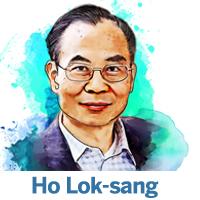
The author is an honorary research fellow at the Pan Sutong Shanghai-Hong Kong Economic Policy Research Institute, Lingnan University, and an adjunct professor at the Academy for Applied Policy Studies and Education Futures, the Education University of Hong Kong.
The views do not necessarily reflect those of China Daily.
