

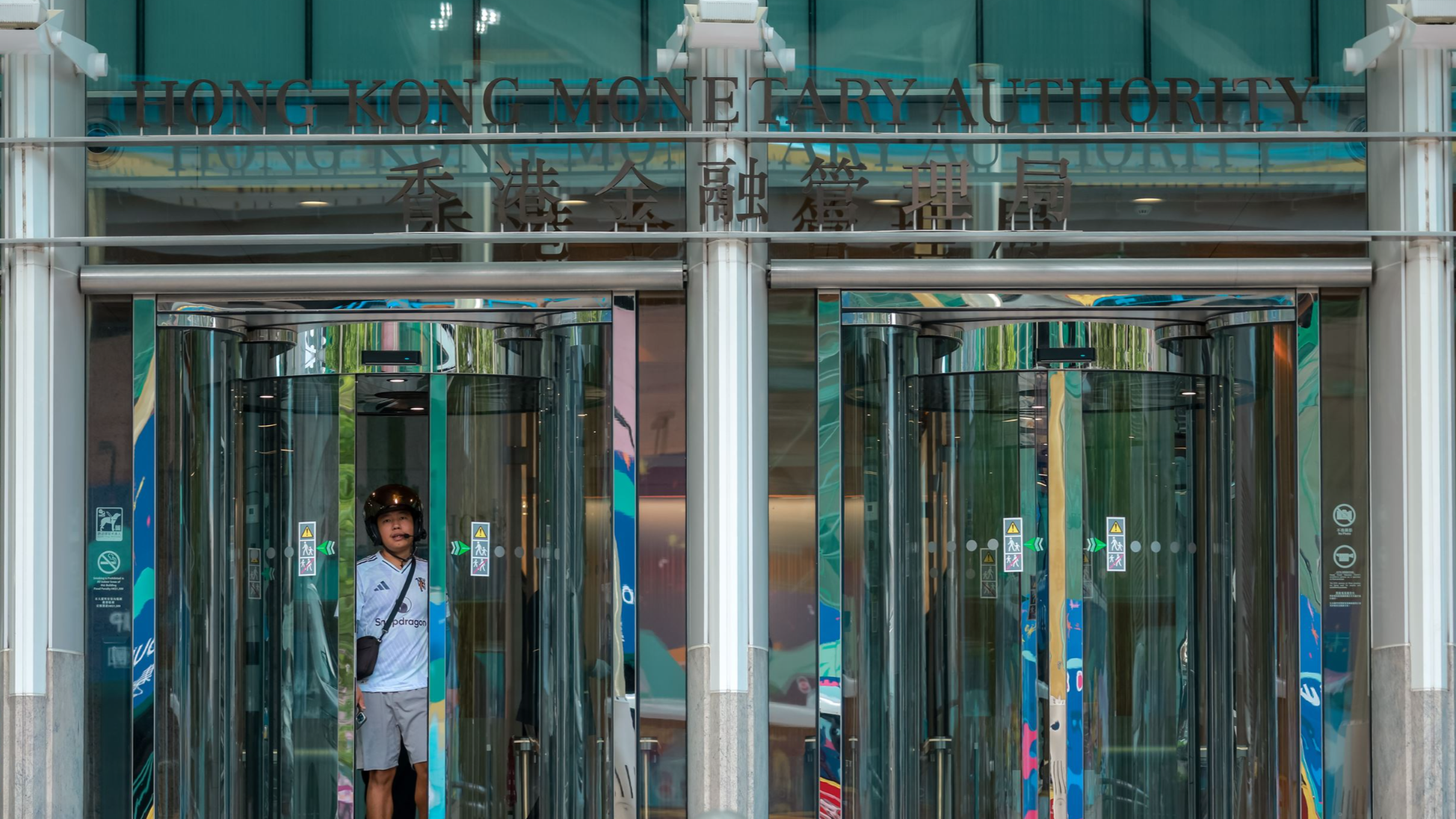
The Hong Kong Monetary Authority announced on Tuesday the launch of four flagship projects to encourage Hong Kong banks to adopt frontier financial technologies, further cementing a smart financial services ecosystem and optimizing capital flows in the special administrative region.
The projects, under the HKMA’s fintech promotion blueprint, include encouraging banks to adopt quantum computing; enhancing data management capabilities of banks; establishing a new, standardized, and industry-led fintech cybersecurity baseline for fintech solution providers; and training competent general fintech users.
The HKMA will adopt the three core pillar strategies of technological advancement, ecosystem collaboration, and talent development to propel frontier fintech adoption in the city’s banking industry.
The blueprint is part of the Fintech 2030 strategy unveiled last year, which focuses on more sophisticated applications of artificial intelligence (AI) and distributed ledger technologies (DLT), enabled by the infrastructural support of high-performance computing, data security and cyber-resilience. The goal is to strengthen the banking sector’s ability to better manage risks associated with advanced technologies.
“By encouraging banks to advance their adoption of frontier financial technologies, it can help cement a smart financial service ecosystem and optimize capital flows. Banks have to design, plan and make the correspondent business model changes and rationalize the flow of their business operations,” HKMA Deputy Chief Executive Arthur Yuen Kwok-heng said at the technical meeting on Tuesday.
Though the investment in frontier financial technologies will not be a small amount for banks for small and medium-sized banks, Yuen said that the investment could equalize the threshold for large as well as small and medium-sized banks in the race to adopt frontier financial technologies in their business operations.
ALSO READ: Hong Kong to issue first batch of stablecoin licenses in March
The HKMA also will develop a Quantum Preparedness Index to assess the readiness of the banking sector in applying quantum technologies so that it can leverage quantum banking to enable novel banking services. The HKMA will also implement a new risk data strategy to upgrade banks’ risk data management so that banks can analyze their structured and unstructured data to facilitate intelligent and data-driven risk management.
The banking-industry regulator will establish a standardized, industry-led fintech cybersecurity baseline to help fintech companies practically embed cybersecurity requirements into their end-to-end innovation cycles. It will also work with the industry to provide practical guidance to enhance the skills of banking practitioners in their roles as general fintech users.
“While it is not a regulatory requirement, the banking industry is expected to follow the fintech cybersecurity baseline as it will be a good practice guideline. The aim of establishing the guideline is to balance innovation and compliance and provide a consistent standard for the industry and service providers,” HKMA Executive Director (Banking Supervision) Carmen Chu said.
Alvin Li, HKMA’s head of banking supervision, said when utilizing frontier financial technologies, banks can satisfy customers’ service demand needs. For example, banks can apply the quantum computing technology into tokenized financial products, and can strengthen the accuracy of the data platform when delivering financial products.
Yuen said that when banks can update the business data of small and medium-sized enterprises in Hong Kong, they can better assess the financial situation of SMEs and provide banks loans, thus facilitating smoother capital flows for SMEs.
