

Tokyo’s Ueno Zoo sees huge crowds amid farewell to Xiao Xiao and Lei Lei as they return to China
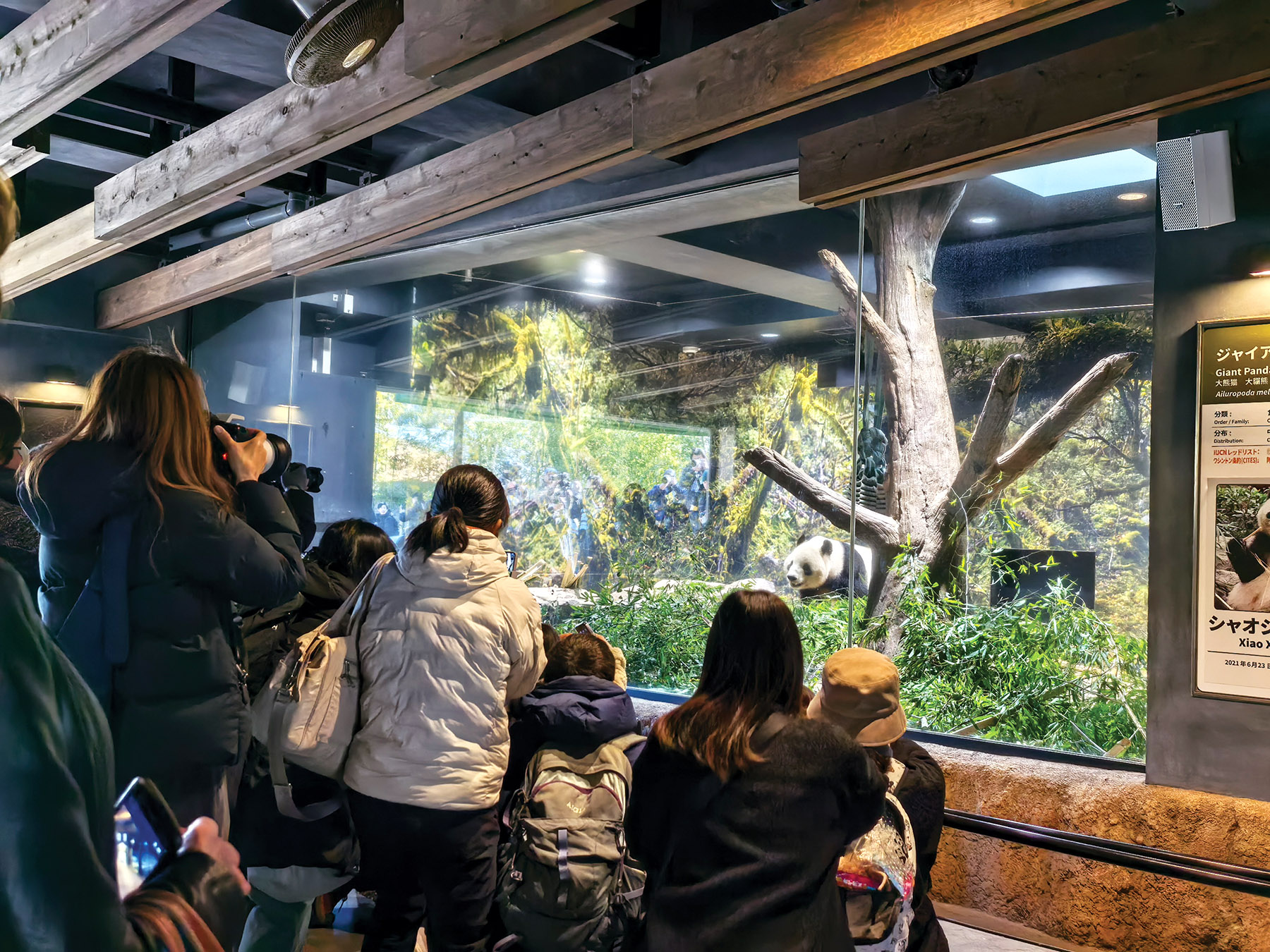
Emotions ran high at Ueno Zoological Gardens in Tokyo on Jan 27 as Japanese fans gathered in large numbers to bid a fond farewell to giant panda twins Xiao Xiao and Lei Lei as they left for China, marking the first time in more than 50 years that Japan is left without any of the beloved bears.
Visitors carrying panda-themed accessories queued outside the zoo from noon to catch a glimpse of the twins. Many said that they would be glad just to wave goodbye from a distance, with others expressing hope that someday they will be able to travel to China to see these beloved pandas again.
The panda twins left Ueno Zoo for Narita International Airport in the afternoon, and were put on a flight to China later in the night, according to media reports.
Xinhua News Agency reported that the pair arrived in Chengdu, Sichuan province, in the early hours of Jan 28, and were then sent to a facility where they will be quarantined.
Jan 25 marked the last day the pandas were open to the public. Despite not being able to see the animals in person, large numbers of fans gathered at Ueno Zoo that day to bid farewell to the twin pandas.
The Tokyo metropolitan government announced on Jan 19 that, in accordance with agreements between China and Japan, the two pandas would be returned to China on Jan 27. Their departure means Japan will enter a period without any giant pandas for the first time since 1972.
According to Japanese media reports, the panda cooperation program began in February 2011 with an initial 10-year term, which was later extended by five years.
Although the final return deadline was scheduled for Feb 20, 2026, the date was moved forward to allow time for quarantine and health examinations before repatriation.
Visitor numbers increased significantly since Dec 15 last year, when Ueno Zoo announced that the pandas would return to China. To ease crowding, the zoo introduced an online reservation system in late December, limiting daily admissions.
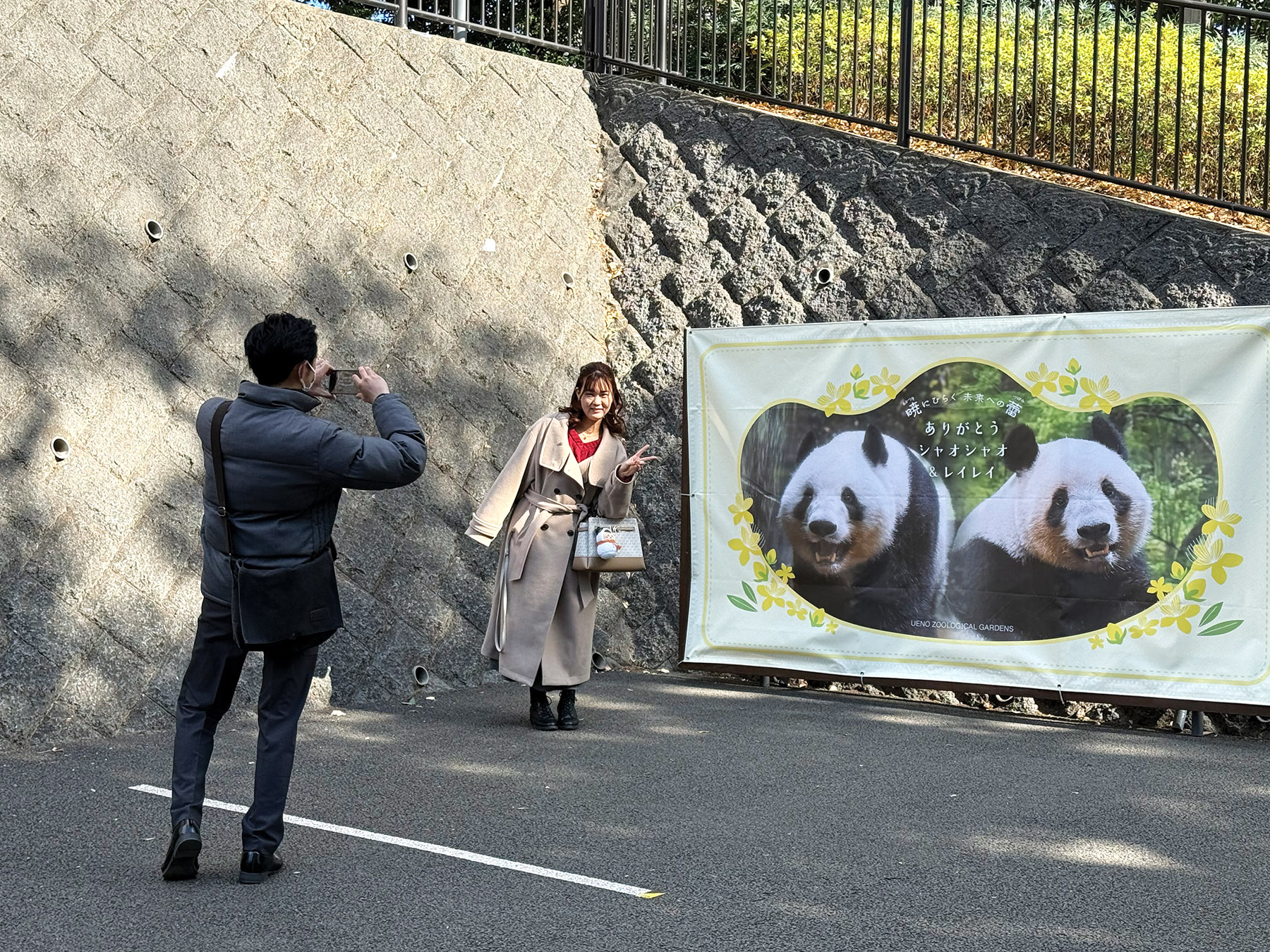
Japanese media reported that about 4,400 visitors were expected to enter the zoo on Jan 25 through a lottery system. From the morning, 400 visitors were admitted every 30 minutes, with an additional special quota of 100 people in the final 15 minutes. Applications surged, with lottery odds around 25-to-1.
Each visitor was allowed about one minute to view the pandas. Despite the short time, many raised their cameras to capture the moment.
At the zoo entrance, message boards filled with handwritten notes attracted visitors’ attention. Messages such as “Thank you for the time we spent together” and “Wishing you good health in China” reflected strong emotional attachment.
Several visitors said that even without entering the viewing area, being present for the farewell itself held special meaning.
Noriko Tezuka, a Tokyo resident, came to Ueno Zoo carrying a backpack filled with panda plush toys. Although she had won the lottery twice before, she failed to secure a spot on the final day.
“Even if I can’t see them, I want to spend their last days in Japan in the same time and space,” she said, adding that she hopes to visit China to see the pandas again.
A visitor from western Japan who won the lottery told China Daily while waiting in line that he also hopes to visit China in the future to see Xiao Xiao and Lei Lei, and other giant pandas, including their parents and their older sister Xiang Xiang.
Born in 2021, Xiao Xiao and Lei Lei are the offspring of giant pandas Bi Li and Xian Nu, who returned to China in September 2024. The twins’ older sister, Xiang Xiang, returned in February 2023.
Last June, four giant pandas at Adventure World in Wakayama Prefecture also returned to China, leaving the Ueno twins as Japan’s last remaining pandas.
Addressing a regular news briefing in Beijing on Jan 27, Chinese Foreign Ministry spokesman Guo Jiakun said that based on a relevant agreement between China and Japan, giant pandas Xiao Xiao and Lei Lei have embarked on their journey to China.
“We, as always, welcome Japanese friends to come visit giant pandas in China,” Guo added.
China’s panda loan program with Japan is widely seen as successful, having advanced cooperation in areas such as breeding technology, veterinary care, and public education. More than 30 giant pandas have either been brought from China or born in Japan, including the four raised at Adventure World, which were returned to China last June.
Doi Toshimitsu, president of the Japan Panda Protection Association and former director of Ueno Zoo, said that when the first two giant pandas arrived in Japan in 1972, they symbolized the normalization of diplomatic relations between China and Japan and sparked widespread public enthusiasm.
Over time, Toshimitsu said, their political symbolism has diminished, while their role as a symbol of friendship and cultural exchange has remained.
He also noted that China’s leading expertise in giant panda breeding and research has contributed to international cooperation on wildlife conservation, providing positive support for bilateral relations.
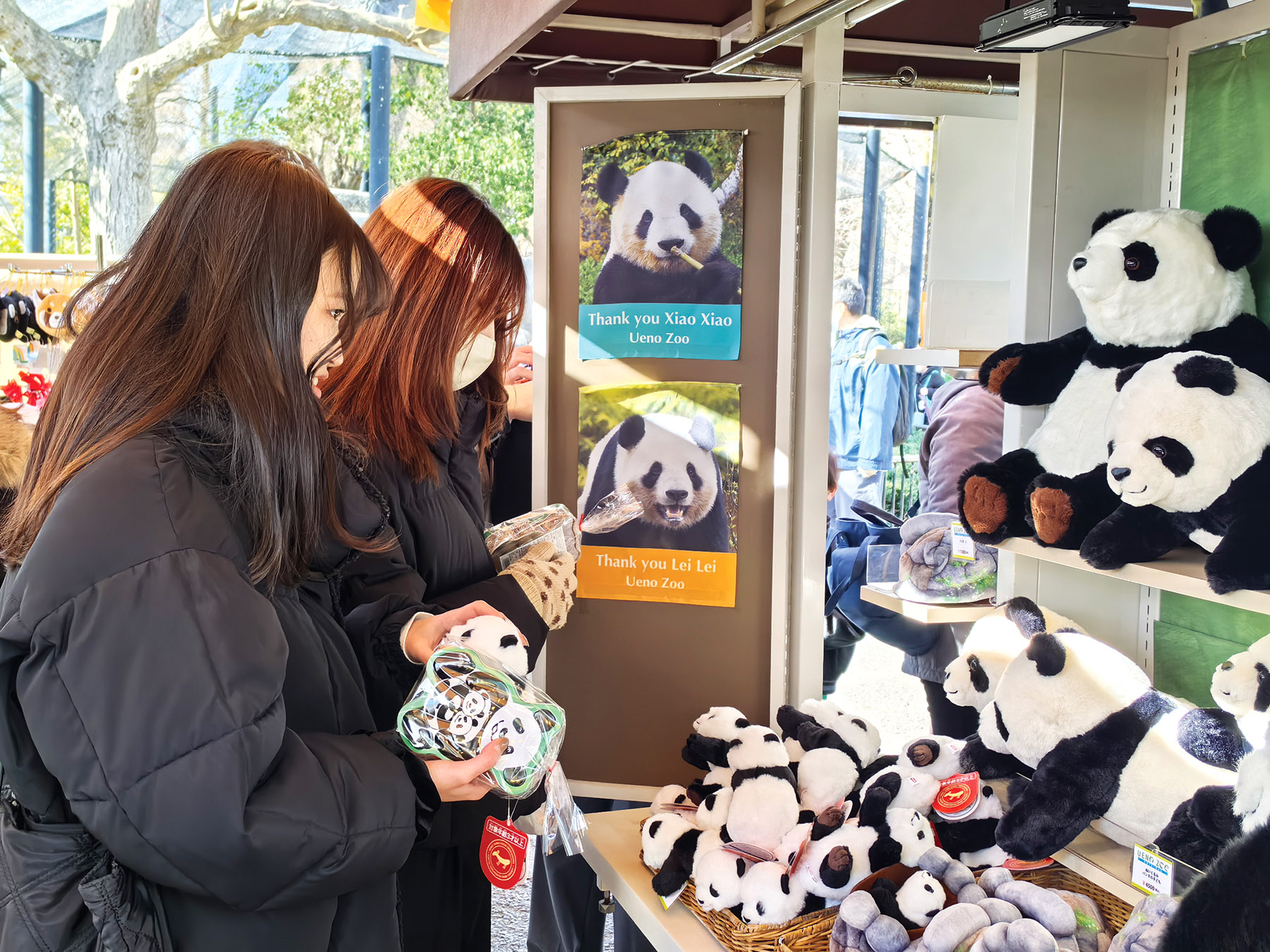
In the Ueno area, panda-themed elements are widespread, including snacks, cakes, plush toys, and
statues. Over the years, giant pandas have become closely tied to the zoo and the surrounding commercial districts.
Toshimitsu pointed out that as an animal with exceptionally high public visibility, giant pandas have played a significant role in boosting the attractiveness of zoos and generating spillover economic effects. These include the growth of panda-themed merchandise, food products, and cultural creative businesses, thereby contributing to the formation of a distinctive local commercial identity.
As Xiao Xiao and Lei Lei prepared to leave, nearby shopping streets and department stores launched panda-themed promotions, selling panda-shaped desserts and offering themed merchandise.
Miyamoto Katsuhiro, professor emeritus of economics at Kansai University, estimated that the absence of giant pandas from Ueno Zoo could lead to annual economic losses of at least 15.4 billion yen ($103 million), affecting nearby hotels, restaurants, cafes, and souvenir shops.
Since the first pair of giant pandas arrived in 1972, Ueno Zoo has housed 15 pandas. Each arrival or birth has drawn nationwide attention.
When Xiao Xiao and Lei Lei were born on June 23, 2021, celebrations extended beyond the zoo into the surrounding streets, becoming a shared memory for the local community.
Contact the writers at houjunjie@chinadaily.com.cn
