

At the dawn of 2026, a wave of AI-driven startups from the Chinese mainland — names like Biren Tech, Knowledge Atlas, GigaDevice, and MiniMax — burst onto the scene with debut initial public offerings that sent share prices soaring. By 2025, Hong Kong’s IPO tally had outpaced the combined listings of the three major mainland exchanges, making it the largest IPO market in the world. For a city once derided as the “ruins of a global financial center”, this was nothing short of a rebirth — Hong Kong was back at the center, and back with force.
 But finance is only half the story. The city has not merely surged with IPOs; it is teeming with people. Visitors from across the border poured into Kai Tak Sports Park to watch the electrifying performances of the K-pop group Blackpink. Days later, Hong Kong hosted the Asian Financial Forum and the inaugural Global Business Summit, commanding the attention of investors, policymakers, and entrepreneurs from around the world. In the span of a week, Hong Kong reminded us of its ability to fuse culture and commerce, spectacle and substance.
These moments matter. They reveal that Hong Kong’s enduring strength lies in its international reach. As it deepens ties with partner cities in the Guangdong-Hong Kong-Macao Greater Bay Area, the city must rise to its full potential under the 15th Five-Year Plan (2026-30) by strengthening its identity as Asia’s most internationalized city.
Hong Kong’s role is not simply to be a financial hub or research center in isolation but to act as China’s global city. Its mission is to translate high-tech aspirations into projects that are globally investable and collaborative, serving as a bridge between capital and innovation, local and global talent, and national priorities and international standards.
Launchpad for China’s global business expansion
Hong Kong distinguishes itself from Shenzhen not by scale, but by credibility. Its global financial role, common law system, international connectivity, and cultural openness make it the natural launchpad for the nation’s “go abroad” strategy. What sets Hong Kong apart is not just access, but a system rooted in common law and internationally recognized for contracts, arbitration, and intellectual property protection.
The numbers confirm this role. According to a 2025 survey by Invest Hong Kong and the Census and Statistics Department, 11,070 overseas and mainland firms were registered in the city — an 11 percent increase from 2024 — employing more than half a million people. Mainland companies accounted for 3,090 registrations, double the number of US and Japanese firms, each at 1,550.
For mainland firms, Hong Kong is the training ground where they learn to operate under global rules before venturing abroad. For companies from the United States, Japan, the United Kingdom, and Singapore, the logic is reversed: They use Hong Kong as a reliable gateway into the mainland’s vast market. In both directions, Hong Kong is no longer just a gateway — it is a reliable launchpad for business expansion.
Accelerator to nation’s innovation ambition
The mainland’s financial system remains constrained by capital controls and lower transparency, while the US dollar continues to dominate global reserves and trade. In this context, Hong Kong’s role is not simply to host IPOs — it must also serve as the financial bridgehead that connects mainland capital with international markets
Hong Kong’s strength in basic research and its vibrant innovation ecosystem are becoming powerful catalysts for the nation’s innovation drive. In 2025, the city ranked eighth globally in Clarivate’s Highly Cited Researchers list, highlighting the international impact of its academic community. Research and development investment has more than doubled over a decade, rising from HK$16.7 billion ($2.1 billion) in 2014 to HK$35.8 billion in 2024, while the number of R&D personnel grew 62 percent.
With five universities among the world’s top 100, Hong Kong anchors high‑quality research that feeds directly into innovation. The Northern Metropolis development should build on these strengths — not by replicating Shenzhen’s industrial base, but by cultivating knowledge‑intensive sectors. If Shenzhen is the “heart” of production, Hong Kong must be the “brain” of invention, creating an ecosystem where collaboration generates unprecedented opportunities.
A 2025 US analysis found that China has reached parity with the US in annual new-drug discoveries, tripling its discovery contributions over the past decade. Hong Kong should seize this momentum by focusing on talent‑driven fields — biomedicine, artificial intelligence, fintech, and advanced materials — where land is secondary to brainpower.
Equally important is Hong Kong’s ability to commercialize ideas. With leading scientists strengthening its universities and a startup ecosystem commercializing cutting‑edge technologies, Hong Kong combines intellectual capital with financial muscle. This unique blend positions the city not just as a participant, but as the accelerator that can translate China’s innovation ambition into globally credible, investable, and respected achievements.
Magnet for global talent
Deeper integration into the Greater Bay Area must rest on collaboration in research and innovation, where talent is the decisive factor. Hong Kong has the credibility and cosmopolitan appeal to draw scientists, entrepreneurs, and innovators from every continent. The city’s global competitiveness is well recognized, ranking third worldwide in the 2025 IMD World Competitiveness Yearbook and first in Asia in the IMD World Talent Ranking. However, in recent years, Hong Kong’s talent-attraction campaigns have leaned heavily on Chinese mainland talent, while the inflow of nonlocal students from overseas remains limited. Despite hosting five universities ranked among the world’s top 100 in the rankings of Quacquarelli Symonds and the Times Higher Education, Hong Kong enrolled only 1,365 nonlocal students outside the mainland and Macao in 2024. This imbalance underscores the need for greater effort to diversify the city’s talent pool.
Universities have already reached out to North America and Europe to recruit renowned scientists, but Hong Kong must broaden its horizons further. Attracting top talent should not be confined to a few regions — it should also extend to South Asia, the Middle East, Africa, and Latin America, where emerging research communities are producing breakthroughs in biomedicine, climate science, and digital innovation.
By cultivating a global mix of talent with diverse expertise, Hong Kong can reinforce its role as Asia’s most internationalized city and help strengthen China’s ambition to achieve high-tech self-reliance and global leadership.
China’s financial bridgehead
The mainland’s financial system remains constrained by capital controls and lower transparency, while the US dollar continues to dominate global reserves and trade. In this context, Hong Kong’s role is not simply to host IPOs — it must also serve as the financial bridgehead that connects mainland capital with international markets.
In 2025, Hong Kong reaffirmed its dominance as the world’s top IPO venue, raising $37.22 billion — well ahead of the Nasdaq Stock Market. It’s also home to more than 1,100 fintech firms and over 10 unicorns, supported by strategies such as Fintech 2025 and Fintech 2030. Crucially, Hong Kong hosts the largest pool of offshore renminbi liquidity, making it indispensable to the internationalization of the yuan.
The challenge now is not scale but confidence. Hong Kong must ensure smoother flows of capital, greater confidence in RMB assets, and wider acceptance of Chinese financial instruments abroad. In doing so, it helps the nation narrow the gap on US financial power — not by replicating Wall Street, but by offering an internationally accepted platform where Chinese financial innovation can meet global standards.
Under the 15th Five-Year Plan, Hong Kong’s mission is unmistakable: to serve as China’s launchpad for global business expansion, accelerator of innovation, magnet for global talent, and financial bridgehead. Its future will not be secured by imitating inland cities, but by embracing its unique role as China’s “go global” platform.
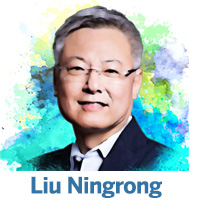
The author is a professor of globalization and business at the City University of Hong Kong.
The views do not necessarily reflect those of China Daily.
