

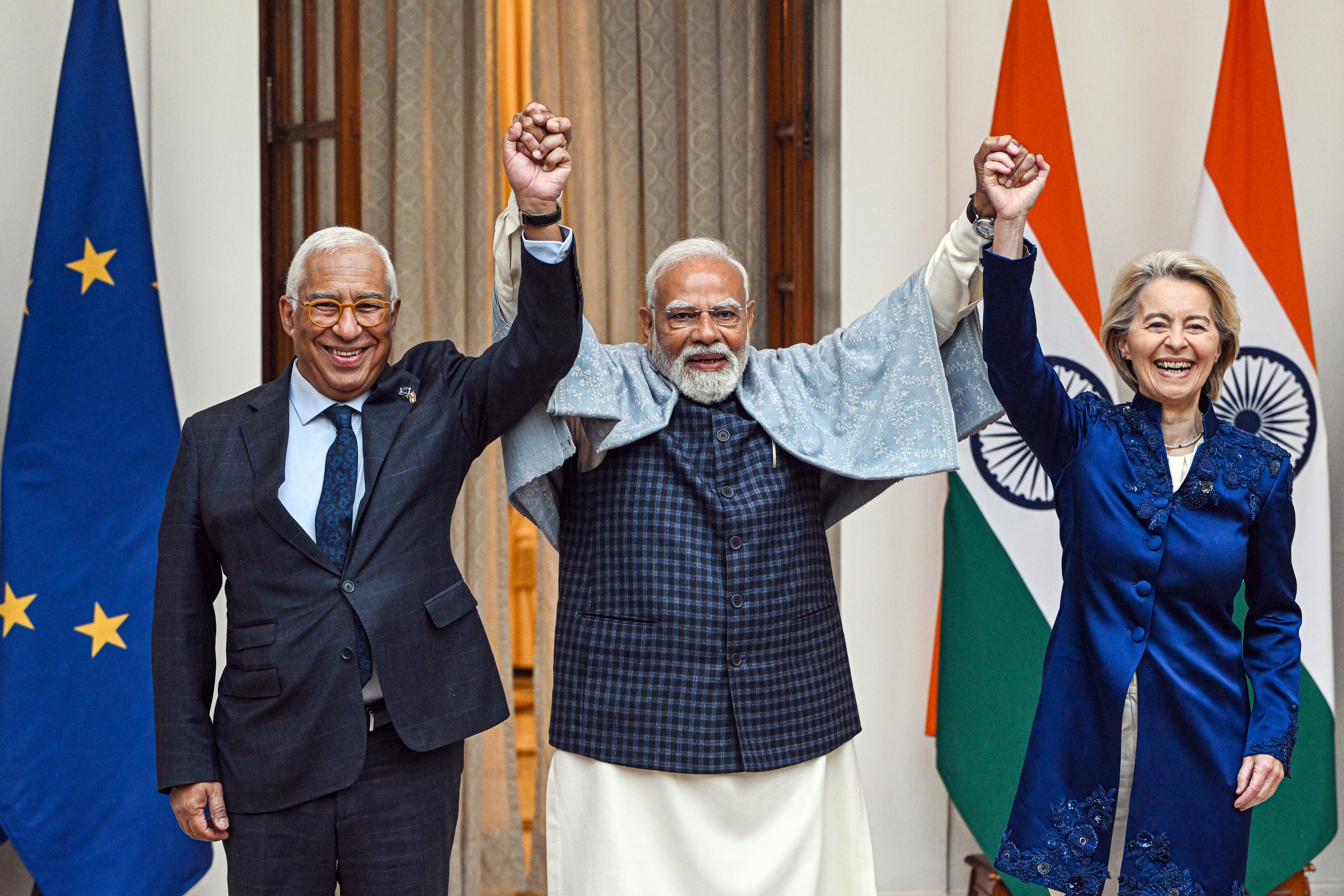
The European Union and India concluded a free trade agreement after nearly two decades of negotiations, as both sides seek to deepen economic ties and offset the impact of Washington’s tariff policies.
“We have concluded the mother of all deals,” European Commission President Ursula von der Leyen said on X on Tuesday. “We have created a free trade zone of two billion people, with both sides set to benefit.” Von der Leyen and European Council President Antonio Costa are in New Delhi to mark the moment.
Indian Prime Minister Narendra Modi, who announced the conclusion earlier in the day, said the agreement would strengthen India’s manufacturing and services sectors while boosting investor confidence in Asia’s third-largest economy.
ALSO READ: India, EU agree to wrap up free trade pact this year
The deal is expected to double EU goods exports to India by 2032 by eliminating or reducing tariffs on 96.6 percent of EU goods exports to India, according to a European Commission press release on Tuesday. These products range from automobiles and industrial goods to wine, chocolates and pasta.
Meanwhile, the EU will eliminate or reduce tariffs on 99.5 percent of goods imported from India over seven years, India’s Ministry of Commerce and Industry said.
The deal is the most ambitious trade agreement India has signed. New Delhi has agreed to allow up to 250,000 European-made vehicles to enter the country at preferential duty rates — a quota more than six times larger than in its recent deals, Bloomberg News reported. It will also cut tariffs on premium European wine to 20 percent from 150 percent in a phased manner, according to a European Commission document.
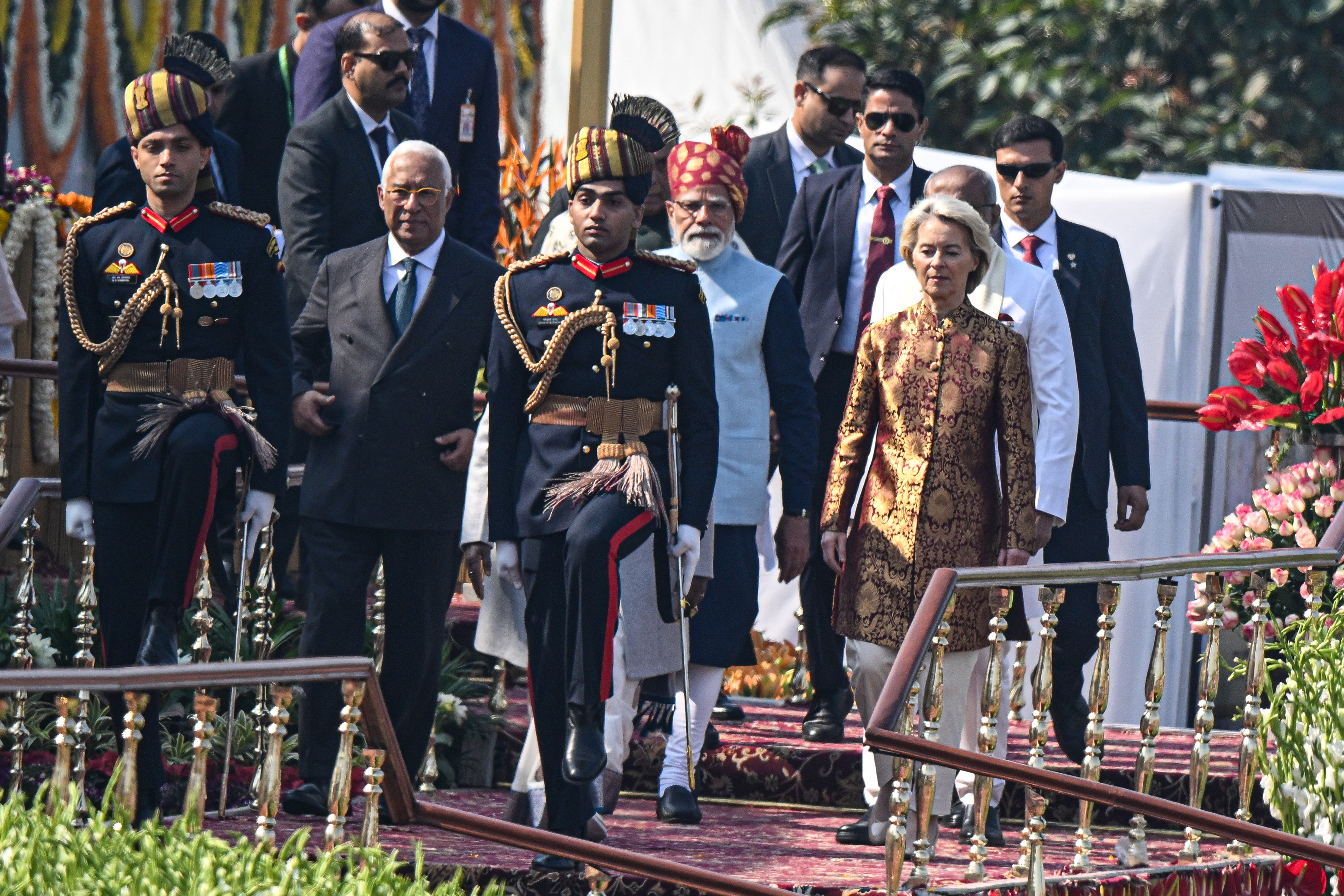
The deal would also give India a competitive edge in exporting labor-intensive goods hit hard by US President Donald Trump’s steep tariffs, including apparel, gems and jewelery and footwear. Brussels has also offered binding commitments on student mobility and post-study visas, along with concessions across 144 services sectors. India has kept dairy out of the deal.
The pact is expected to be formally signed after legal vetting, which will likely take around six months. The European Parliament will also have to ratify it.
The announcement comes weeks after India signed trade deals with New Zealand and Oman. Days earlier, the EU finally polished off a separate, long-gestating trade deal with the Mercosur bloc of South American countries. EU lawmakers have yet to ratify that deal, however.
ALSO READ: India says Europe trade group committed to $100b 15-year deal
Tuesday’s agreement marked Modi’s fourth trade deal since last May, following pacts with the UK, Oman and New Zealand.
Next up, Modi is seeking partnerships with the Mercosur bloc, Chile, Peru and the Gulf Cooperation Council, hoping to secure strategic resources and increase India’s global footprint.
Bilateral trade between the EU and India stood at $136.5 billion in India’s fiscal year through March 2025, with the EU making up more than 17 percent of India’s total exports, official data showed. Conversely, India is the EU’s ninth largest trading partner.
Security Partnership
The EU and India are also growing closer on the defense front, unveiling a new security partnership.
The agreement mostly offers a political signal — part of an EU effort to expand its alliances as Trump rattles the transatlantic bond. The EU has struck similar deals recently with countries like the UK and Canada.
The two sides vowed to tighten defense industry cooperation while officials also opened the door to more maritime security cooperation and possible joint naval exercises.
