

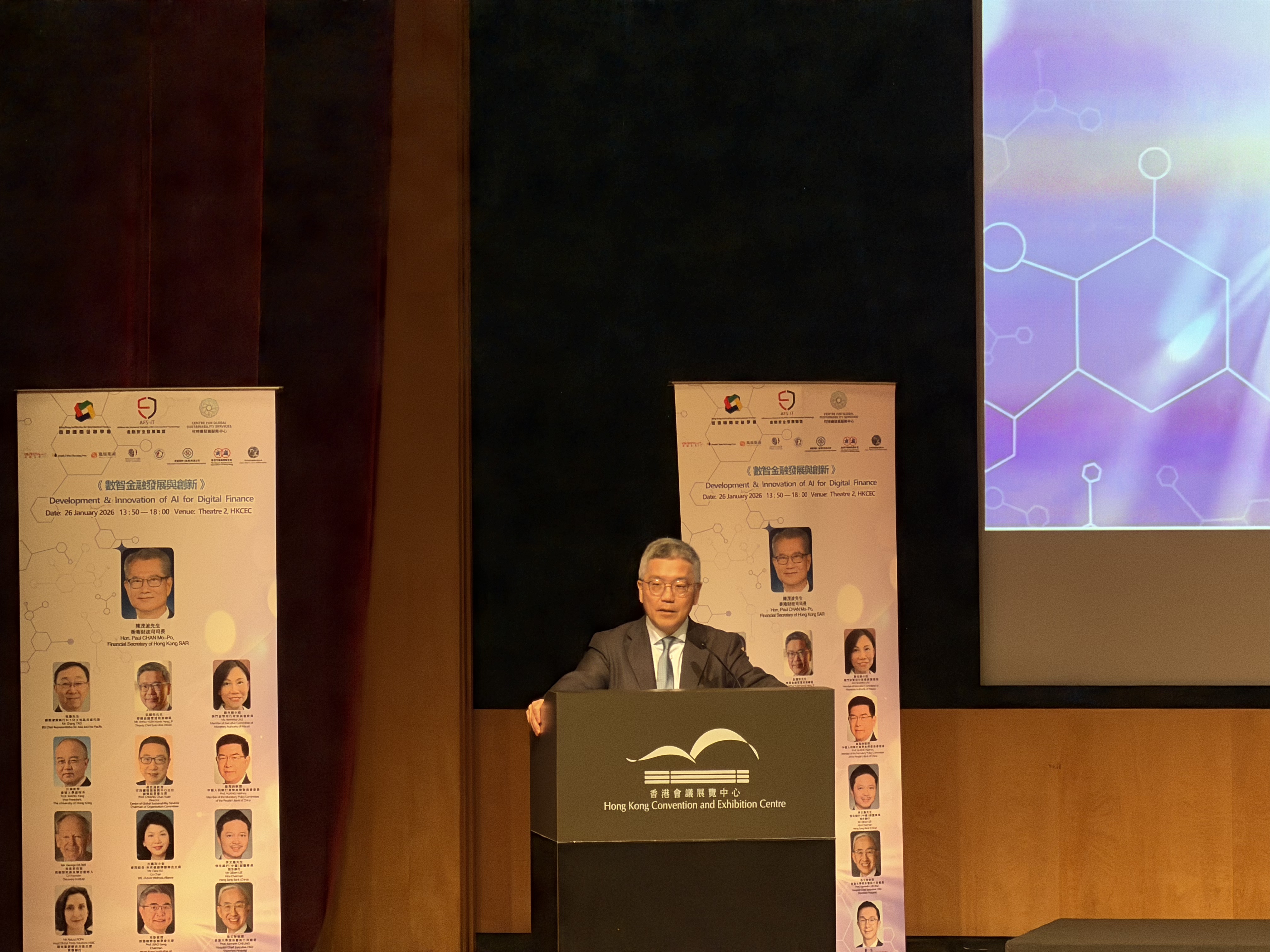
Hong Kong’s reliable and innovative multicurrency banking system is encouraging a growing number of Chinese mainland enterprises to choose the city as their regional headquarters when expanding into international markets, Arthur Yuen Kwok-hang, deputy chief executive of the Hong Kong Monetary Authority, said on Monday.
Speaking at a forum themed Development and Innovation of AI & Digital Finance, a parallel event of the Asian Financial Forum, Yuen said about 60 percent of the mainland’s outbound direct investment, which totals $150 billion to $200 billion annually, is destined for the Hong Kong Special Administrative Region, for use as a springboard to the rest of the world.
ALSO READ: Global business leader foresees strong green future for HK
“Our banking system is a truly international and multicurrency platform,” Yuen said, adding that foreign currency deposits and loans account for more than 50 percent of its total exposure. Daily payments made through the city’s real-time gross settlement system in US dollar and renminbi amounted to more than $100 billion and 3 trillion yuan ($431.4 billion), respectively.
Yuen said the banking platform is dependable and that banks operate under an internationally recognized common law system, which provides companies with legal certainty and safety for transactions. Moreover, Hong Kong’s capital adequacy ratio and liquidity coverage ratio, measuring banks’ capacity to withstand risks, are both well above international requirements.
READ MORE: More green ties urged with Gulf nations
Yuen said the banking sector’s edge in innovation has strengthened Hong Kong’s appeal as a preferred base for mainland companies pursuing overseas expansion. The HKMA is working on developing a blueprint to steer the industry from exploratory phase toward deeper deployment of advanced technologies, particularly AI and distributed ledger technologies, he added.
Invest Hong Kong, the city’s investment promotion agency, said on Monday it helped 560 overseas and mainland companies set up or expand their businesses in Hong Kong in 2025, up 4 percent from the previous year and the highest on record. It is estimated that the total investment in Hong Kong’s economy last year was HK$69.4 billion ($8.9 billion), a 2 percent increase compared to 2024.
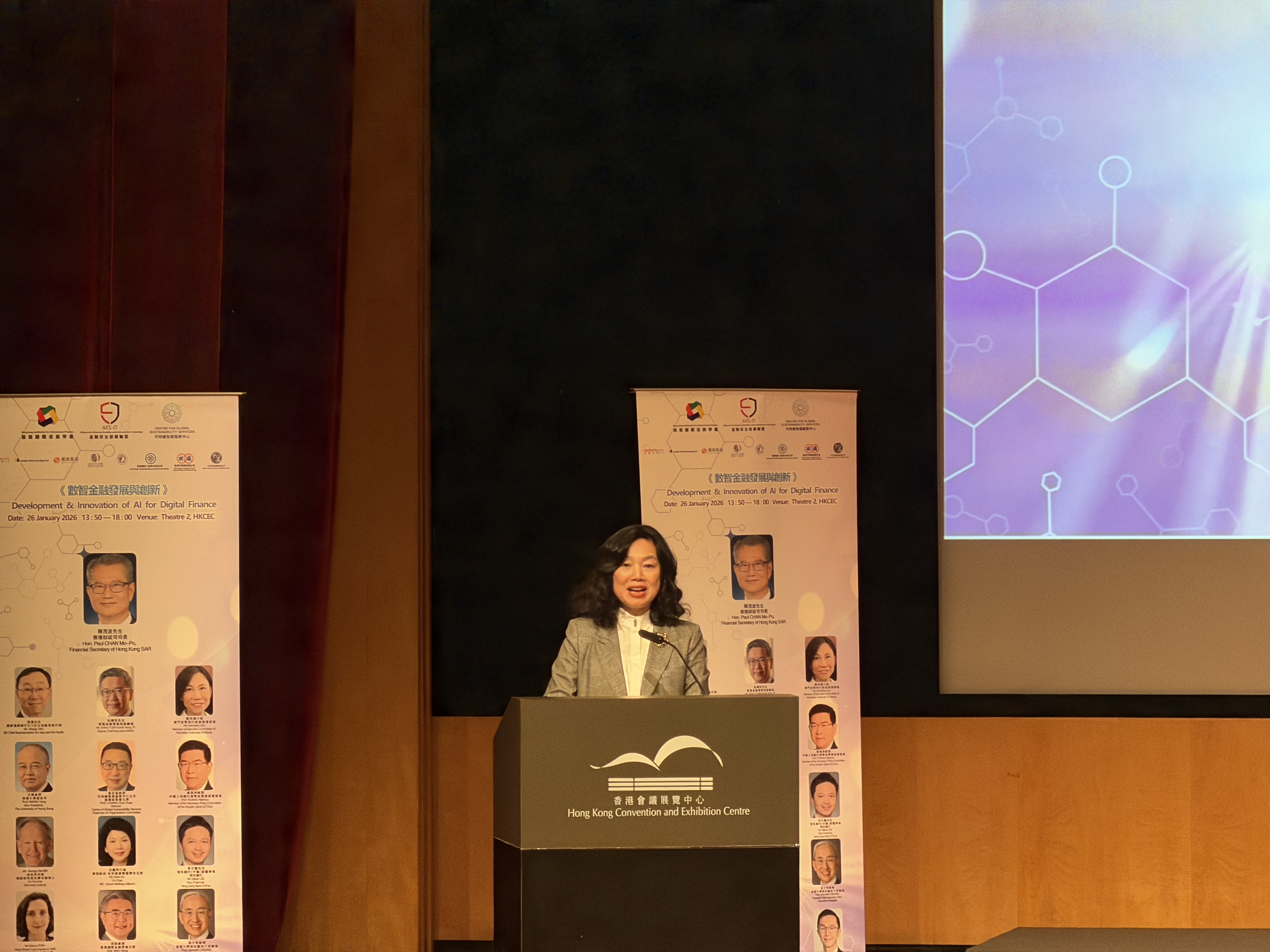
The forum also explored how innovation in AI and digital development can be balanced with financial stability. “In growing the liquidity and breadth of our capital markets, Hong Kong stands ready to harness the potential brought about by technology advancement and innovations,” said Permanent Secretary for Financial Services and the Treasury Salina Yan Mei-mei.
“Innovation drives the future, while a robust regulatory and security regime contributes to enduring progress.”
READ MORE: HK’s significance to rise amid global fragmentation
Hong Kong has been using the “same activity, same risks, same regulation” principle when promoting innovation in virtual assets, Yan said, with the aim of enabling the “healthy and responsible” development of the sector.
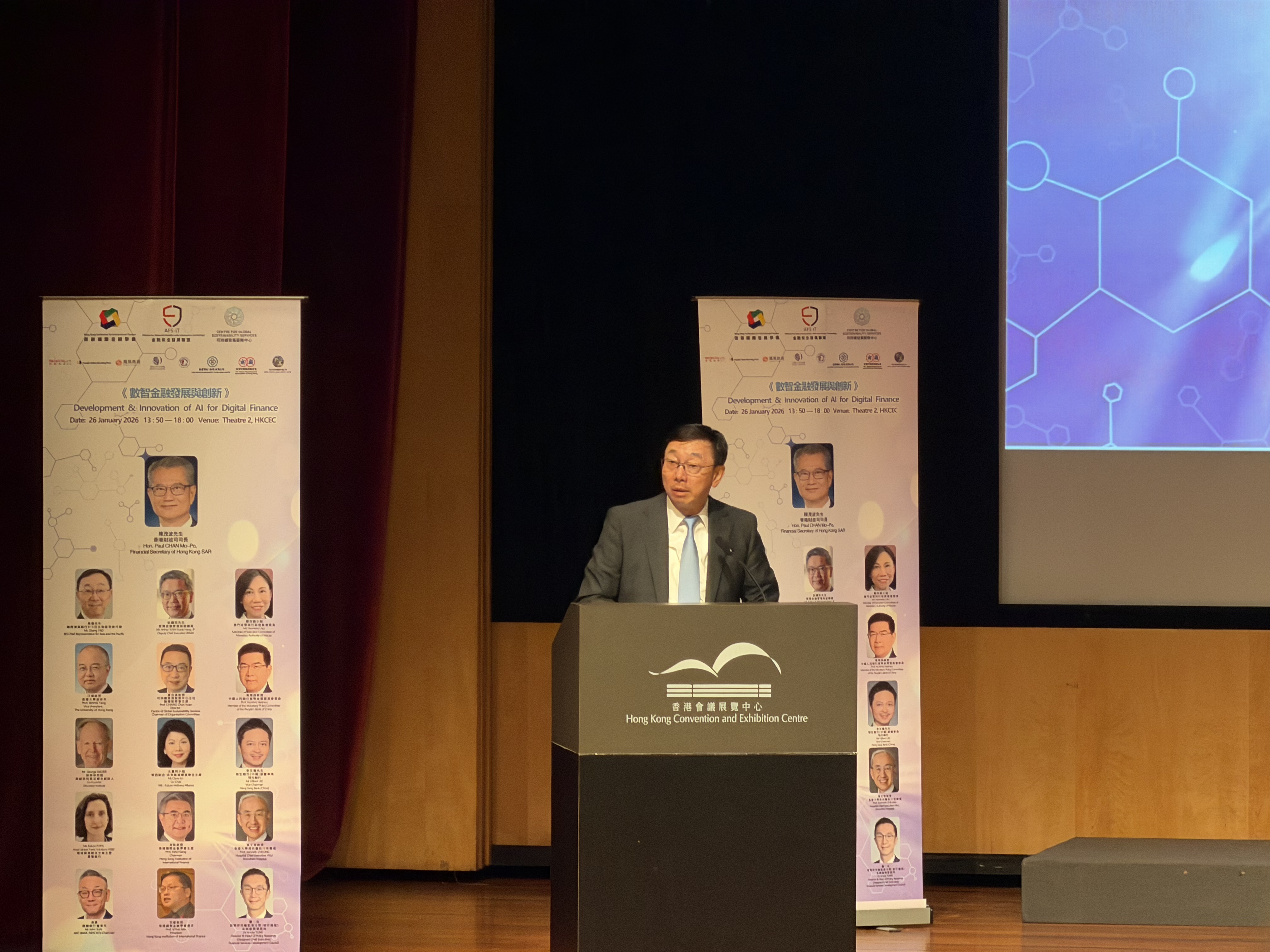
Zhang Tao, chief representative for Asia and the Pacific at the Bank for International Settlements, said AI is being adopted across the financial sector for a wide range of purposes. Financial institutions are using it to analyse large data, support credit underwriting, detect fraud, manage risks, and automate back-office processes.
These applications can lift efficiency, lower costs and support more integrated financial markets, Zhang said. They also reshape how risks emerge and spread. Faster trading and portfolio adjustments driven by AI, for instance, could amplify short-term price swings and pose challenges for regulators, he added.
Contact the writer at irisli@chinadailyhk.com
