

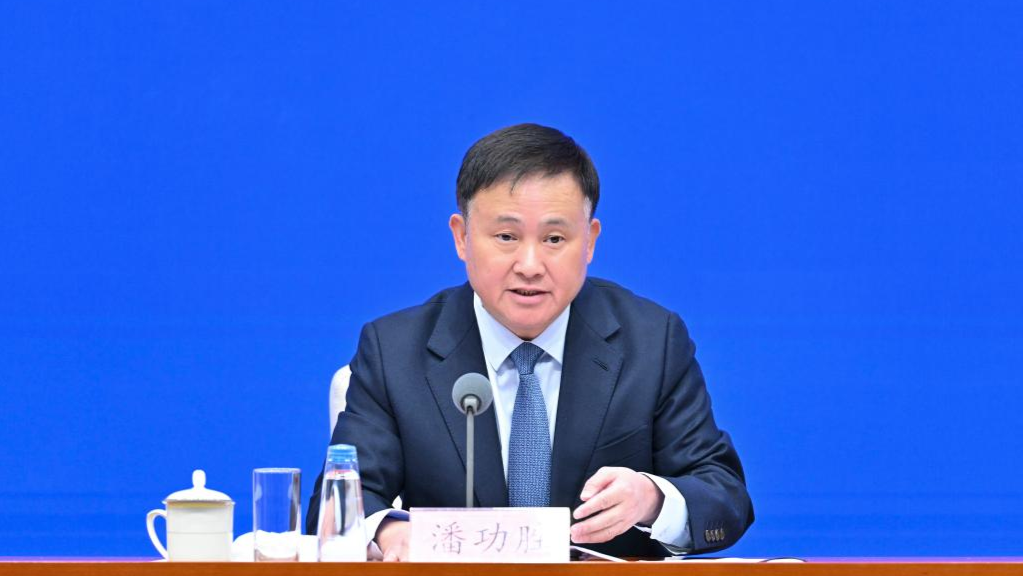
BEIJING - The People's Bank of China (PBOC) will continue to implement a moderately loose monetary policy in 2026, and will utilize tools such as reserve requirement ratio (RRR) cuts and interest rate reductions to ensure liquidity remains sufficient, according to central bank governor Pan Gongsheng.
Monetary policy will focus on promoting stable economic growth and reasonable price recovery, with the use of both incremental and existing policies to create a favorable monetary and financial environment for the high-quality development and stable operations of financial markets, Pan told Xinhua in an interview.
"There is still room for further RRR and interest rate cuts this year," he said, promising efforts to ensure the effective implementation and oversight of interest rate policies to keep overall financing costs at a low level.
READ MORE: China cuts key rate, reserve ratio to enhance macro regulation
In the interview, Pan noted that China's financial system has undergone significant changes in recent years, with the share of new loans in total social financing falling below 50 percent in 2025.
In response to the shifts, the PBOC plans to refine its monetary policy framework to adapt to the evolving financial landscape and improve the effectiveness of its financial regulations.
The PBOC will work to enhance the flexibility of its monetary policy tools and create an environment conducive to stable economic growth. This includes optimizing the policy framework by shifting from quantitative targets to more observation-based and expectation-driven indicators.
The central bank also plans to improve liquidity management by utilizing government bond transactions to maintain sufficient liquidity within the banking system. Efforts will also be made to streamline the transmission of central bank policy rates to market-based rates, ensuring a more efficient flow of monetary policy across financial markets.
Additionally, the PBOC will enhance its structural policy tools to guide financial institutions in optimizing loan allocations, particularly in sectors such as innovation and technological upgrading.
The exchange rate mechanism will also be refined to ensure that market forces play a decisive role in determining the yuan's value while maintaining flexibility and guarding against excessive fluctuations.
To further support China's evolving financial system, the PBOC is working to enhance macroprudential management, with a strong focus on strengthening risk monitoring and assessment systems.
Pan also underscored efforts to strengthen support for expanding domestic demand, promoting technological innovation, and assisting small and medium-sized enterprises (SMEs) in 2026.
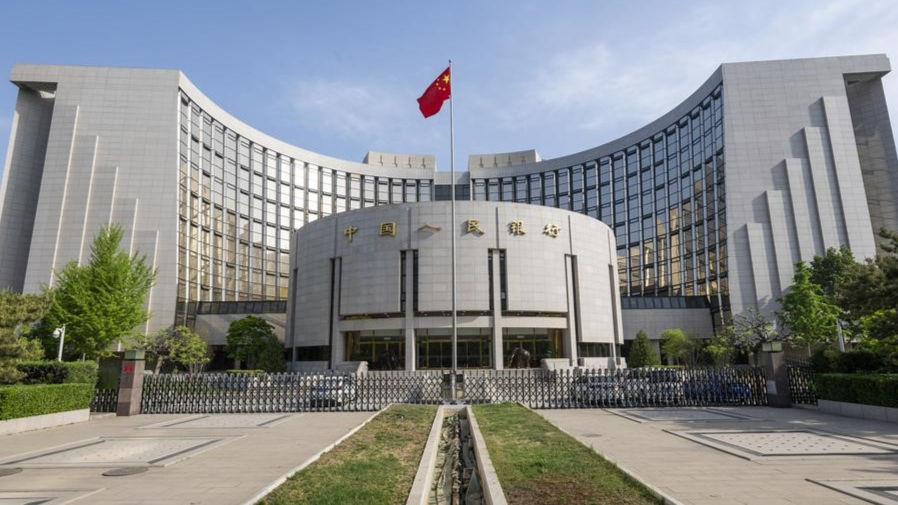
On the international front, the PBOC will continue to promote global financial governance reforms and international financial cooperation. The central bank will push for deeper financial sector openness, support the internationalization of the RMB, and strengthen Shanghai's financial hub and Hong Kong's position as an international financial center.
Additionally, the PBOC aims to enhance cross-border RMB payment systems and increase international cooperation in cross-border payments.
The central bank will also play an active role in global financial governance, engaging in multilateral and bilateral monetary and financial cooperation, Pan said.
READ MORE: China's first RRR cut for financial institutions in 2025 takes effect
China to conduct 900-billion-yuan MLF operation
The People's Bank of China announced on Thursday that it will conduct a 900-billion-yuan (about $128.54 billion), one-year medium-term lending facility (MLF) operation on Friday, aiming to maintain ample liquidity in the country's banking system.
The central bank said the MLF operation will be carried out via a fixed-quantity, interest-rate-bidding and multiple-price-bidding method.
The MLF was introduced in 2014 to help commercial and policy banks maintain liquidity by allowing them to borrow from the central bank using securities as collateral.
