

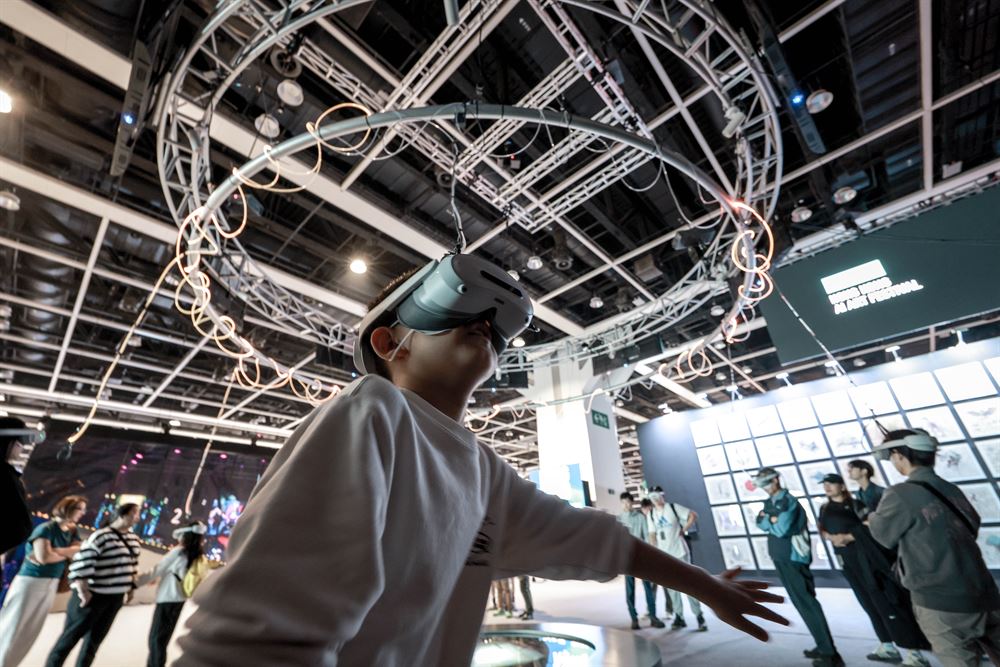
As artificial intelligence (AI) and other frontier technologies accelerate from research to commercial application, Hong Kong must seize the window of opportunities to translate its financial strengths into technological progress through deeper cross-sector collaboration, academics and business executives said on Thursday.
Speaking at an innovation and technology forum hosted by Caijing, a Beijing-based business magazine, with academic support from the Business School of the Hong Kong University of Science and Technology, Tim Cheng Kwang-ting, HKUST’s vice-president for research and development, said Hong Kong’s technology sector has expanded at an “explosive” pace over the past few years, and at this stage the city should adopt a more globally connected perspective to build an innovation ecosystem that is more commercially viable.
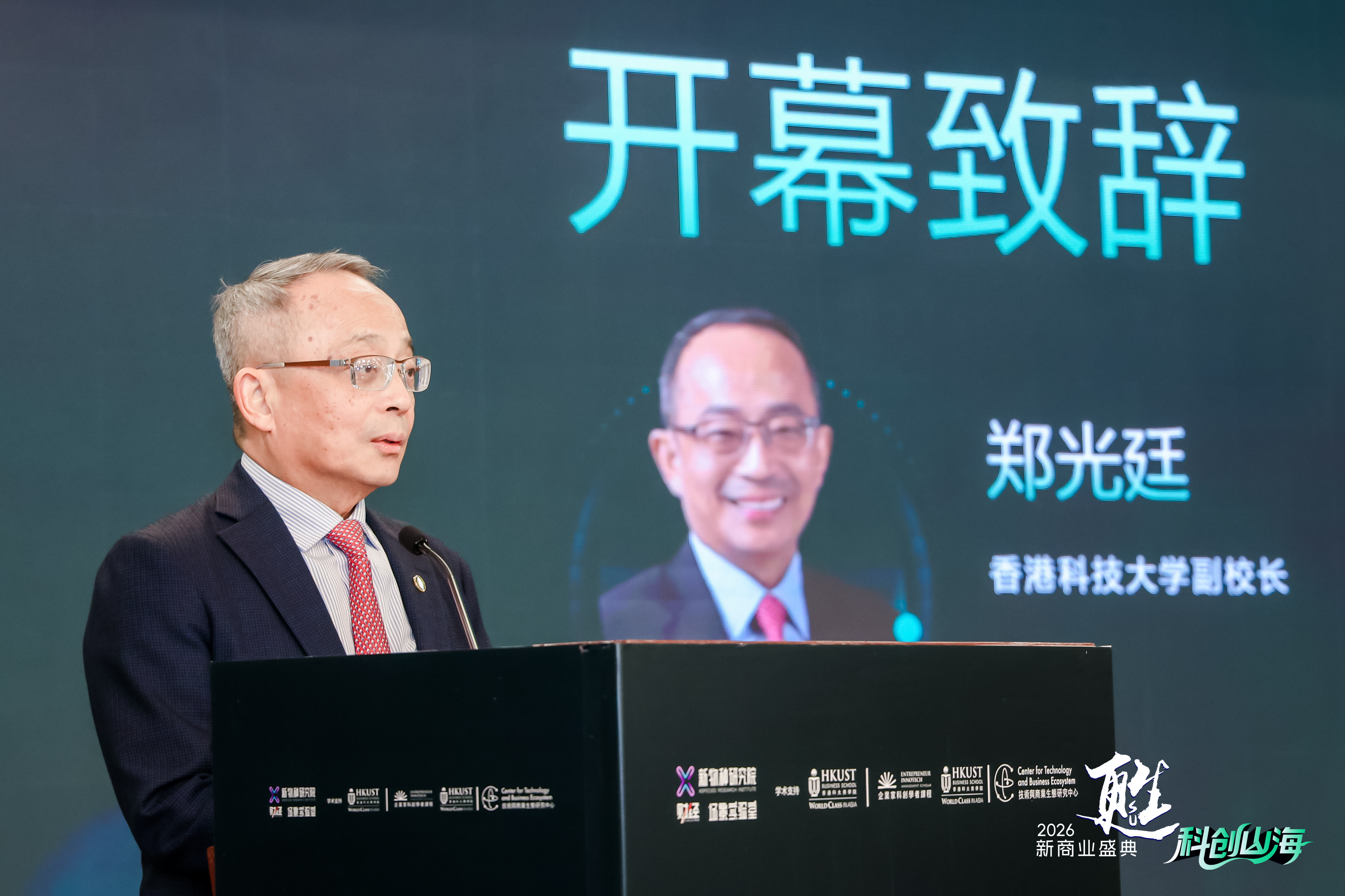
Cheng said technological advancement requires integration across disciplines, supply chains, sectors and geographies. For instance, he emphasized the importance of closer collaboration between industry, academia, research bodies, financial institutions and policymakers — with capital playing an indispensable role.
Liang Weibin, partner of Shanghai Healthcare Capital, a municipal-level investment fund, agreed, saying that the Hong Kong Special Administrative Region’s status as an international financial center gives it a unique advantage in developing cutting-edge technologies. High-quality projects, she added, tend to cluster where capital is deep and policy frameworks are open.
Taking AI as an example, industry leaders said competition over AI capabilities among major economies and companies is shifting from research breakthroughs to real-world deployment.
ALSO READ: HK builds up strength in I&T to foster future growth engine
Cui Li, chief development officer of ZTE, a Shenzhen-based telecommunications multinational company, said the performance gap among leading large language models is narrowing, driven by the rapid rise of open-source approaches as well as falling costs from algorithmic and engineering optimization. As a result, she said, model capability alone is no longer the decisive factor in AI competition.
“The real test lies in cost efficiency, application capability and the ability to build an ecosystem,” Cui said. While the “intellectual race” in AI continues, she added, the “practical contest” has already begun. At this stage, the priority for frontier technologies such as AI is deeper integration with industry, enabling companies to cut costs and boost efficiency, she noted.
Wu Junhua, vice-president of China’s AI and intelligent speech giant iFlytek, agreed, saying the AI sector is no longer competing over who has the largest parameter count or the “smartest” model, but over who can deliver tangible value.
READ MORE: Chan: HK to fortify finance, tech, trade functions
Academia and industry need to focus on embedding AI across every stage of corporate operations and making it part of infrastructure, Wu added. He cited iFlytek’s work with China National Petroleum Corporation as an example of AI translating into real economic value, where a model with hundreds of billions of parameters has been integrated into oil exploration, marketing and other parts of operations.
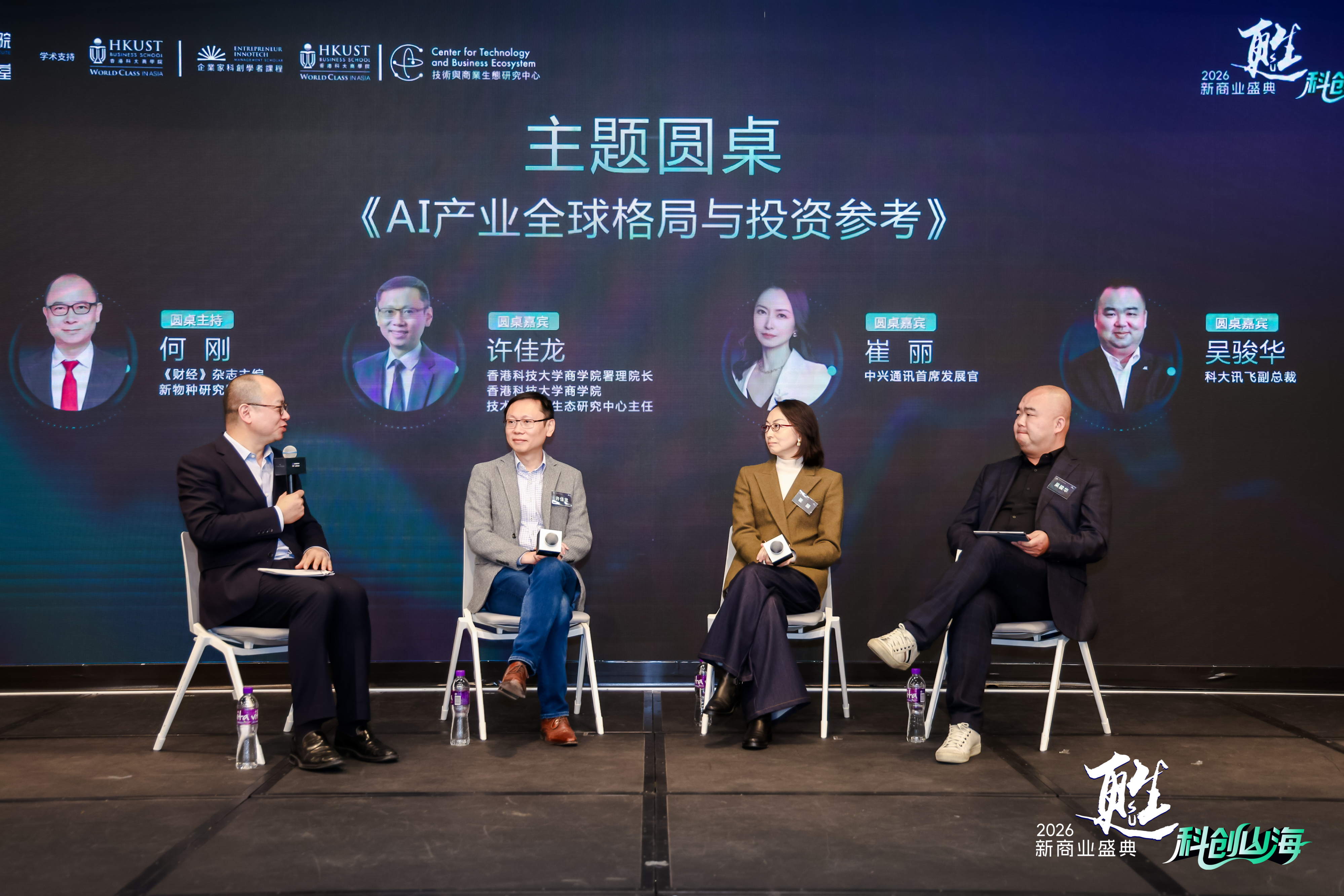
During the forum, HKUST’s Center for Technology and Business Ecosystem, in collaboration with Ernst & Young, released a report titled Measuring the Future: Constructing a Dual-Dimension Index of Technology Development Potential and Ecosystem Co-Benefit Capacity for Global Leading Tech Cities.
The report found that Hong Kong’s technological development has moved above the global average, but still faces challenges including a limited pool of high-growth technology companies and shortage of technology-focused venture capital and later-stage growth funds.
Contact the writer at irisli@chinadailyhk.com
