

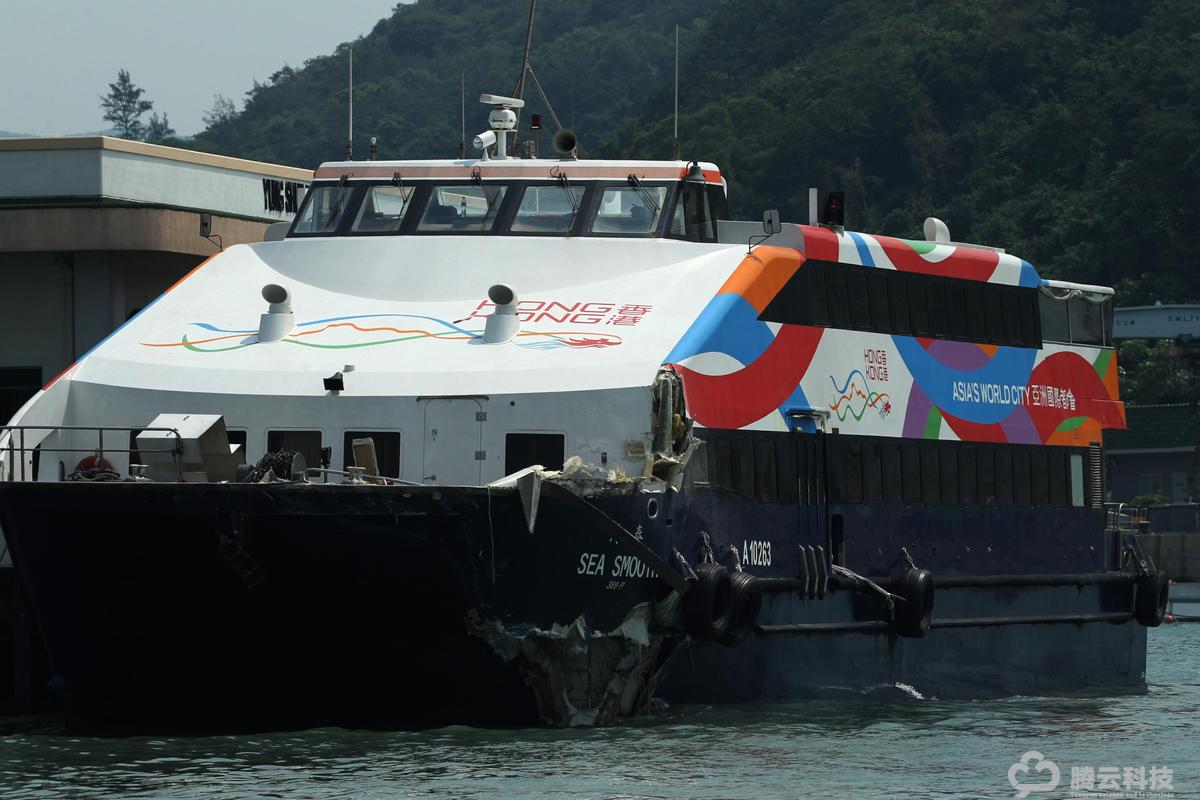
Hong Kong’s Coroner’s Court ruled on Wednesday that 39 people who died in one of the city’s worst sea collisions in decades were “unlawfully killed” after a 44-day inquest into the 2012 Lamma ferry disaster reached a verdict.
The victims, including eight children aged 10 and younger, died when the Lamma IV – a vessel chartered by Hong Kong Electric Company to take its employees to watch a National Day fireworks display in Victoria Harbour -- collided with the passenger sea ferry Sea Smooth – near Lamma Island on the evening of Oct 1, 2012.
The ferry was on a scheduled run from Hong Kong Island’s Central District to Yung Shue Wan on Lamma when the accident occurred.
The captains of both vessels had earlier been convicted in connection with the tragedy. Lai Sai-ming, who commanded the Sea Smooth at the time, was found guilty of manslaughter in 2015, while the captain of the Lamma IV, Chow Chi-wai, was acquitted of manslaughter, but convicted of the lesser offense of endangering the safety of others at sea.
ALSO READ: Hong Kong is taking a holistic approach to child protection
Lai was jailed for eight years, and Chow for nine months. Despite the convictions, their families had insisted that the Coroner’s Court conduct an open hearing on the case.

The inquest, which was held from May to September last year, was presided over by Coroner Monica Chow Wai-choo who sat without a jury, with 84 witnesses giving evidence.
According to Chow, the inquest honed in on six key issues, including whether Cheoy Lee Shipyards -- the shipbuilder of the Lamma IV -- had prior knowledge of the need for watertight doors on the ferry -- a crucial design element for post-collision survivability.
During the hearings, the court heard that the defect was the main cause of the ship sinking within two minutes of the collision. An expert witness also testified that if the watertight door had been in place, it would have offered at least an hour for more passengers to be rescued.
READ MORE: SAR government must put an end to the suffering
The Lamma IV, although having been regularly inspected by the authorities, had been kept in service for years before the tragedy, with its first license to sail granted in 1996.
Other structural flaws in both vessels that were believed to have worsened the situation, also came under scrutiny, such as the potentially faulty steel in the Sea Smooth’s hull and the low cabin walls on the Lamma IV.
The inquest also looked into whether potential overwork among the staff of the Sea Smooth was another factor that contributed to the crash, Chow said.
She said the hearing encountered evidential hurdles as a number of crucial witnesses did not give evidence, while many others who were present testified that their memories of the incident had likely become fragmented or unclear.
Contact the writer at wanqing@chinadailyhk.com
