

Sector surges in China at the start of 2026 amid winter-themed tours, sunny getaways
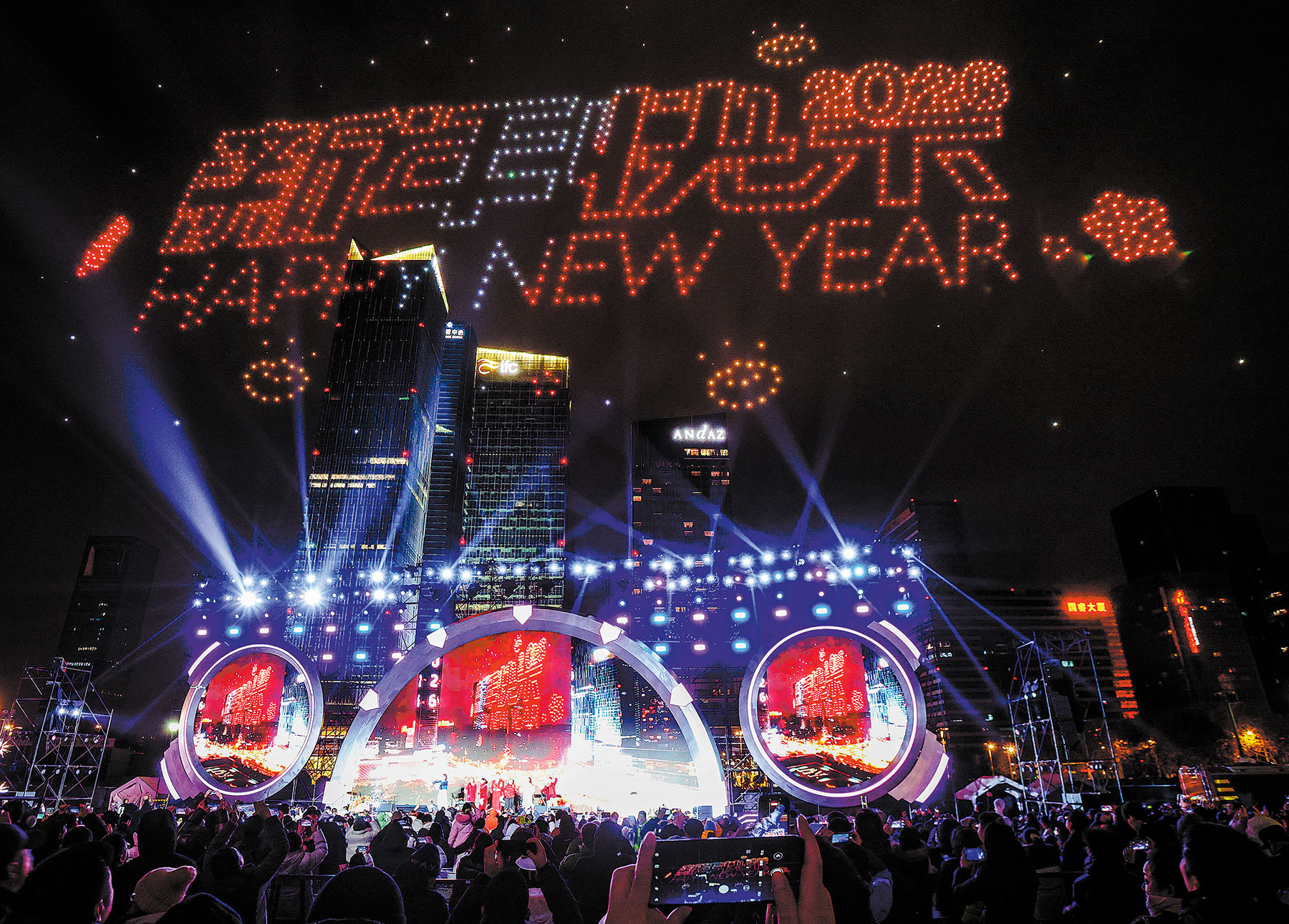
Emotional experiences and sought-after “sense of ritual” — mindful ways to imbue activities with symbolic meaning — best capture how Chinese people ushered in 2026, as vibrant celebrations across the country reflected robust domestic consumption at the start of the new year.
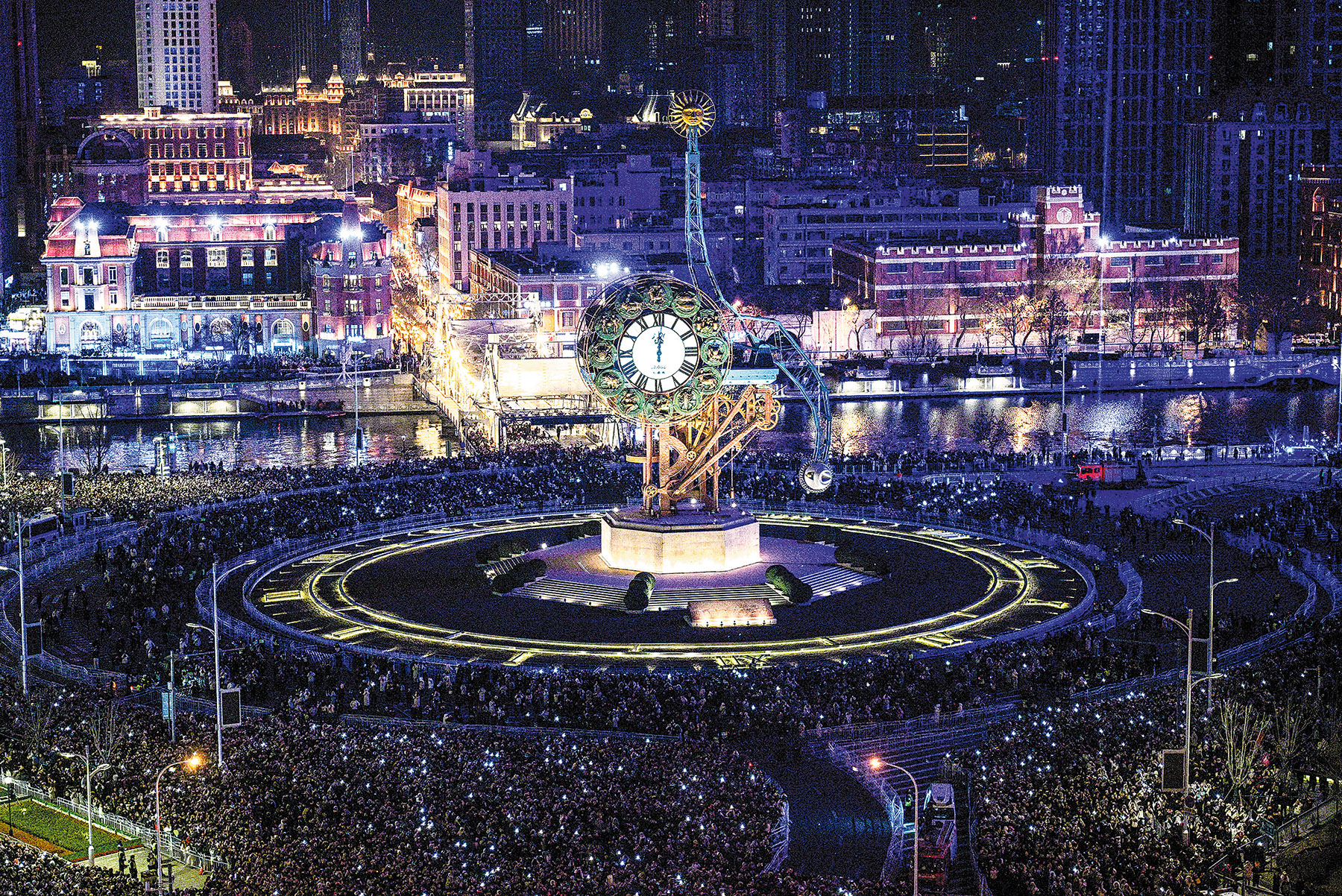
For Ms Li of Beijing, celebrating the New Year with a huge crowd under the eye-catching Century Clock and enjoying the dazzling countdown light show in neighboring Tianjin was an experience she will never forget.
“I purposefully traveled to Tianjin for the New Year celebration. I didn’t expect there would be such a huge crowd, and I could deeply feel the New Year vibe,” she said.
As Li enjoyed her New Year celebration, Zhao Xinran, in her 20s, traveled thousands of kilometers from the warm city of Guangzhou, Guangdong province, to Harbin, Heilongjiang province, an icy world of white snow. On the first day of the holiday, a hundred adorable penguins at Harbin Polarpark stole the show, drawing lots of visitors.
“I visited the Harbin Ice-Snow World theme park, learned about local ice sculpture and lantern art, and enjoyed a walk on the historic Harbin Central Street,” said Zhao.
Li and Zhao are a microcosm of the Chinese tourism consumption market heating up in the New Year season. During the three-day New Year holiday from Jan 1 to 3, keyword searches for “New Year trip” via the nation’s leading travel platform Trip.com Group rose more than 125 percent. From theme park fireworks and wish-making events to concerts and more, people enjoyed a wide variety of ways to celebrate the New Year.
Data from the Ministry of Culture and Tourism show that during the three-day break, tourist spending on domestic travel reached nearly 84.8 billion yuan ($12.1 billion), as winter-themed tours, sun-seeking getaways and short-distance excursions gained significant traction during the holiday period.
Data from Fliggy, a leading online travel service provider, also indicate Chinese people’s growing travel interest during the New Year holiday, with per capita consumption spending rising 30 percent year-on-year.
The robust travel-related consumption is closely tied to an advanced and efficient transport system, especially the country’s vast high-speed rail network, which now stretches over 50,000 kilometers after the Xi’an-Yan’an high-speed railway opened on Dec 26.
With the new route’s launch, the travel time between the two cities in Northwest China’s Shaanxi province has been cut to around one hour. This 299-kilometer railway that links 19 counties and urban districts has made travel to tourist attractions such as the Mausoleum of the Yellow Emperor, the legendary ancestor of the Chinese nation, as well as Hukou Waterfall on the Yellow River, a seamless experience.
“The launch of this new high-speed railway has made travel a lot easier,” said a tourist surnamed Mo from Xi’an. Mo and his family were among the visitors who took the high-speed train to get to Yan’an for a visit to the Hukou Waterfall during the New Year holiday.
Data show that daily visits to the waterfall increased 165 percent on average after the launch of the new railway. Nationwide, railway trips constitute part of a total of 590 million trips made via various transport modes during the holiday period, according to data from the Ministry of Transport.
Commenting on the booming tourism market, Dai Bin, head of the China Tourism Academy, noted that the year 2026 marks the start of China’s 15th Five-Year Plan (2026-30). “At the start of the new year, we see tourism increasingly become part of Chinese people’s daily lives, forming an essential part of cultural experience and spiritual enjoyment,” Dai said.
Apart from emotional satisfaction from travel, the practical allure of seaside retreats and duty-free shopping also attracted a growing number of visitors to South China’s resort island province of Hainan. Duty-free shopping got off to a strong start over the New Year holiday, with offshore duty-free sales reaching 712 million yuan from Jan 1 to 3, up 128.9 percent year-on-year, local customs data show. This surge in sales was backed by the number of shoppers that rose 60.6 percent year-on-year.
Data from travel services platform Qunar show that Haikou and Sanya in Hainan, among all Chinese cities, recorded the fastest increases in inbound passenger numbers via international flights during the New Year holiday, with entries into the two cities growing threefold and fivefold year-on-year, respectively.
During the holiday, duty-free shopping complexes in Sanya and Haikou were packed with bustling shoppers, with long lines forming at counters. This shopping frenzy came after China last month launched island-wide special customs operations in the Hainan Free Trade Port (FTP), the world’s largest FTP by area. These operations have allowed for freer entry of overseas goods, expanded zero-tariff coverage, and introduced more business-friendly measures.
In addition to robust travel spending, the New Year holiday also witnessed a growing number of shoppers incentivized by government subsidies for purchases of digital products and AI-empowered home appliances under the consumer goods trade-in program.
Just before the new year, China set aside 62.5 billion yuan in special treasury bond funds ahead of time to support consumer goods trade-ins for 2026. The move aims to keep up with growing demand during the New Year and Spring Festival holidays, especially for products like cars and home appliances.
According to data provided by Suning, a leading Chinese home appliance retailer, the company’s chain stores across the country saw a 110 percent rise in customer visits during the holiday amid the trade-in program. This policy is in line with the Central Economic Work Conference held in December, which announced that expanding domestic demand is set to top China’s major economic priorities in 2026.
The conference also outlined plans to implement consumption-boosting campaigns and increase the incomes of urban and rural residents.
Hong Yong, an associate researcher with the Chinese Academy of International Trade and Economic Cooperation, said the consumption market’s dynamics during the New Year holiday have shown that the government’s policies have promoted tourism and consumption and helped rebuild confidence.
“When policies are geared toward improving people’s lives, the recovery of the consumer market gains its most solid foundation. The strong momentum witnessed at the beginning of the year marked a good start to 2026 and boosted confidence for continuous consumption expansion throughout the year,” Hong said.
