

China’s diplomatic efforts focused on new global challenges, including resurgent Japanese militarism
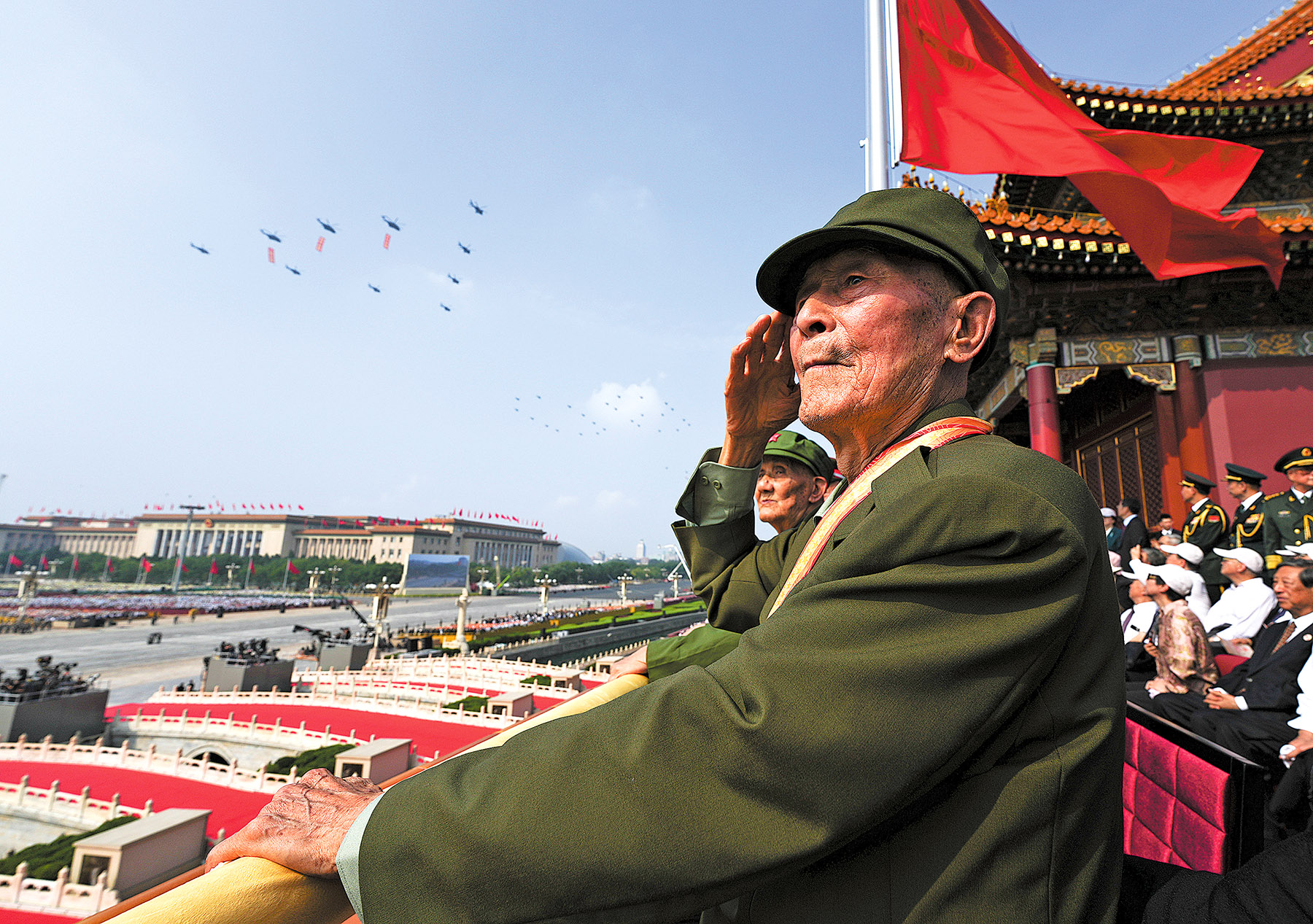
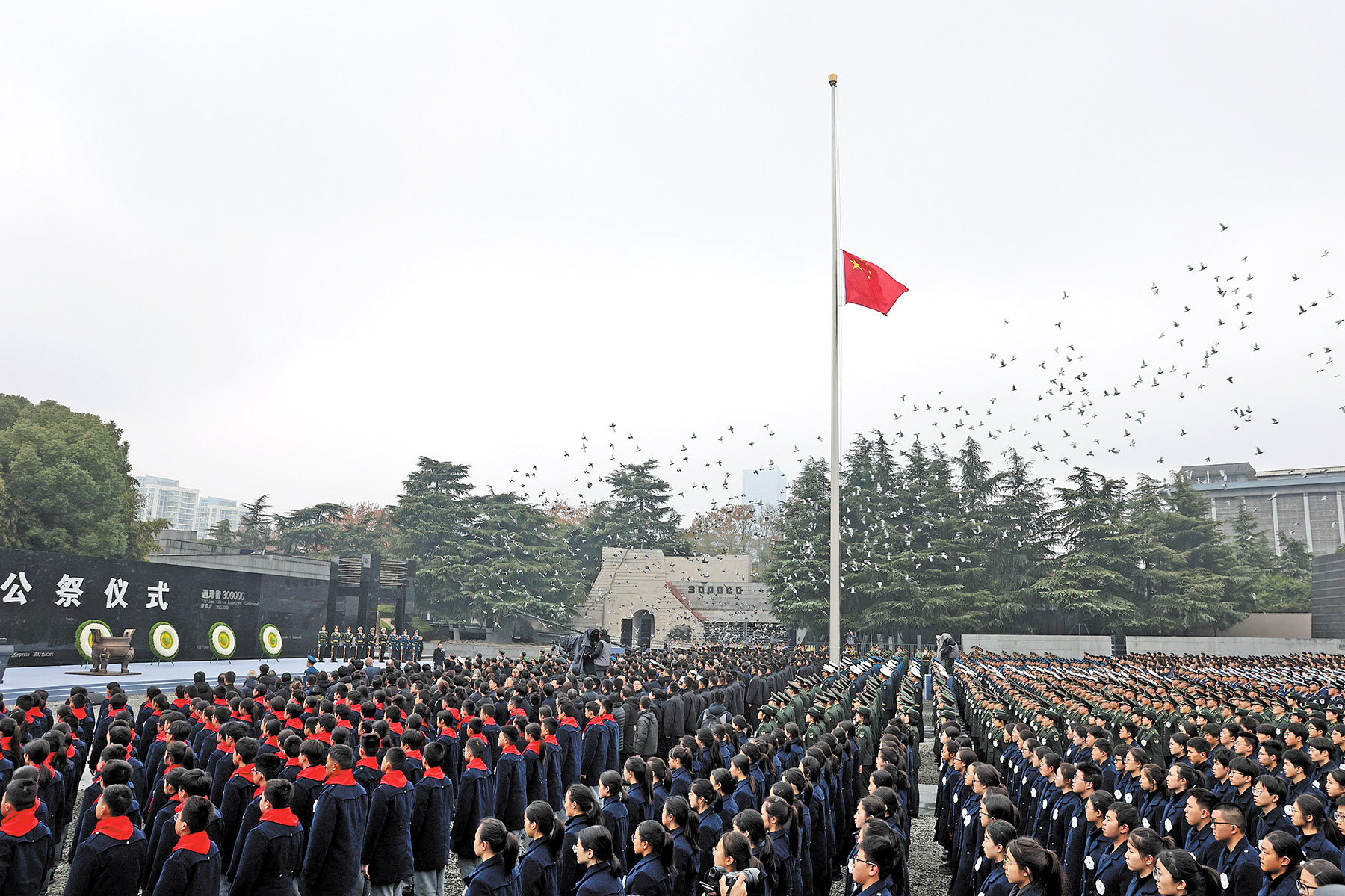
Over the past year, China directed much of its diplomatic efforts to championing the postwar international order as it celebrated the 80th anniversaries of the victory in World War II, the founding of the United Nations and Taiwan’s restoration to China.
These efforts were “highly necessary and timely”, and much more than just simple ticks on the 2025 diplomatic calendar in a volatile world, leading scholars and observers told China Daily.
Such diplomatic efforts proved to be timely reminders of the imminent challenges posed by right-wing impulses, unilateralism and hegemony to countries across the globe, the international system and China’s core interests, they said.
At the heart of the celebrations were the V-Day commemorative events, culminating in a parade on Sept 3 at Tian’anmen Square in Beijing. There, China solemnly commemorated the 80th anniversary of the victory in the Chinese People’s War of Resistance Against Japanese Aggression (1931-45) and the World Anti-Fascist War.
Attendees included 26 foreign heads of state and government, over 20 high-level representatives of foreign governments, heads of international organizations as well as over 100 diplomatic envoys including 19 from European countries, according to the Foreign Ministry.
In his address before the parade began, President Xi Jinping highlighted the great spirit of resisting aggression, promoted the correct view of history on World War II, and said “justice will prevail, peace will prevail, and the people will prevail”.
However, two months later in Tokyo, Japanese Prime Minister Sanae Takaichi suggested in Japan’s parliament a possible military intervention in Taiwan in the event of what she called a “survival-threatening situation”.
Beijing voiced strong protests over Takaichi’s Nov 7 remarks, but so far Tokyo has failed to retract the comments as requested by China.
Countries including Russia and the Democratic People’s Republic of Korea blasted Japan over the statement and its hasty decision seeking the lifting of constitutional restrictions on a military buildup.
On Dec 15, the Chinese Foreign Ministry announced sanctions on Shigeru Iwasaki, a former chief of the Joint Staff of the Japan Self-Defense Forces who is serving as a consultant for Taiwan authorities, for “colluding with ‘Taiwan independence’ separatist forces”.
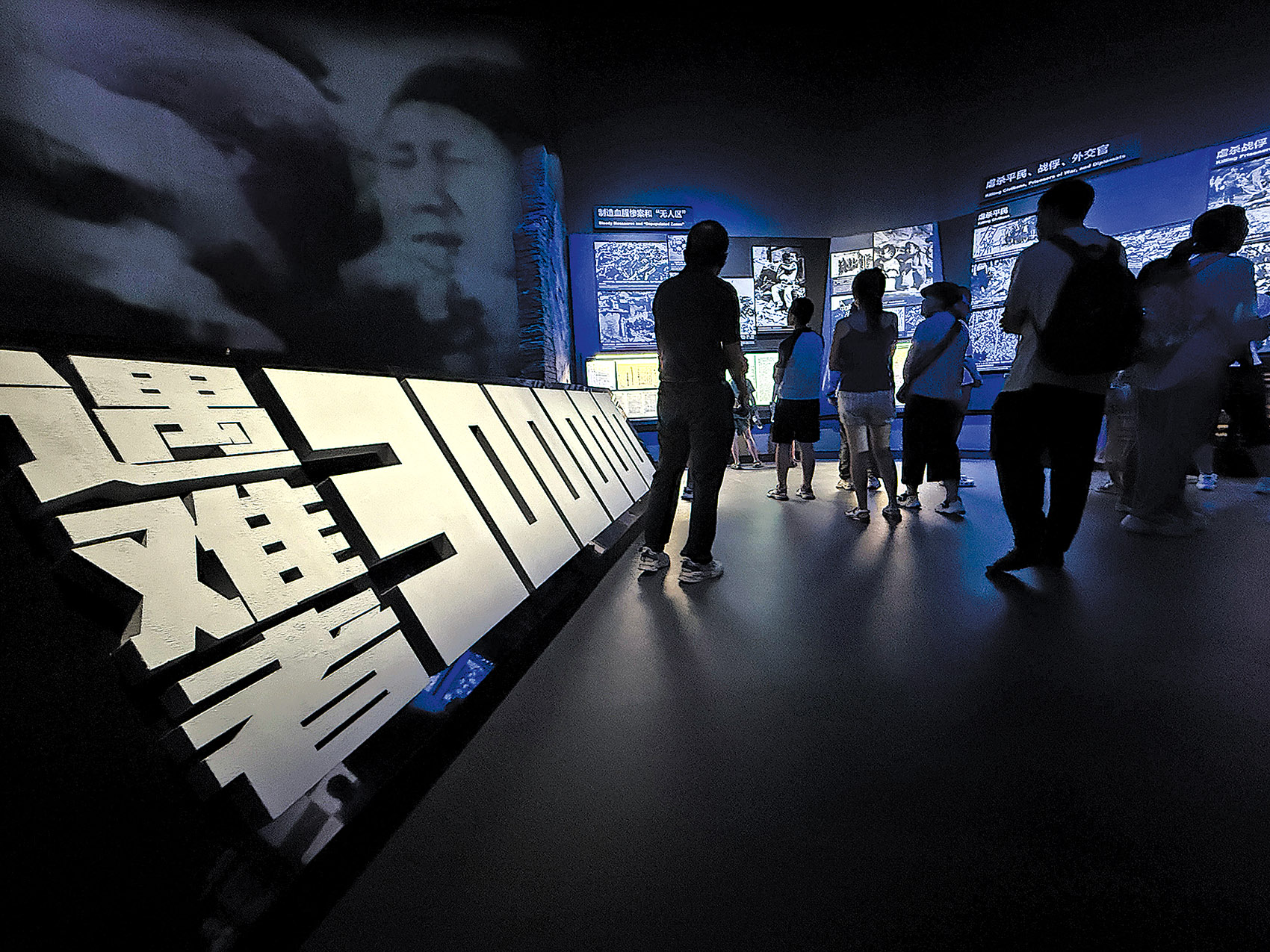
While people around the world were drawing lessons from history in a year of special significance, “Japan, the country that had started the war of aggression against China, again failed to express deep remorse for the crimes it had committed”, Foreign Minister Wang Yi said in a year-end speech on Dec 30.
“Even worse, Japan’s current leader publicly challenged China’s sovereignty and territorial integrity, challenged the historical verdict of World War II, and challenged the postwar international order. This is totally unacceptable to all countries that love peace and all people who do not want the repetition of past tragedies,” he added.
Lan Jianxue, director of the Department for Asia-Pacific Studies at the China Institute of International Studies, said China’s diplomatic efforts last year mainly focused on two aspects — highlighting the nation’s unique historical contribution to world peace and justice, and its support for the global community’s efforts in championing the postwar international order.
“What happened after Takaichi’s parliament remarks on Taiwan serves as a clear reminder of the demanding task for us to keep the postwar order from being sabotaged,” he said.
At the UN headquarters in New York, Fu Cong, China’s permanent representative to the United Nations, sent letters to UN Secretary-General Antonio Guterres on Nov 21 and Dec 1 elaborating on the Chinese government’s position.
“Following Takaichi’s provocation, Beijing has effectively projected its warning and deterrence to Japan’s radical right-wing forces through both diplomatic and military approaches, prompting them to realize that crossing the lines regarding the postwar international order will inevitably come at a cost,” Lan said.
On the last two days of 2025, countries including Russia, Laos, Myanmar and Kazakhstan publicly reaffirmed the one-China principle, making clear that Taiwan is an inalienable part of China’s territory.
Despite Japan’s colonial rule over Taiwan from 1895 to 1945, which saw atrocities inflicted on the people, Takaichi said in November that “we are not in a position to determine Taiwan’s legal status or recognition”.
Experts, including Lan, said it was trite for Japan’s right-wingers to downplay the recovery of Taiwan to China in 1945 and whitewash Japan’s wartime atrocities by citing the so-called Treaty of San Francisco, which was signed in 1951 in the absence of China.
When citing the 1951 treaty, they usually avoid major international legal documents that underpin the postwar international order and clarify Taiwan’s recovery, such as the 1945 Potsdam Proclamation and the UN Charter.
“The fixation on the 1951 treaty ignores China’s historical role as the largest winning country in the Far East region,” Lan said.
He warned that the Takaichi cabinet, with a complex combination of members, has made no major changes in its anti-China policy or in its attempt to whitewash the country’s past aggression.
“In 2026, we will have to continue countering the right-wing policy agenda, and Beijing should step up collaboration with other countries in the Asia-Pacific region to further champion the postwar international order, which is key to the region’s peace and stability,” Lan said.
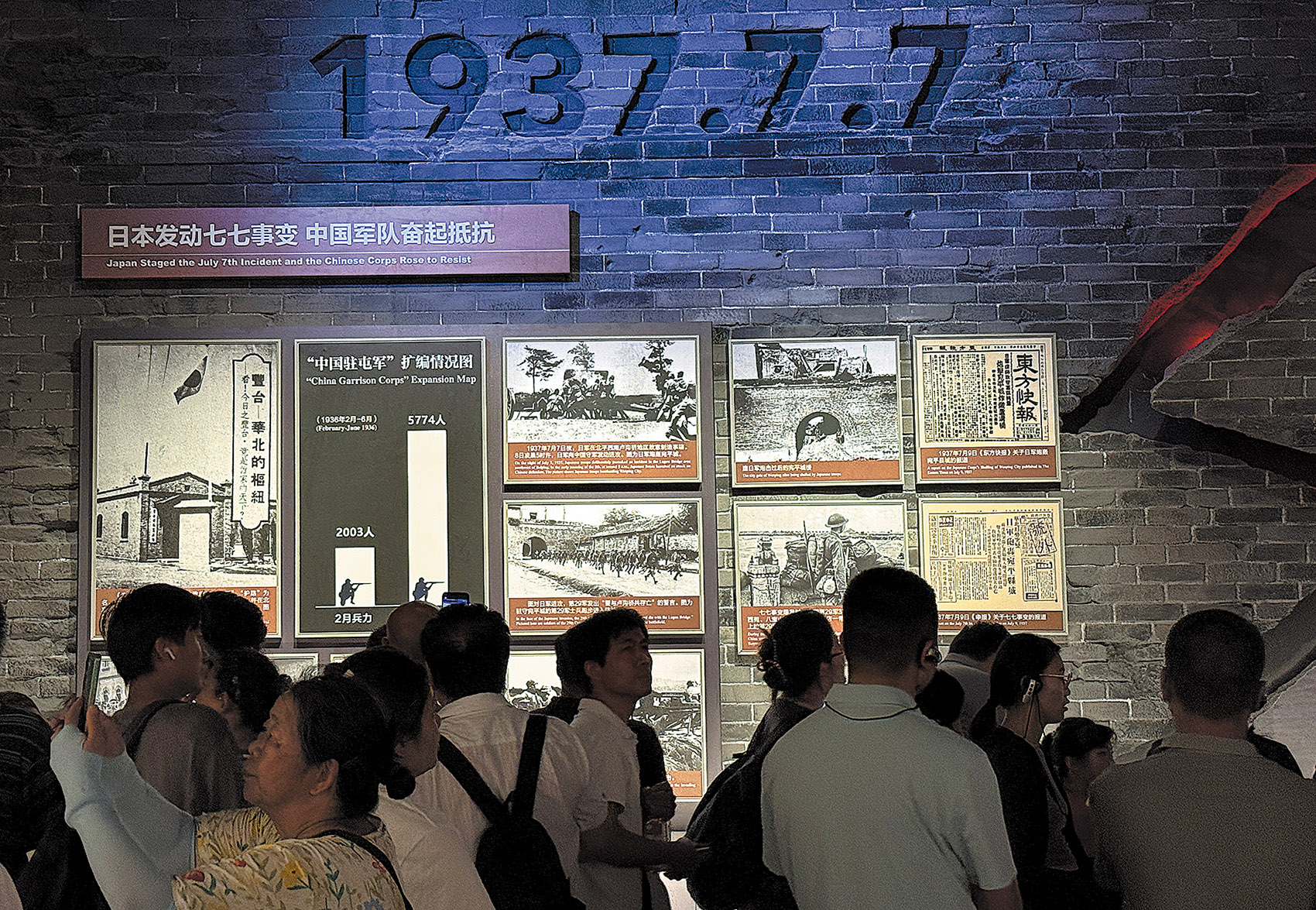
Observers also urged Tokyo to acknowledge its “dark and unflattering past” as it seeks to remove constitutional bans on Japan’s military buildup.
Article 9 of Japan’s pacifist Constitution clearly states that “the Japanese people forever renounce war as a sovereign right of the nation and the threat or use of force as means of settling international disputes”.
Dutch writer Ian Buruma, an expert on East Asian culture, said one of the reasons many Japanese and people in other parts of Asia resisted efforts to remove the constraints in Japan’s Constitution was because “Japanese nationalists often downplayed, or even denied, the atrocities committed by their forebears”.
“Politicians who prayed at Tokyo’s Yasukuni Shrine for the souls of dead soldiers (including convicted war criminals) were not trusted to revise Japan’s postwar pacifism. That includes Abe (former Japanese prime minister Shinzo Abe), but also Takaichi, who visited the shrine before she became prime minister,” Buruma wrote in an article last month.
Zhu Feng, dean of the School of International Studies at Nanjing University, said Japan’s pacifist constitution and Self-Defense Forces system “have not only been integral components of the region’s security order for the past 80 years, but also a crucial sign of Japan’s acceptance of its defeat in the war and of the postwar treatment”.
“The current right-wing cabinet of Japan not only lacks a clear understanding of historical issues, but also seeks to abuse the Taiwan question to further bolster Japan’s military capabilities as a so-called major power,” he added.
As Japan persists in countering China’s peaceful rise when radically advancing its military buildup, “it is now indeed a major threat to East Asia’s security” 80 years after the end of World War II, Zhu warned.
The year 2025 marked significant commemorations, yet the UN-centered international system and the international norms epitomized by the UN Charter face challenges “not only from Japan’s right-wing forces, but also from the unilateralism and the ‘America First’ policies of the US”, said Wu Xinbo, dean of Fudan University’s Institute of International Studies.
“China’s focus on securing the post-war international order has proved to be significant in tackling two major issues in the world this year — Prime Minister Takaichi’s provocative remarks on Taiwan, and the unilateralism advanced by Washington,” he said.
Wu noted that unlike Washington, Beijing has consistently made full payments to the regular UN budget, and it has also been an advocate for multilateralism on a number of international occasions.
In September, President Xi proposed the Global Governance Initiative, which Foreign Minister Wang said is “a Chinese contribution to revitalize the central position and leading role of the UN”.
“China honors its commitment as a responsible major country when it serves as a pillar in these aspects,” Wu said, adding that the nation has “demonstrated in every respect its unwavering stance and resolve to uphold” the postwar international order, the international system, and the international norms.
Wu expects the impact of unilateralism to loom large in 2026, and said “China should continue joining hands with other countries and playing its important role in advancing multilateral cooperation in areas such as climate change and keeping the World Trade Organization functioning properly”.
“There will be more struggles (against unilateralism) and collaboration. The overarching goal includes advancing the necessary adjustments of the international political, economic and security landscape,” he added.
Prominent political figures and scholars from across the globe also underscored the importance of carrying forward multilateralism at a time of unilateralist impulses — including trade and tariff wars — that keep plaguing the world.
Gordon Brown, a former British prime minister, said that multilateral cooperation is not dead yet and “can be revived”.
In a recent article, Brown cited a Focaldata survey of 36,000 respondents across 34 countries, and he said, “contrary to the ‘America First’ critique of multilateralism, trust in the World Health Organization stands at 60 percent globally (71 percent in Africa) and 58 percent trust the UN — a higher level than most national governments enjoy”.
Anum A. Khan, associate director of research at the Center for International Strategic Studies in Islamabad in Pakistan, said the power dynamics in the global world order are changing.
“While past powers combined economic and military might, China’s rise is focused on economic interdependence as a responsible stakeholder rather than a revisionist power,” she wrote in a recent article.
Wu Shicun, chairman of the Huayang Center for Maritime Cooperation and Ocean Governance, said, “The development of China’s military capabilities and the growth of its defense budget are aimed at safeguarding its legal rights and interests, not at threatening other nations like some other countries do.”
“China’s growth in economic strength and defense capabilities serves to champion territorial integrity, especially to counter impulses for seeking ‘Taiwan independence’,” he said.
China will further champion the postwar international order and multilateralism through the consistency of its project policies, such as the 15th Five-Year Plan (2026-30), Wu Shicun said.
“As long as countries such as China and Russia remain dedicated to securing the postwar international order, there will be lesser chance for unilateralism and anti-globalization movements to substantially overturn the order,” he added.
Contact the writers at zhangyunbi@chinadaily.com.cn
