

Company now operates autonomous vehicles in 11 countries and regions
Chinese autonomous driving company WeRide is ramping up its overseas robotaxi operations from the Middle East to Europe and Southeast Asia, leveraging its Hong Kong listing as a springboard to scale commercial deployments beyond China at a moment that many investors see as a global inflection point for driverless transport.
The Guangzhou, Guangdong province-based firm completed a dual listing in Hong Kong and the United States late last year, marking the company's second IPO in just over a year.
While the listing adds another financing channel, WeRide's strategic focus is increasingly offshore. The company now operates autonomous vehicles in more than 40 cities across 11 countries and regions, with the Middle East, Singapore and parts of Europe emerging as its fastest growing markets.
READ MORE: How China's robotaxis jumped to top of ranks worldwide
Han Xu, founder and CEO of WeRide, said: "China's 15th Five-Year Plan (2026-30) emphasizes new quality productive forces, a new national innovation system, a new security framework and Chinese-style modernization. All these will help drive autonomous driving to commercial success."
The Middle East has become a cornerstone of WeRide's overseas strategy. In Abu Dhabi, the company has operated robotaxi services since 2021, making the emirate the first city in the region to launch commercial driverless ride-hailing. In partnership with Uber, WeRide now runs one of the largest robotaxi fleets outside China and the United States.
By late 2025, a single WeRide robotaxi in Abu Dhabi was completing up to 18 passenger trips per 12-hour shift, according to the company. Local fares are roughly four times higher than those in China's largest cities, offering significantly stronger revenue potential.
Saudi Arabia has followed. In Riyadh, WeRide and Uber launched public robotaxi services, marking the first time autonomous vehicles were available through Uber's app in the country, as Gulf governments position autonomous transport as part of national economic diversification strategies.
Singapore is another priority market. WeRide has secured permits for fully driverless operations of its autonomous minibuses and rolled out a consumer-facing autonomous ride-hailing service developed with Grab. The city-state has also become a testing ground for WeRide's autonomous sanitation vehicles, which entered commercial service in 2024.
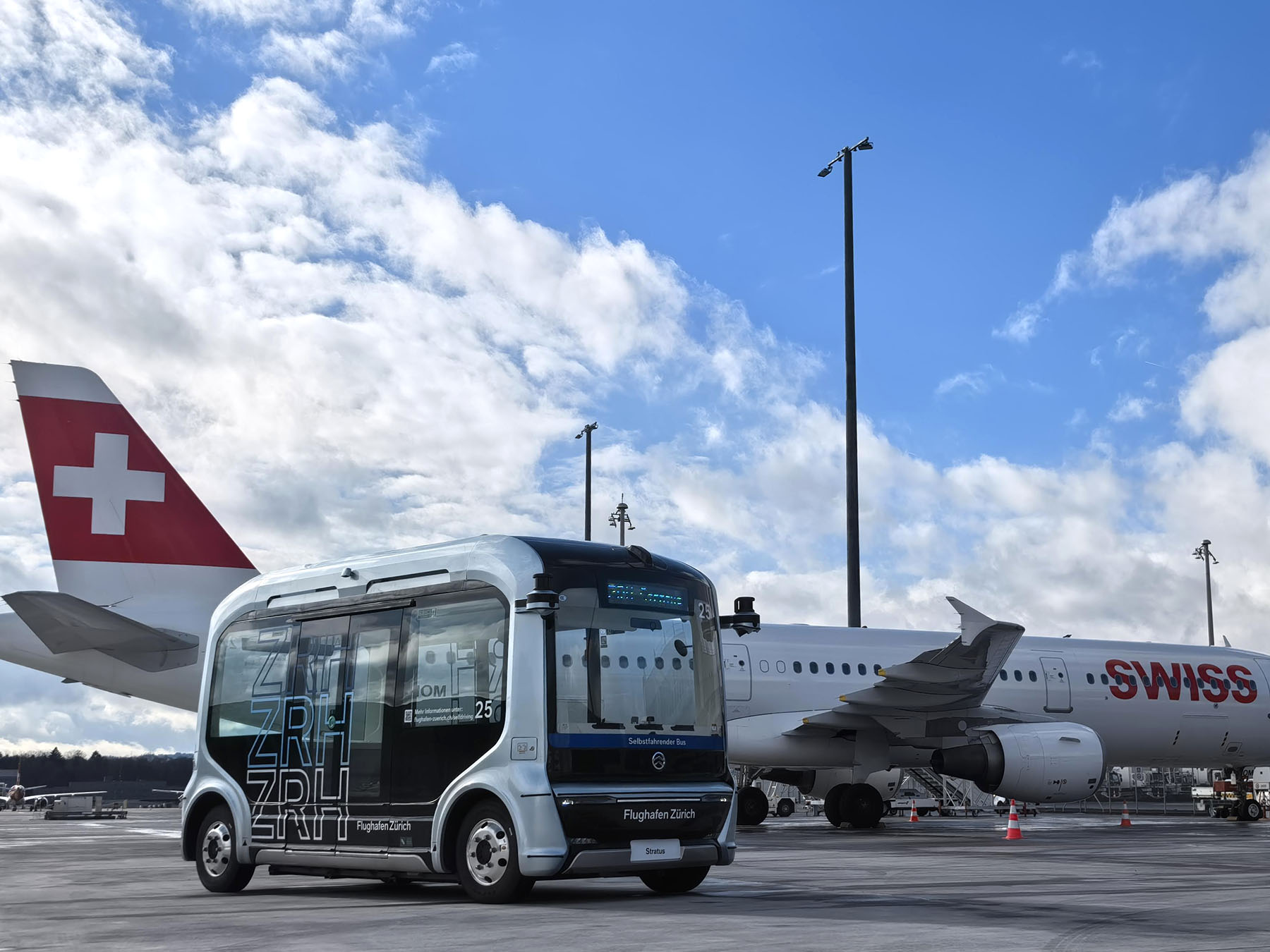
In Europe, WeRide has deployed L4 autonomous fleets in France, Switzerland and Belgium, and is preparing to launch fully driverless autonomous minibuses at Zurich Airport. Industry data show it is currently the only company with L4 fleets operating commercially across multiple European countries.
Founded in 2017, WeRide has built its business around Level 4 autonomous driving, where vehicles operate without human intervention under defined conditions. The company gained early recognition in China by launching the country's first L4 robotaxi in 2018.
Ahead of the Hong Kong IPO,Han, the founder, signed a voluntary lock-up agreement pledging not to sell any of his shares for three years, a move aimed at reassuring investors as the company increases spending to support global expansion.
WeRide's technology is built on its proprietary platform, which supports a full range of autonomous products from Level 2 and plus driver assistance to fully driverless vehicles. The platform underpins five product lines, including robotaxis, autonomous minibuses, freight vehicles and robotic street sweepers.
ALSO READ: WeRide taps world mkt for driverless tech
The overseas push is supported by sustained investment in research and development. From 2022 through the first half of 2025,WeRide spent more than 35 billion yuan ($5 billion) on R&D.
Robotaxi revenue surged more than eightfold year-on-year in the second quarter, accounting for over 30 percent of total revenue, driven largely by overseas operations, according to its prospectus.
Industry experts said that global robotaxi markets are approaching a turning point as vehicle costs decline and regulators in the Middle East, Asia and parts of Europe move from pilot programs to large-scale deployment. Some Gulf countries have set targets for autonomous vehicles to account for a quarter of urban transport by around 2030.
For WeRide, the Hong Kong listing offers a platform to attract long-term international investors, including sovereign funds and strategic partners such as Uber, Grab and Bosch, all of whom participated in the IPO.
Contact the writers at chengyu@chinadaily.com.cn
