

Close proximity strengthens cooperation across the entire production chain
When the production team behind the animated blockbuster Ne Zha 2 needed to swap large effects files, they often avoided digital transfers altogether. Instead, they walked a few minutes to a neighboring studio, hard drives in hand.
Such "collaboration within a coffee's reach" has become a hallmark of the Tianfu Long Island Digital Cultural and Creative Park in Chengdu, the capital of Sichuan province and also the birthplace of the record-smashing film. Released earlier this year, Ne Zha 2 earned 15.9 billion yuan ($2.2 billion), topping the global animation box office and becoming the world's fifth highest-grossing film.
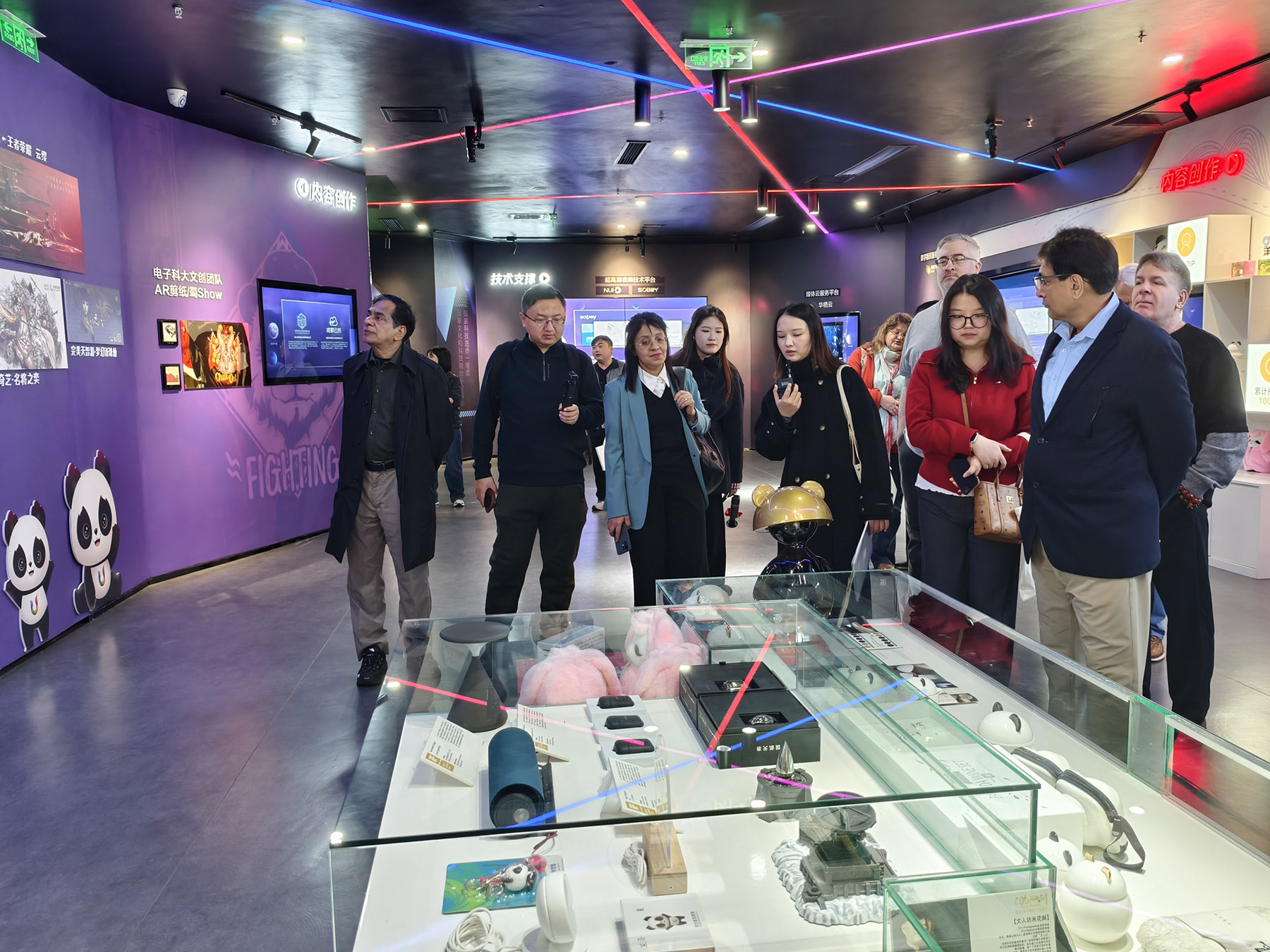
Unlike conventional industrial parks, Tianfu Long Island's low-rise studios and landscaped walkways resemble a high-end neighborhood rather than an industrial hub. The layout, officials say, is deliberate as it brings creators physically closer, making rapid, face-to-face collaboration part of daily routine.
READ MORE: 'Ne Zha 2' to conclude China run with over 15b yuan box office
"The park has brought together 64 companies involved in animation, esports and digital music — all within walking distance," said Gu Yiming of the Chengdu High-Tech Zone's digital economy bureau. "This clustering effect strengthens cooperation across the entire production chain."
Proximity is particularly valuable for firms working on major IPs. Chengdu Coco Cartoon, producer of the Ne Zha franchise, sits within 100 meters of Chengdu Qianniao Cultural Communication, and is a five-minute walk from More VFX Chengdu, its key animation and effects partner, Gu said.
Many of the park's companies are using advanced digital technologies to reinterpret Chinese culture for new audiences, a direction in line with China's recent call to harness information technology trends and strengthen the global reach of Chinese civilization.
Sichuan's landscapes and cultural legacy have long inspired the Ne Zha series, said Liu Wenzhang, president and head of production at Chengdu Coco Cartoon. The Jiejie Beast characters, for instance, draw from ancient bronze figures unearthed at the Sanxingdui and Jinsha archaeological sites, which date back more than 3,000 years.
Chengdu Ebgame InfoTech Co, a mobile game developer in the park, found international success blending traditional craftsmanship with modern gameplay. Its puzzle, titled 5th Invention: Mortise & Tenon, was an original spatial puzzle game released in 2020 centered on the method of sunmao, the mortise and tenon joints used in Chinese architecture that connect wood without glue or nails.
To date, it has garnered 80 million downloads and 10 million registered users, and has been collected and exhibited by museums at home and abroad.
Similarly, Leenzee Technology, a 3A game developer, infused its action title Wuchang: Fallen Feathers with Sichuan culture — from historical sites and folk customs to intangible heritage such as face-changing and shadow puppetry. Some nonplayer characters even speak in the Sichuan dialect.
Guo Xinyi, co-founder and CFO of Leenzee Technology, said that to ensure authenticity, the development team employed laser scanners and drones to digitally replicate historical sites in Sichuan and its nearby regions.
"The global appetite for Chinese storytelling, combined with the strong development environment here, underpins our confidence," Guo said.
From the perspective of entrepreneurs and creators, a distinct creative culture and an open and inclusive environment set Chengdu apart.
"In Beijing, Shanghai, Guangzhou or Shenzhen, people focus more on your business model and profit expectations. But in Chengdu, the first question they usually ask would be: 'Is it fun enough?'" said Tian Haibo, CEO of Chengdu Ebgame, adding that this makes a big difference for content creators.
Supportive local policies and the park's one-stop services also allow companies to focus on creation rather than administration, he added.
For AG Esports, one of the world's oldest esports organizations, Chengdu's openness and inclusive cultural atmosphere were a deciding factor when it set up in the city in 1999. "When esports was still widely doubted, Chengdu took an open attitude," said Ge Lei, the company's head of public relations.
ALSO READ: Chengdu's high-tech zone a hub for innovation
That early embrace has proven effective. According to the 2024 China Esports Industry Report, Chengdu hosted 15.3 percent of the country's esports events last year, second only to Shanghai. More than 200 competitions attracted two million spectators and amassed hundreds of millions of online views.
Today, the Chengdu High-Tech Zone hosts more than 6,000 digital cultural and creative firms, employing over 120,000 people and generating an industrial output of more than 110 billion yuan, according to statistics from the high-tech zone's management committee.
The success of the Ne Zha series, as also the hit video game Black Myth: Wukong, demonstrates that China has done an incredible job introducing its culture to the world through animation and gaming, said Matt Vegh, a Canadian expert in artificial intelligence as well as cultural and creative industries.
"The advanced technologies, such as AI and digital innovation, are making Chinese culture more accessible to international audiences," Vegh said. "However, people-to-people exchanges, particularly in the academic and educational fields, remain equally vital to help Chinese culture go global."
Contact the writers at pengchao@chinadaily.com.cn
