

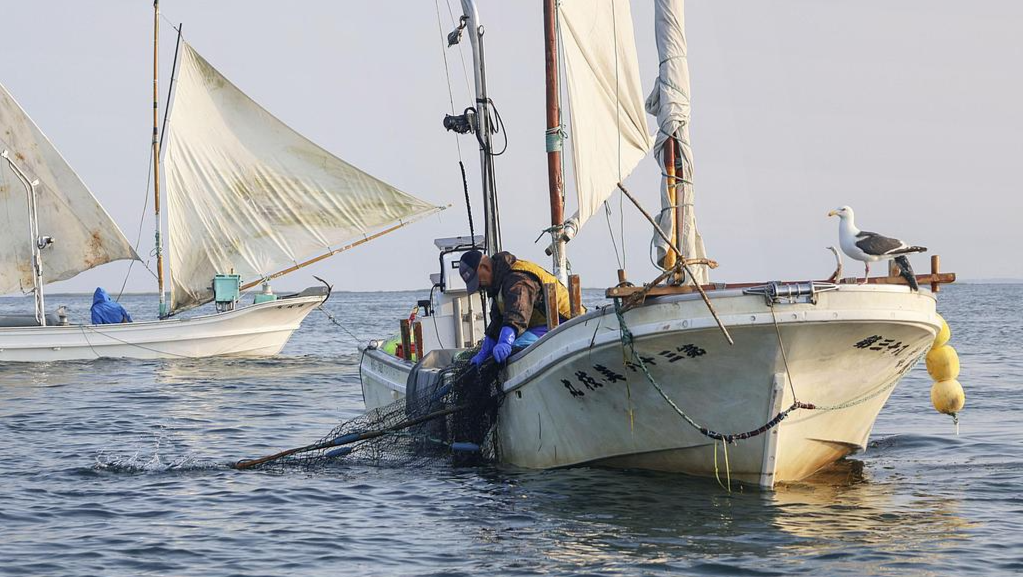
China has notified Japan that it is suspending imports of Japanese aquatic products, the Chinese Foreign Ministry said on Wednesday.
According to Foreign Ministry spokeswoman Mao Ning, Japan had previously pledged to fulfill its regulatory responsibilities to ensure product quality and safety for aquatic products exported to China— a prerequisite for such exports.
However, Japan has "so far failed to provide the technical materials it promised," she said.
Mao also stressed that the recent "erroneous" remarks made by Japanese Prime Minister Sanae Takaichi on major matters including the Taiwan question have triggered strong public indignation in China.
"Given the current situation, even if Japanese aquatic products were exported to China, there would be no market for them," she added.
Severe countermeasures
Mao warned that if Japan refuses to withdraw Takaichi's remarks on Taiwan, or persists in its wrongdoing, China will have no choice but to take severe and resolute countermeasures.
All consequences arising from such measures will be borne by the Japanese side, according to Mao.
Her comments came after Japan's Chief Cabinet Secretary Minoru Kihara said Tokyo does not intend to withdraw Takaichi's recent remarks on Taiwan as they are consistent with Japan's long-standing position.
ALSO READ: Envoy: Japan 'totally unqualified' for Security Council permanent seat
In response, Mao stressed that Takaichi's erroneous remarks on Taiwan have fundamentally undermined the political foundation of China-Japan relations and triggered strong indignation and condemnation among Chinese people.
China urges Japan to retract the remarks, stop creating provocations on issues related to China, and take concrete steps to acknowledge and correct its mistakes so as to safeguard the political foundation of bilateral ties, she added.
Vigilance against militarism
Mao called on the international community to remain highly vigilant, firmly counter any attempt to revive militarism, and to jointly uphold the post-war international order and safeguard world peace.
Her remarks followed a wave of recent analysis noting that Takaichi is the first postwar Japanese leader to explicitly link a so-called "Taiwan contingency" with a "survival-threatening situation".
ALSO READ: China ready to take tougher steps over Takaichi remarks
Such a linkage, analysts say, would allow Japan to invoke what it calls "collective self-defense", making the possibility of Japanese military involvement in the Taiwan Strait real — a move that crosses China's bottom line.
Mao said that history shows Japan's militarism repeatedly used the pretexts of "existential crisis" and "self-defense" to launch external aggression. "The alarm has sounded; tragedy must not be allowed to recur," she said.
A challenge to the post-war international order
Meanwhile, Zhu Fenglian, spokesperson for the State Council Taiwan Affairs Office, said Takaichi's recent provocative remarks concerning Taiwan trample on international justice, challenge the post-war international order, and seriously undermine China-Japan relations.
Zhu said at a regular conference that Takaichi's remarks attempt to interfere in the situation in the Taiwan Strait, deny the outcomes of the Chinese People's War of Resistance Against Japanese Aggression, and revive militarism.
"The remarks inevitably give rise to intense questioning and concern from the international community," Zhu said.
She stressed that the Taiwan question is China's internal affair and brooks no external interference, urging Japan to immediately stop meddling in China's internal affairs, cease its provocations, and refrain from going further down the wrong path.
READ MORE: China files fresh protest with Japan over PM Takaichi's remarks
"We hope that our compatriots in Taiwan will recognize the dangers and harmful nature of Japan's related actions, stand with us to resolutely crush all separatist activities aimed at 'Taiwan independence' and foreign interference, and safeguard our shared homeland of the Chinese nation," Zhu said.
In response to Lai Ching-te echoing Takaichi's remarks, Zhu pointed out that the root cause of tensions in the Taiwan Strait lies in the Democratic Progressive Party (DPP) authorities' obstinate adherence to the "Taiwan independence" separatist position and their collusion with external forces to seek independence.
Many foreign media outlets, experts, and scholars have recently criticized the DPP authorities for their imprudent and reckless moves, calling them a "destroyer of peace across the Taiwan Strait" and a "troublemaker."
With Xinhua inputs
