

The Hong Kong Exchange Fund’s (EF) investment income in the first three quarters netted HK$224.7 billion ($28.9 billion), close to the HK$226 billion recorded last year, the Hong Kong Monetary Authority (HKMA) has announced.
In the third quarter, the investment income was HK$114.6 billion, excluding valuation changes of private equity and real estate investments held by the fund’s investment holding subsidiaries. That was a 1.74 times increase from the second quarter of HK$41.7 billion.
Bond investment was the main contributor in the last quarter, recording an investment income of HK$66.4 billion, doubling quarter-on-quarter.
READ MORE: HK Exchange Fund posts H1 investment loss of HK$144.2b
Hong Kong equities generated an investment income of HK$21.9 billion, recording investment income for two consecutive quarters, an increase of approximately 1.5 times quarter-to-quarter.
Foreign equities brought an investment income of HK$18.2 billion, representing a quarterly increase of 58 percent. The foreign exchange valuation of non-Hong Kong dollar assets increased HK$8.1 billion in the period.
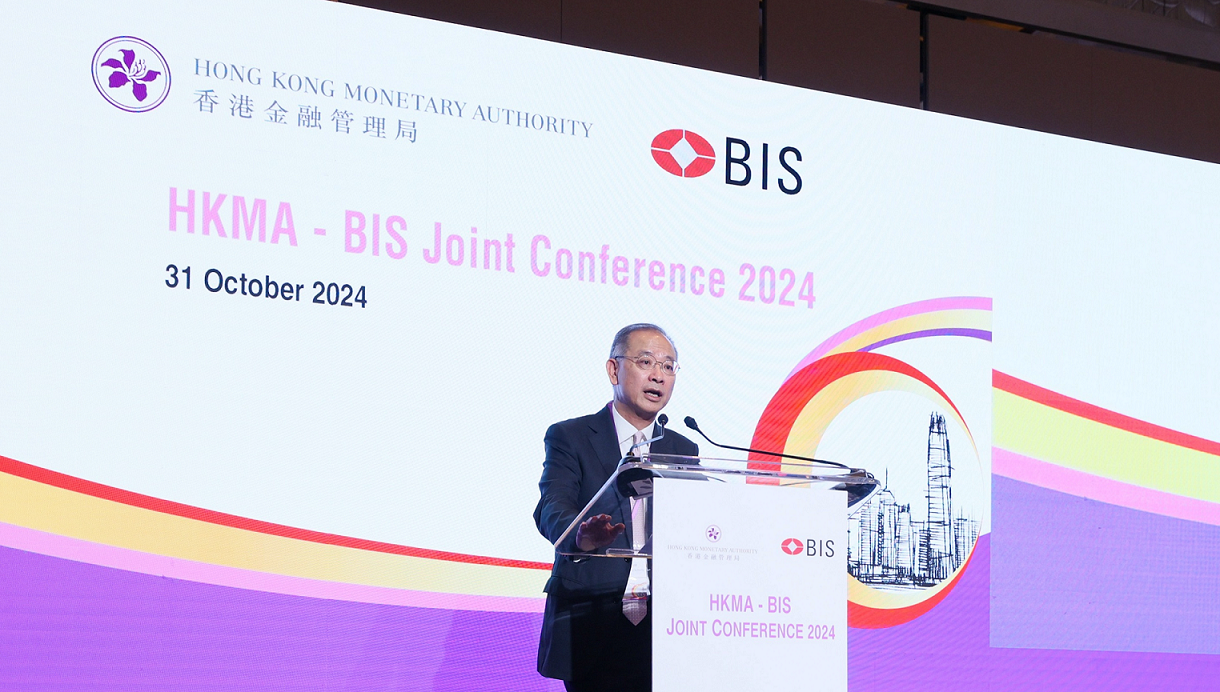
As the fund manager of EF, HKMA Chief Executive Eddie Yue Wai-man said it will increase its efforts in monitoring the global market situation.
“There will be US presidential election, US Federal Reserve meeting and the Chinese mainland National People’s Congress’s Standing Committee meeting this week,” he said during an HKMA briefing to the Legislative Council’s Financial Affairs Panel on Monday.
“There is uncertainty about the outlook for US economic policy. Even though the Federal Reserve is expected to continue to cut interest rates, there are still many variables in the pace of interest rate cuts. The market is watching this week’s US presidential election, and investors should pay attention to market fluctuation risks,” Yue added.
Under the Linked Exchange Rate System, Hong Kong interest rate has room to fall when interest rates in the US are declining, Yue said, but Hong Kong’s short-term interbank offered rate will be affected by seasonal factors and capital market activities.
READ MORE: HK's Exchange Fund returns drop amid global uncertainties
“The exchange rate of the Hong Kong dollar is stable. The stock market atmosphere has been relatively bullish recently, and the demand for Hong Kong dollars has increased. In the first nine months, total deposits in Hong Kong increased 5.8 percent, and Hong Kong dollar deposits increased 2.5 percent. There have been no capital outflows yet, and the inflow of funds was more obvious in October,” Yue noted.
