

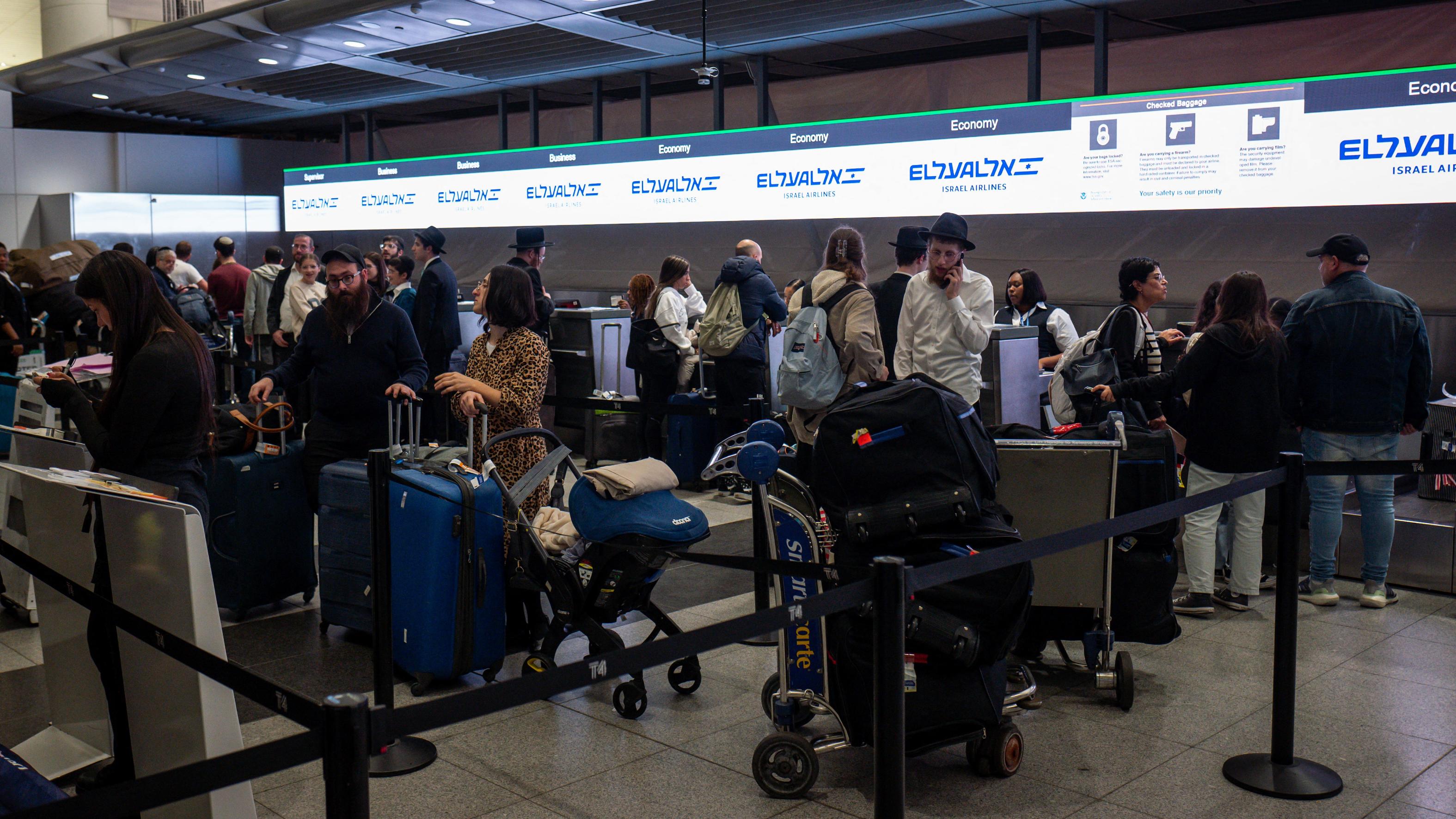
 People check-in for a flight to Tel Aviv at JFK Airport Terminal 4 on Oct 14, 2023, in New York City. (PHOTO / GETTY IMAGES VIA AFP)
LONDON - Almost half of 217 global firms cut their business travel carbon emissions by at least 50 percent between 2019 and 2022, analysis published on Monday found, as corporate air travel returned at a much slower pace since the pandemic than leisure flights.
Despite a global rebound, business travel has been slow to return to 2019 levels, with many corporate clients turning to video conferencing or rail trips rather than flying.
Global business travel firms say this trend could hit corporate relationships, while environmentalists argue it represents an important step in minimizing overall emissions.
Major companies such as tech firm SAP, accounting firm PwC and Lloyd's Banking Group all reduced their corporate air travel emissions by more than 75 percent compared to 2019, the Travel Smart Emissions Tracker analysis concluded
Advocacy group Transport and Environment has said that a 50 percent reduction in business travel from pre-COVID levels is needed this decade to cap global warming at 1.5 degrees Celsius.
Major companies such as tech firm SAP, accounting firm PwC and Lloyd's Banking Group all reduced their corporate air travel emissions by more than 75 percent compared to 2019, the Travel Smart Emissions Tracker analysis concluded.
"The way forward is collaboration with more online meetings, more travel by train and less by plane," Denise Auclair, Travel Smart campaign manager, said in a statement.
ALSO READ: Lagging business travel takes shine off transatlantic restart
However, the study found 21 of the companies exceeded their levels of flying compared to 2019, with L3Harris, Boston Scientific and Marriott International increasing their carbon emissions by more than 69 percent compared to 2019.
L3Harris, Boston Scientific and Marriott International did not respond to requests for comment.
Airlines say the corporate travel decline could harm their business and economic growth, but robust post-pandemic consumer demand for flying has tempered fears.
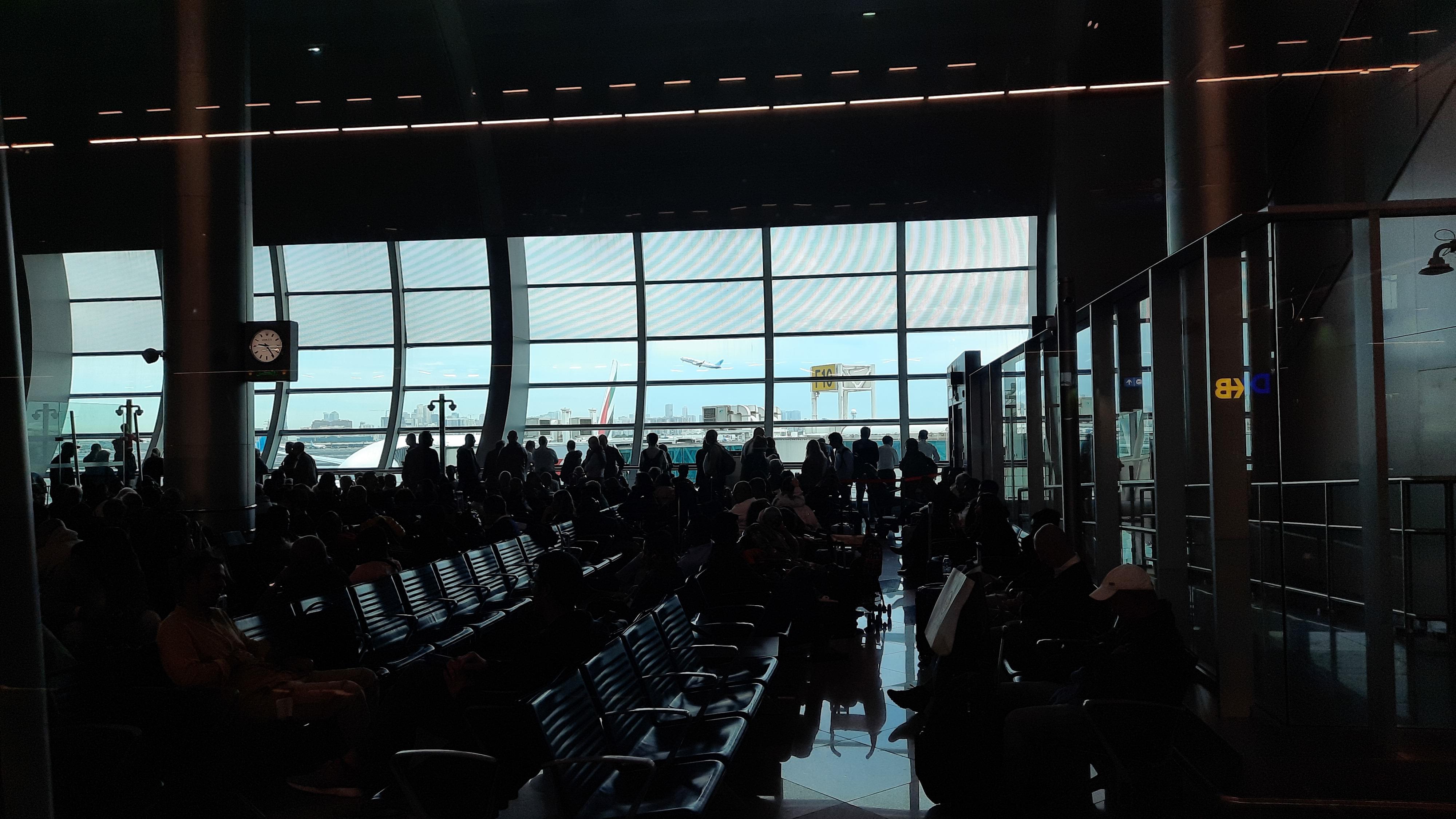 Passengers watch an aircraft take off as they are waiting at a boarding gate at Dubai International Airport in the United Arab Emirates on Nov 17, 2023. (GARY CHIU / CHINA DAILY)
A joint survey by American Express Global Business Travel (Amex GBT) and the Harvard Business Review released in September said 84 percent of businesses believe in-person trips still bring "tangible business value".
Business trips generated as much as half of passenger revenue at US airlines before the pandemic, industry group Airlines for America estimated. This helped airlines sell high-margin premium seats and fill weekday flights.
READ MORE: UN-led talks eye cutting aviation emission with less polluting fuels
In Europe, airlines like Air France have shifted their strategies, with others trying to make up for the business drop by selling more premium trips to leisure travellers.
