

 An Afghan boy stands in front of his house that was destroyed by the earthquake in Zenda Jan district in Herat province, western Afghanistan, Oct 11, 2023. (PHOTO / AP)
KARACHI, Pakistan/KABUL, Afghanistan - The World Food Programme on Wednesday called the recent Afghanistan earthquakes a 'disaster on top of a disaster,' urging the international community to provide humanitarian aid to the war-torn nation.
Limited aid makes relief work difficult after earthquakes and aftershocks since Saturday rattled the nation. The tremors killed at least 2,400 people and injured more than 2,000, the Taliban-run government said, making the quakes among the world's deadliest so far this year after tremblors in Turkey and Syria killed an estimated 50,000 people.
"In Afghanistan, this is a disaster on top of a disaster, on top of a disaster, on top of a disaster," said Philippe Kropf, head of communications at the World Food Program (WFP) Afghanistan, in an interview.
On Wednesday, a strong earthquake rattled Afghanistan's western province of Herat, forcing authorities to redeploy relief and rescue teams already in the field following a series of deadly quakes on Saturday
"We have 50 million people who do not know where their next meal will come from, and the World Food Program is only able to support 3 million people due to a massive funding shortfall," Kropf said in Herat, a northwestern province where the WFP has begun distributing rations.
"All the houses are completely flattened" and health centers have been turned into rubble, he added. "Livelihoods have been destroyed."
ALSO READ: Rescue efforts wind down in quake-hit Afghanistan
The WFP is initially providing each family of seven with 2100 kilocalories a day for a month, and may consider other forms of aid like cash in the coming weeks, Kropf said. To battle malnutrition, it has been distributing high energy biscuits and a special peanut butter.
"Breastfeeding women are amongst the most vulnerable," along with children and pregnant women, he said. "If we can help them prevent malnutrition, that's how we do it, because preventing malnutrition is much cheaper than treating malnutrition."
Women and children make up two-thirds of the injured in Afghanistan, said Dr Alaa AbouZeid, head of the World Health Organization's emergency on Monday response in the country.
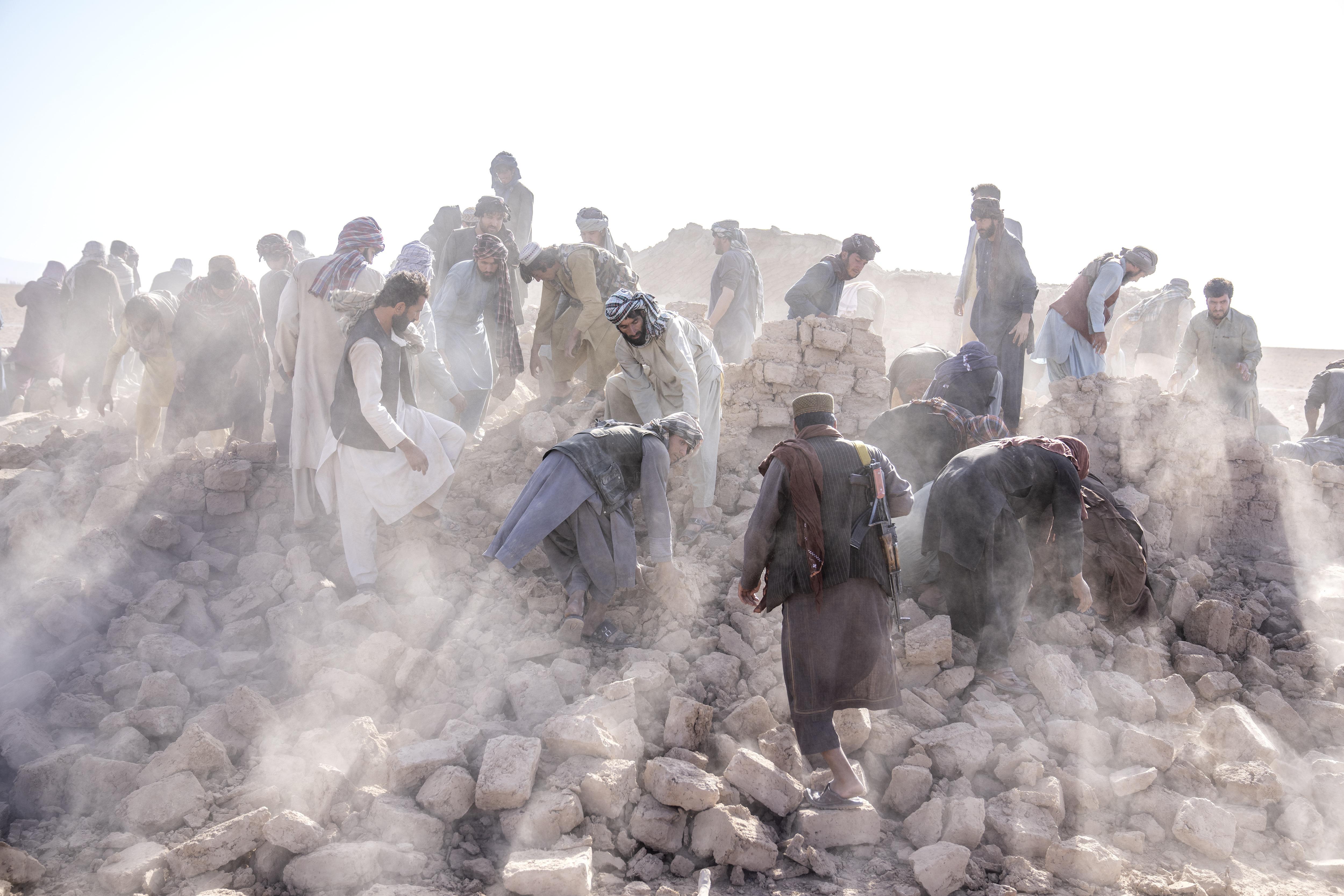 Afghan volunteers clean up rubble after an earthquake in Zenda Jan district in Herat province, western Afghanistan, Oct 11, 2023. (PHOTO/AP)
Another quake
On Wednesday, a strong earthquake rattled Afghanistan's western province of Herat, forcing authorities to redeploy relief and rescue teams already in the field following a series of deadly quakes on Saturday.
There were no details on casualties so far, disaster management spokesman Janan Sayeeq told Reuters, but provincial officials said hundreds of homes had been destroyed.
The office of Herat's governor said some areas had suffered "huge losses", without giving details.
"Mobile medical teams and officials have been working together and have transferred several injured people to hospital," the governor's office said in a statement.
The German Research Center for Geosciences (GFZ) said the latest quake was a magnitude 6.3, and occurred at a depth of 10 km.
Hemmed in by mountains, Afghanistan has a history of strong earthquakes, many in the rugged Hindu Kush region bordering Pakistan. Herat province borders Iran, which said it would send humanitarian aid.
ALSO READ: Afghan earthquakes kill 2,445, Taliban say, as deaths mount
In the central district of Rubat Sangi, which was rattled by Saturday's quakes, at least 200 homes were partially or completely destroyed, Governor Noor Ahmad Shahab said, adding that residents had suffered "huge financial losses".
There were no casualties reported so far, he said, as many villagers were already sleeping out in the open or in tents since the earlier earthquakes.
"People need urgent aid," Shahab said, adding that survivors were falling ill from the colder autumn weather.
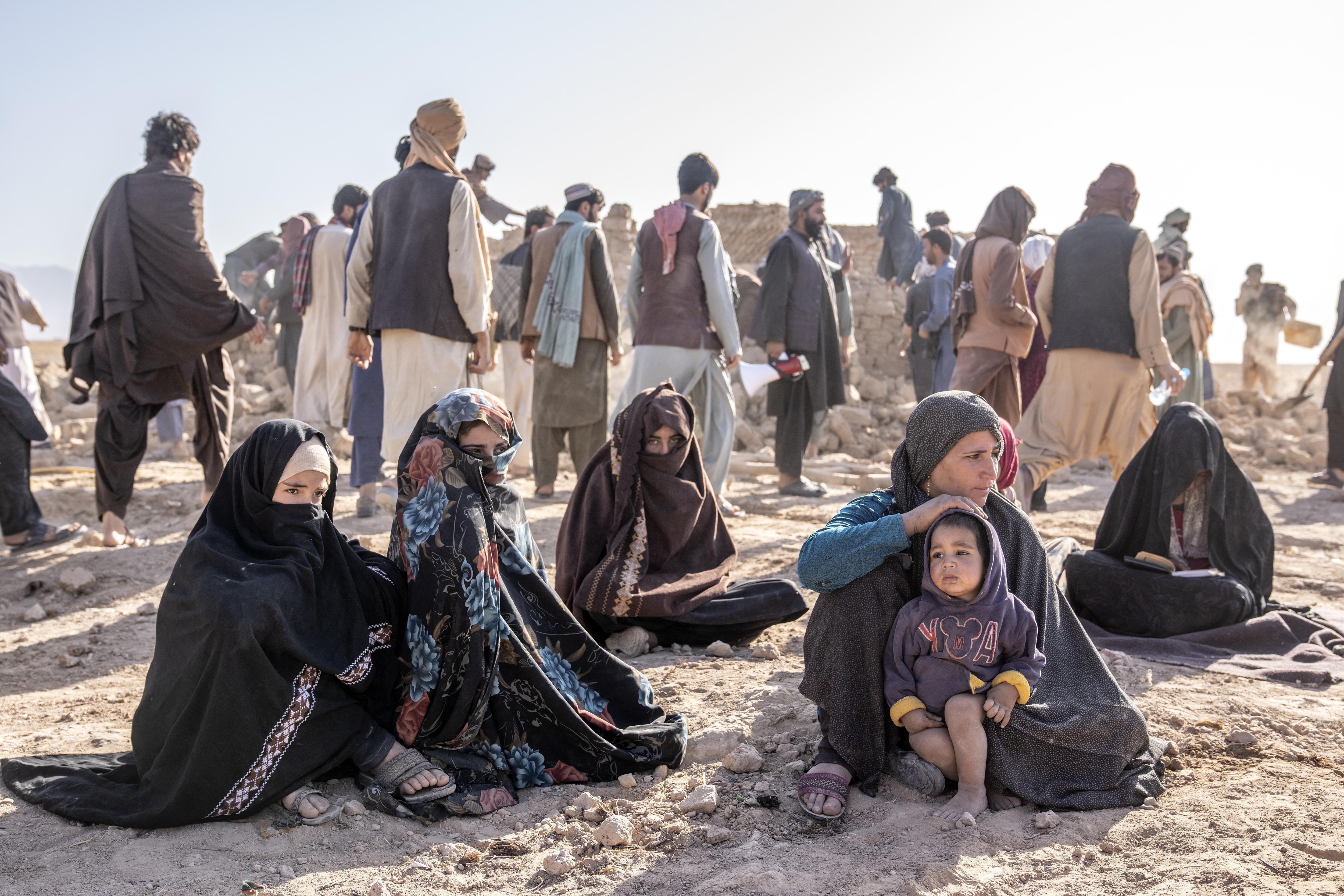 Afghan women sit in front of their houses that were destroyed by the earthquake in Zenda Jan district in Herat province, western of Afghanistan, Oct 11, 2023. (PHOTO / AP)
Afghanistan's healthcare system, reliant almost entirely on foreign aid, has faced crippling cuts in the two years since the Taliban took over and much international assistance, which had formed the backbone of the economy, was halted.
Afghans have endured decades of wars, since the fight to drive out Soviet Union military forces in 1979-1989 to US efforts to topple the Taliban government after the Sept 11, 2001 attacks, and the Taliban's victory in 2021.
The United Nations and humanitarian agencies reduced the budget for Afghanistan's 2023 aid plan to $3.2 billion from $4.6 billion earlier in the year, in wake of Taliban administration restrictions on female aid workers.
The WFP has already slashed rations and cash assistance from eight million Afghans this year, underscoring the severity of financial challenges aid agencies face in what the United Nations considers the world's worst humanitarian crisis.
The European Union said it would provide 2.5 million euros ($2.65 million) to humanitarian partners working to provide relief, in addition to the 89 million euro humanitarian aid already allocated in 2023.
It also offered shelter kits, winter tents and hygiene kit, among other relief supplies.
Pakistan, Iran, Türkiye, and China have already pledged to send in food, blankets, medicines, tents and funds. The United Nation's humanitarian office has also announced $5 million worth of assistance.
