

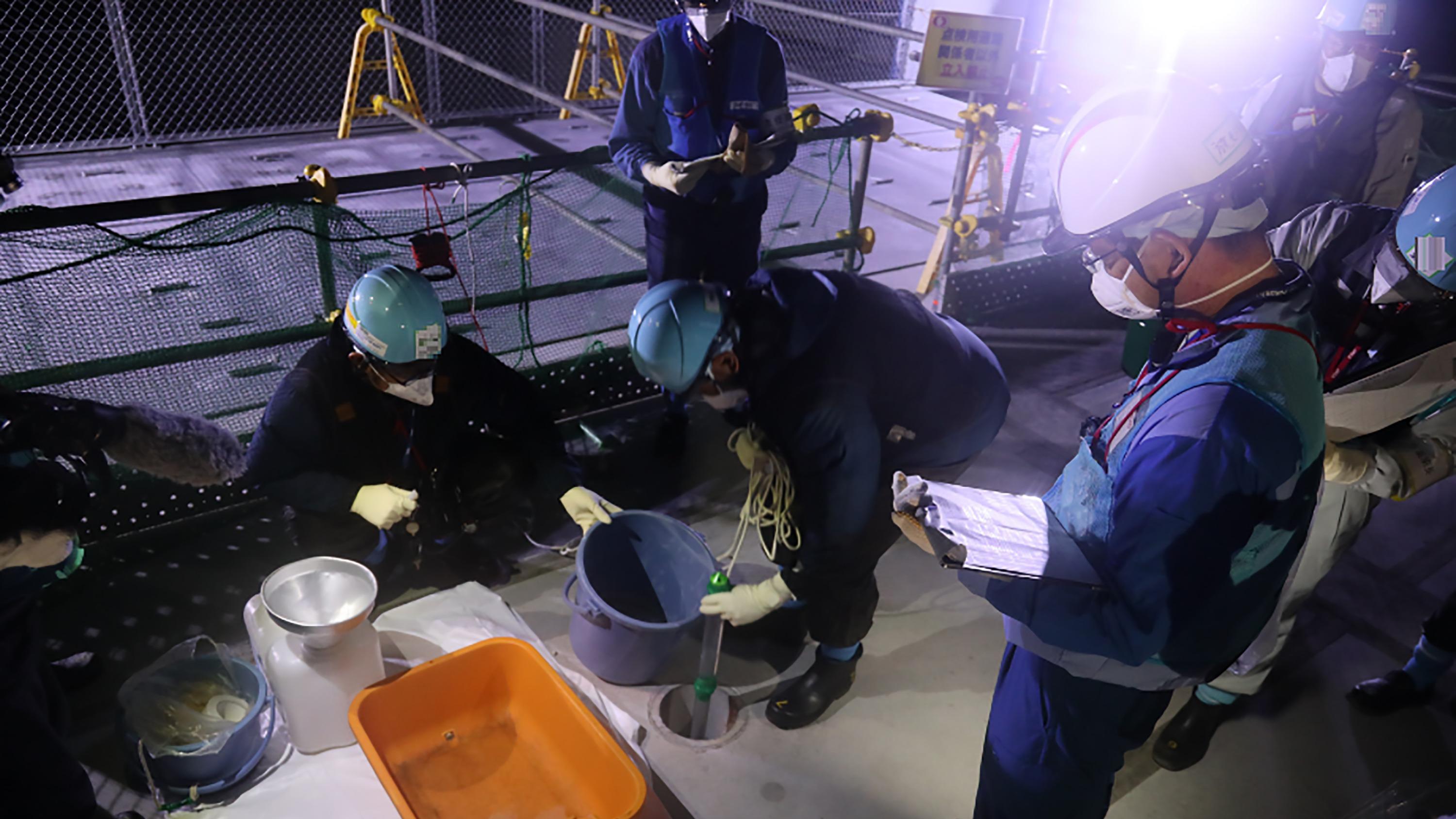
 This photo taken on Aug 22, 2023 and released by Tokyo Electric Power Company (TEPCO) on Aug 23 shows sampling from the upper-steam storage during preparations for the initial discharge of treated water at the Fukushima Daiichi nuclear power plant in Okuma, Fukushima prefecture. (PHOTO / AFP)
Opposition parties and civic groups in South Korea have stepped up their urgent efforts to press the Japanese government to immediately stop its plan to release Fukushima’s nuclear-contaminated water into the ocean.
“Japan’s nuclear wastewater discharge is likely to be recorded as the second Pacific War in history,” said Lee Jae-myung, leader of the country’s main opposition Democratic Party, in Seoul.
Chang Ma-ri, a climate energy campaigner for Greenpeace in Seoul, said the flawed understanding of nuclear power plants was behind the South Korean government’s decision to accept Japan’s release plan and its energy policies
In a meeting of the party's supreme council at the National Assembly on Aug 23, Lee said Japan, which had threatened its neighbors’ right to survive in the past due to its imperialist war of aggression, is about to bring another irreversible disaster to South Korea and Pacific Rim countries.
READ MORE: Fukushima: Mothers' group voices concerns on wastewater release
Condemning Japan’s plan as an act of “terror”, Lee said the Japanese government is solely responsible for any future damage caused by its act of dumping the contaminated water into the ocean.
Despite protests both in and beyond the country, the Japanese government said on Aug 22 that it had decided to start releasing the wastewater from the crippled Fukushima Daiichi nuclear power plant on Aug 24, if the weather and ocean conditions allowed.
The Tokyo Electric Power Company Holdings, the operator of the power plant, had said earlier that it plans to discharge the toxic water for the next 30 years through an underground pipeline.
Following Japan’s announcement, Park Ku-yeon, the first deputy chief of the Office for Government Policy Coordination, said the South Korean government sees no scientific or technical problems with the plan.
However, concerns over the plan to discharge more than 1 million metric tons of treated radioactive water are mounting in South Korea, one of the world’s biggest seafood consumers and producers, especially among its environmental groups and those related to the fisheries industry.
In an emergency meeting held on Aug 23, Jeju Island Province Governor Oh Young-hun said the South Korean government should actively engage with Japan and demand it to withdraw the plan.
“Considering the obvious negative impact on sea women, fishermen and the fisheries industry, the South Korean government should use all means, including international alliances, to ask Japan to withdraw the discharge plan of the contaminated water,” Oh was quoted as saying by the Jeju Environment News.
Chang Ma-ri, a climate energy campaigner for Greenpeace in Seoul, said the flawed understanding of nuclear power plants was behind the South Korean government’s decision to accept Japan’s release plan and its energy policies.
“President Yoon Suk-yeol’s government did not fully examine the risks of the release plan and did not request international legal rights such as temporary measures to suspend the discharge. It will not be free from the judgment of the times,” said Chang, in a statement posted on Greenpeace’s website.
Civic group Environmental Justice said in a statement that the sea is not owned by the Japanese government. Hence, the decision to release the contaminated water should not have been made simply based on inspections that had been conducted as a mere formality, along with the consent of several related parties.
“The Japanese government’s decision has set a precedent, creating an indulgence for all countries that operate nuclear power plants to be allowed to dump radioactive contaminated water into the sea,” the statement said.
The Korean Confederation of Trade Unions, which held a joint news conference in front of the Yongsan Presidential Office in Seoul on the afternoon of Aug 23, said the discharge of the nuclear wastewater is the first price that South Korea has to pay for the trilateral meeting that was held on Aug 18 with the United States and Japan.
READ MORE: S. Koreans petition against Tokyo's nuke wastewater plan
“The Yoon Suk-yeol government said it ‘neither approves nor opposes’ the plan,” the confederation said in a joint statement. “An accomplice in a crime will say the same. They are just conspiring with crime.”
As part of a 72-hour emergency action plan, the participating groups said they will hold protests in front of the presidential office to demand face-to-face talks with Yoon.
The Democratic Party planned to lead a candlelight rally on Aug 23 evening, a march on Aug 24 in Seoul and a public rally on Aug 26.
