

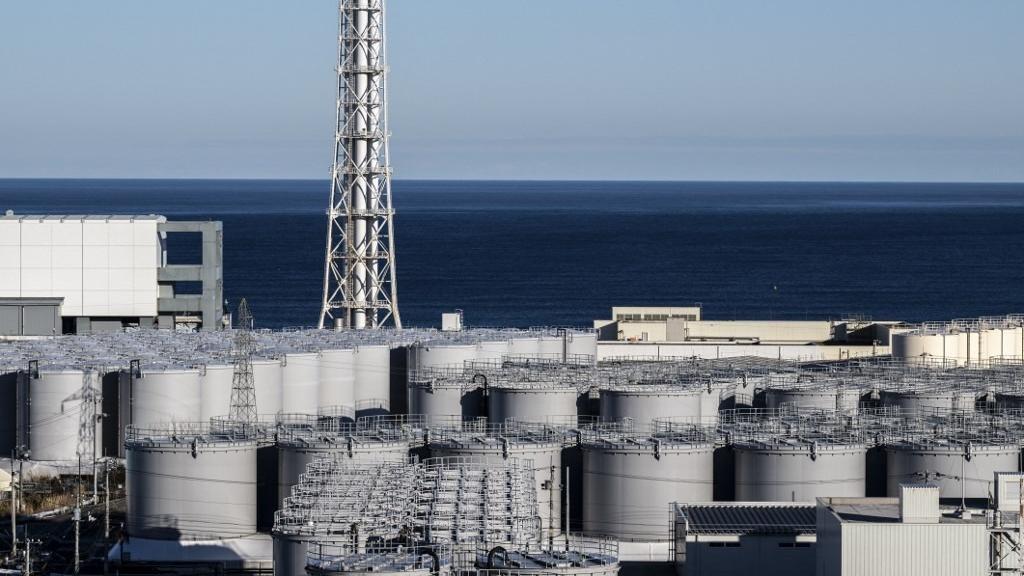
 A general view shows storage tanks for contaminated water at the Tokyo Electric Power Company's (TEPCO) Fukushima Daiichi nuclear power plant, in Okuma of Fukushima prefecture, on Jan 20, 2023. (PHOTO / AFP)
SEOUL — Sea salt demand in the Republic of Korea soared ahead of Japan's planned discharge of radioactive wastewater from its crippled Fukushima Daiichi nuclear power plant into the Pacific Ocean.
The share price of Insanga, a salt producer traded in the smaller KOSDAQ market, surged more than 28 percent at 1:00 pm local time (0400 GMT) on Monday, following a Japanese media report that the test operation of the contaminated water discharge facility began earlier in the day.
Major sea salt vendors stopped selling salt in early June as the salt delivery was delayed amid a flood of delivery orders
The price of 20 kg sea salt spiked 27 percent in the first week of June compared to the first week of April, according to the Ministry of Oceans and Fisheries.
READ MORE: 'Pacific island heads urge Japan not to dump nuclear waste into ocean'
The government attributed the price hike to poor weather and lower production, but local media said it was affected by salt stockpiling both by consumers and retailers.
Major sea salt vendors stopped selling salt in early June as the salt delivery was delayed amid a flood of delivery orders, according to local newspaper Hankyoreh.
According to a Research View survey of 1,000 adults conducted last month, 85.4 percent of ROK residents opposed Japan's contaminated water discharge.
READ MORE: Fiji opposes Japan's plan to discharge nuke wastewater into Pacific
If the wastewater is released into the ocean, 72 percent said they would reduce the consumption of marine products.
