

 (SONG CHEN / CHINA DAILY)
Experiencing the varied splendor of four seasons in a single day while traversing a multitude of different landscapes, from snow-capped mountains and lakes to grasslands, deserts and fields of flowers, is a joy to behold.
It is attractions such as these which draw visitors to one of China’s most beautiful roads, the 561-kilometer-long Dushanzi-Kuqa Highway.
The road wends its way through the Tianshan Mountains in the Xinjiang Uygur autonomous region, connecting Dushanzi in the north with Kuqa in the south.
Inclement winter weather means it is only open to traffic from June to early October and due to its mixture of severe slopes and sharp turns, vehicles with more than seven seats are banned.
Viral video footage taken by tourists in recent years has led to increased visitor flows to explore the highway’s scenic delights.
This year, the local authorities prepared for the highway to open by upgrading infrastructure and launching a range of activities to welcome arrivals from across the country. COVID-19 preventive measures have also been relaxed.
Gong Jiansheng, who heads the Bairui Travel Agency in Urumqi, the region’s capital, said: “There is a great deal to see in Xinjiang, but it is such a vast area that it is worth visiting several times to witness the stunning scenery.”
 The 561-kilometer-long Dushanzi-Kuqa Highway wends its way through the Tianshan Mountains in Xinjiang Uygur autonomous region, connecting Dushanzi in the north with Kuqa in the south. (GAO HAN / XINHUA)
The agency, which is owned by China Tourism Group, offers customized trips. A guide takes visitors to the homes of ethnic groups such as Uygurs and Kazaks, where they dine with the locals and help graze their livestock.
While traditional travel agencies often provide five-day tours starting from Urumqi, Gong suggests that visitors with plenty of time spend at least a week in Xinjiang.
He reminds arrivals that sometimes the narrow highway is congested during the peak tourist season.
Gong also suggests that travelers prepare well for their trip before departure and bring food and warm clothing to keep out the cold.
More than 280 km of the highway is located at an altitude of more than 2,000 meters.
In recent years, the local government has made every effort to upgrade infrastructure and repair the road. More public toilets have been provided, along with garbage disposal areas, and locations have also been established for visitors to take photos.
Gong, who has great confidence in Xinjiang’s tourism industry, said: “It’s now more convenient for visitors to come to the region. The travel experience has been significantly advanced and I hope there will be more improvements.”
Min Xiaoli, a tour guide from Urumqi, said: “The most striking aspect of the highway is the unique scenery, which suddenly changes as you go through the mountains.”
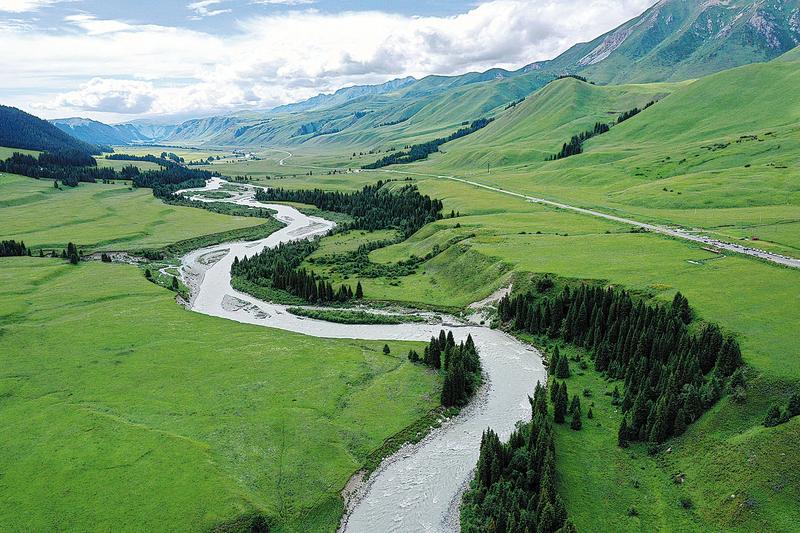 The route offers magnificent views of mountains, lakes and deserts. (HU WEIBIN / FOR CHINA DAILY)
She said the region attracts visitors of all ages, including some in their 60s and 70s who want to fulfill their dream of traveling on the highway after retirement. While many younger visitors drive themselves, middle-aged and elderly arrivals tend to opt for group tours.
“Xinjiang is a destination that offers a comprehensive travel experience, with its ethnic groups, religions and different cultures. Visitors really need to experience these cultures, rather than merely take in the beautiful scenery,” Min said.
She added that COVID-19 prevention and control policies in Xinjiang have been greatly relaxed compared with last year, and all such measures in the region are now being carried out in “a more scientific and precise way”.
Min also said that due to sporadic outbreaks of COVID-19 in some big Chinese cities, which are the major source markets for visitors to Xinjiang, other policies are also aimed at encouraging locals to tour the region.
The popularity of the Dushanzi-Kuqa Highway has enabled locals to earn a good living by becoming part of the tourism industry.
For example, Beishan, the first village in Kuqa that tourists pass through when they enter southern Xinjiang, has witnessed far-reaching changes over the past year.
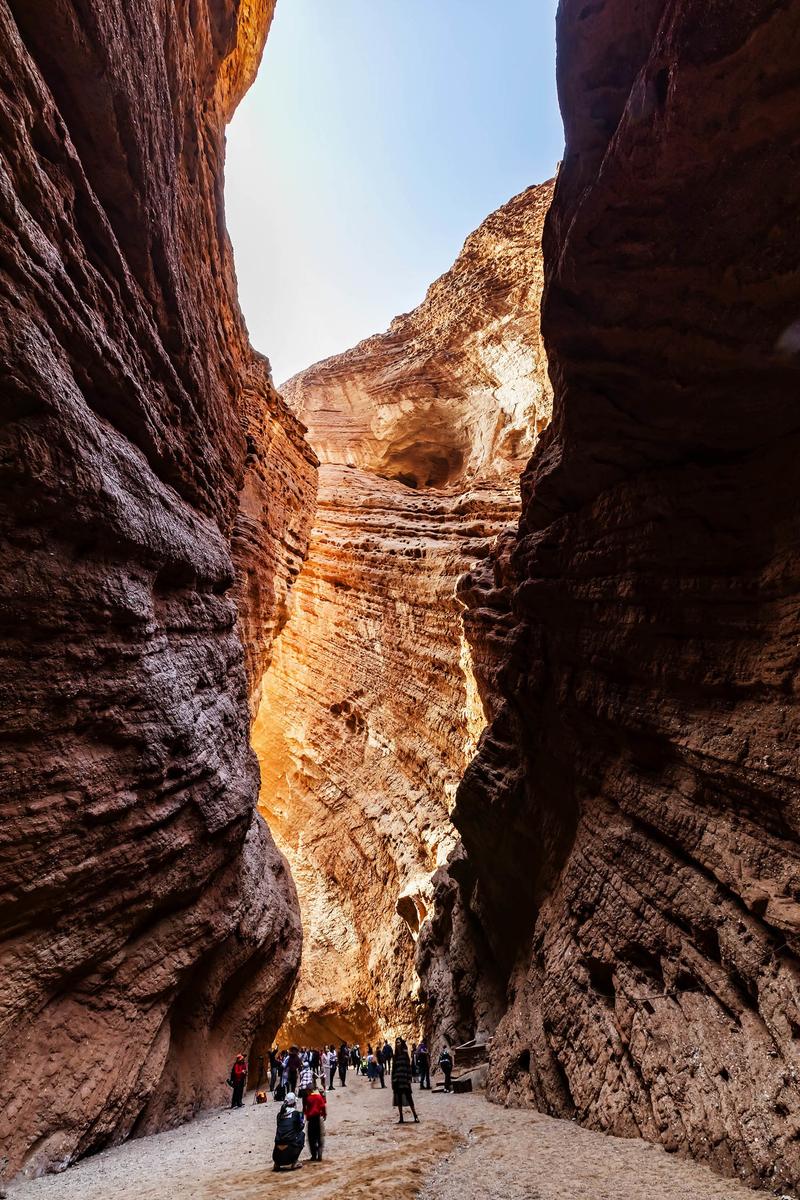 A valley in Kuqa. (ZENG WENPING / FOR CHINA DAILY)
In June last year, the village committee invested more than 10 million yuan ($1.5 million) in renovating the area and upgrading infrastructure to attract tourists.
The committee invited outside investment and used the village collective’s funds to develop the tourism industry from scratch.
Thanks to this booming industry, the collective’s income rose to about 350,000 yuan last year, up from 40,000 yuan in 2020.
Some villagers who used to make a living by grazing goats and sheep, or who worked in nearby cities, have opened homestays in Beishan.
Visitors pose for photos in front of the village’s colorful murals, which boast themes ranging from ethnic group culture to rural vitalization. These artworks were created in just three months by teachers and students from the Central Academy of Fine Arts in Beijing.
To cater to tourists, the village has set up a caravan campsite, a horse-riding venue, minsu, a Chinese-style bed-and-breakfast establishment, and activities centered on agritainment — entertainment in an agricultural setting.
In well-designed minsu, tourists can lie on their beds and view the starry night sky through skylights.
Villagers also organize bonfire parties and folk activities to welcome tourists.
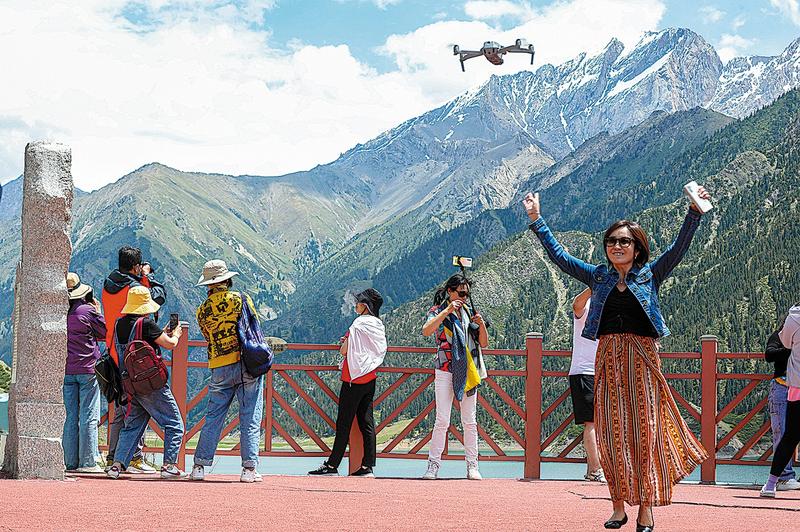 Visitors stop at a scenic spot along the highway. (GAO HAN / XINHUA)
Shi Yaowen, the Beishan Party secretary, said: “Tourists like our village because of its primitive nature and non-commercial atmosphere. All the residents are locals, and visitors can observe the villagers’ daily lives and experience the ethnic culture.”
Early this month, more than 100 vehicles arrived in Beishan from outside the area every day, with some visitors opting to stay overnight.
Shi said efforts are being made to build the village as a brand aimed at the mid-to-high-end market.
In the first half of this year, more than 2 million tourist visits were recorded in Kuqa city, bringing in revenue of nearly 1.08 billion yuan.
Suo Shanwu, director of Kuqa’s bureau of culture, sports, radio, television and tourism, said the city’s tourism industry has been boosted greatly by the Dushanzi-Kuqa Highway.
Kuqa’s scenic areas, including the Mysterious Grand Canyon of Tianshan Mountains, have attracted floods of visitors recently, with the city’s starred hotels reporting full occupancy.
 Girls in Beishan village paint impressions of their dreams. (PHOTO PROVIDED TO CHINA DAILY)
Suo said the local authorities have invited entrepreneurs nationwide to conduct research on business cooperation programs.
Kuqa, known as Qiuci in ancient times, was an important kingdom on the ancient Silk Road, and promoting the Qiuci culture among tourists is important for the city to attract arrivals.
Zhang Xiaoyu, secretary-general of the Xinjiang Tourism Association, said, “The region’s unique landforms and exotic culture make it stand out among its counterparts, especially with outbound travel suspended in China due to COVID-19.”
He said one of the problems in developing tourism in Xinjiang is that the region is a long way from cities such as Beijing, a four-hour flight from Urumqi.
“In some sparsely populated areas, drivers and their passengers commonly see nobody else when they travel for several hundred kilometers. Xinjiang’s tourism infrastructure has improved greatly, but more investment is still needed to improve service quality,” Zhang said.
Wu Liyun, an associate professor at the China Academy of Culture and Tourism at Beijing International Studies University, said: “As tourists are drawn to popular attractions, it’s important for management to understand visitors’ requirements in order to maintain a good reputation.”
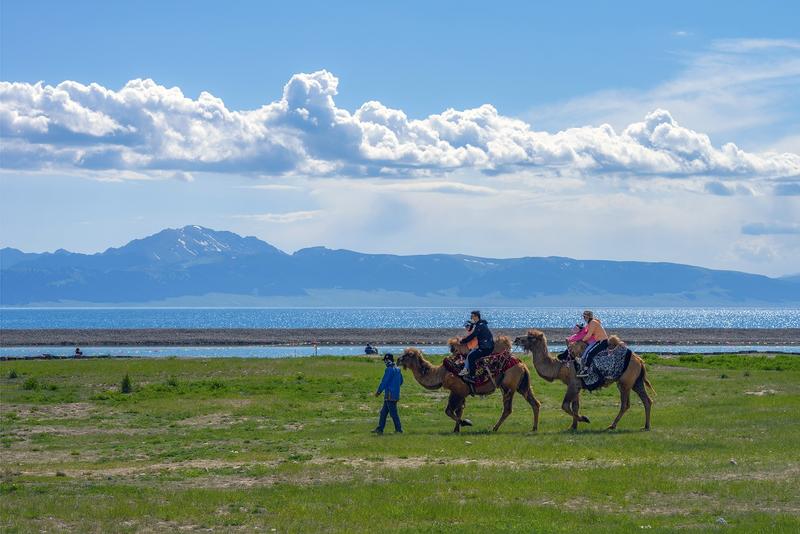 Visitors ride camels by Sayram Lake in Bortala Mongolian autonomous prefecture, Xinjiang. (PHOTO PROVIDED TO CHINA DAILY)
She suggested that to help tourists, local authorities draw up plans for infrastructure and public services — for example, by deciding where to put up sign boards, build gas stations and establish parking lots.
“In-depth tourism products and good-quality services are paramount,” Wu said.
She added that as well as driving along the highway and enjoying the scenery, visitors would prolong their stay when they are attracted by local scenic areas, cultural activities and accommodations.
It is also important to give related information to tourists and enhance support services, she said.
Wu also believes it is vital to provide visitors with real-time information about the highway, including news of weather, traffic and road conditions, so that they can plan their trips efficiently.
In addition, Wu suggested that the authorities send such information to those on the highway via text messages or mobile apps.
“To enrich visitors’ travel experience, caravan campsites should provide eye-catching activities, along with dining services and recreational infrastructure,” she added.
