

Lau Siu-kai says election enables city to participate more effectively in nation’s modernization
On Nov 22, 2026, the general elections for the Election Committee’s sectoral groups were completed efficiently and smoothly. This election represented a significant improvement over the previous one, both technically and procedurally. The voter turnout was 98.79 percent, a substantial increase from the previous election’s 89.77 percent. Compared to the previous election, this one was more competitive, with 856 candidates vying for 723 seats across 31 sectoral groups. Some high-profile candidates even suffered unexpected defeats.
 Overall, the process and outcome of this election can be seen as a continued advancement of the “patriots governing Hong Kong” framework. Given that “patriots governing Hong Kong” is crucial to the comprehensive and accurate implementation of “one country, two systems” in the Hong Kong Special Administrative Region, the safeguarding of national security, the implementation of “executive-led governance”, the positive and cordial interaction between the executive and legislative branches, the effectiveness of Hong Kong’s governance, the long-term stability of the SAR, and Hong Kong’s integration into the overall development of the nation, the continued progress of “patriots governing Hong Kong” has and will continue to have a wide-ranging and profound impact.
READ MORE: HKSAR LegCo hails successful Election Committee polls
This election signifies an increase in the talent pool within the patriotic camp. More and more social and economic elites are eager to join the ranks of patriots, becoming voters and candidates in this election committee and laying the groundwork for building future political careers. In the past, the patriotic camp struggled to grow stronger because patriots were constantly suppressed, harassed, and smeared by the “anti-China disruptive elements” and external forces, thus making them wary of politics, let alone taking part in politics.
More importantly, in the past, politics essentially meant participating in fervent political struggles against internal and external hostile forces — a completely unconstructive and meaningless endeavor — leading many patriots to view politics with dread and hesitancy. However, after the central government intervened to rectify the situation and enacted and implemented the Hong Kong SAR National Security Law, Hong Kong’s political landscape was reshaped, internal and external hostile forces were suppressed, and the political situation was renewed and stabilized. The SAR government, the Legislative Council, and all sectors of society were able to focus on practical issues such as long-term economic development, industrial transformation and upgrading, improving people’s livelihoods, and Hong Kong’s integration with the mainland economy. As a result, more and more patriotic elites felt it was the opportune moment to contribute their knowledge, wisdom, and experience to the country and the Hong Kong SAR through political participation.
This Election Committee election further solidified Hong Kong’s unique electoral culture. In the past, Hong Kong elections were essentially a continuation of and a platform for political struggle. “Anti-China disruptive candidates” relentlessly attacked and slandered their opponents during the election process, successfully transforming political issues, particularly “political reform,” into electoral topics to foment division and antagonism in society, thereby gaining political capital.
Since the eventual implementation of “patriots governing Hong Kong”, those divisive and inflammatory political issues have evaporated. In this election, both voters and candidates focused on practical issues closely related to Hong Kong’s future development and the lives of Hong Kong people, using the election as an opportunity to build consensus on how to address and resolve these issues. What we witnessed in this election was a “gentlemanly competition,” with candidates demonstrating mutual respect and friendly relations. This spirit played a positive role in “optimizing” and “purifying” Hong Kong's political culture.
This election helps strengthen and expand the social support base of patriots. Although the Election Committee election is an “elitist” election, both voters and candidates on the Election Committee understand that their duty and mission are to safeguard and promote the interests and well-being of all Hong Kong citizens. Therefore, they have a responsibility to engage the public and raise awareness of the Election Committee’s powers and work, as well as the candidates’ platforms and aspirations, through various channels and methods, thereby enhancing public support and trust in the Election Committee.
Past elections in Hong Kong, and indeed in other countries and regions, have often been detrimental to social and national unity. Conversely, the Election Committee election is a process of consolidating and uniting society, allowing all sectors to work together on a consensus basis to promote Hong Kong’s development.
ALSO READ: Election Committee poll advances constructive democracy
Shortly before this Election Committee election, the Hong Kong SAR government released its first five-year plan, outlining Hong Kong’s future development blueprint and formulating various major long-term policies. In this election, all candidates expressed their endorsement and support for the plan. The new Election Committee, along with its future chief executive and Legislative Council members elected by it, will certainly implement the plan effectively and proactively, promoting Hong Kong’s high-quality development and enabling Hong Kong to better align with and serve national development strategies, thus making a unique contribution to the nation’s development.
Overall, this election of the Election Committee signifies a positive step forward for “patriots governing Hong Kong”, in terms of talent supply, talent quality, solidarity of the patriotic camp, refinement of Hong Kong’s political culture, governance of the SAR, and expansion of the patriotic camp’s mass base. It marks a significant step forward for “patriots governing Hong Kong”, thereby better promoting the implementation and development of “one country, two systems” in Hong Kong and enabling the city to participate more deeply, comprehensively, and effectively in China’s modernization and the great rejuvenation of the Chinese nation.
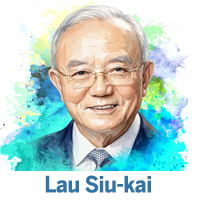
The author is professor emeritus of sociology, the Chinese University of Hong Kong, and a consultant to the Chinese Association of Hong Kong & Macao Studies.
The views do not necessarily reflect those of China Daily.
