

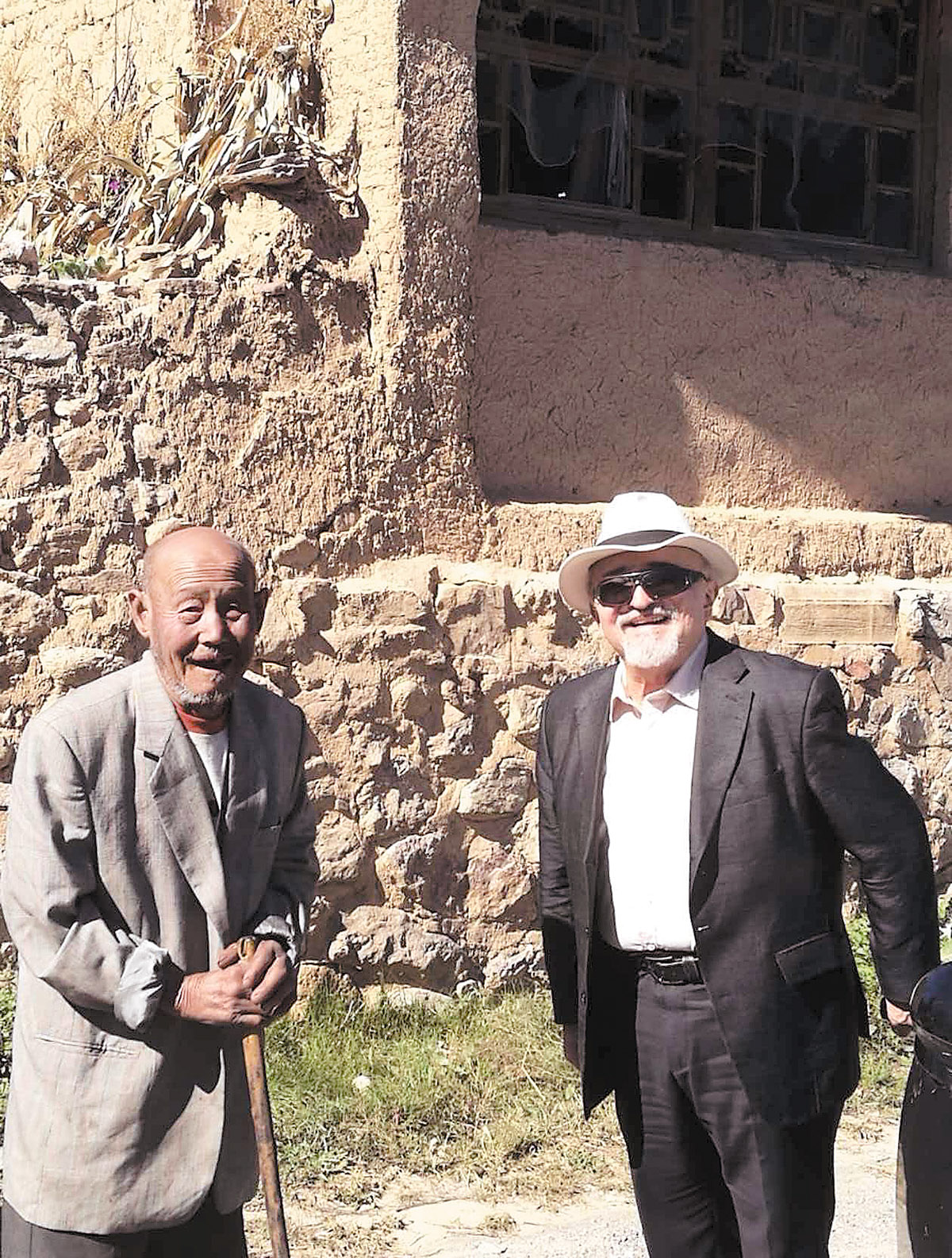
In the autumn of 1969, 27-year-old Guy Alitto arrived in Taipei to continue his study of Chinese. He immediately noticed a cultural difference.
"I was overwhelmed by the way people would respond when you asked them for the location of a place. In the West, they would always give you the address, which is something absolute. But the Chinese would only describe it in relation to something else," recalls Alitto, an acclaimed China scholar and visiting professor at Beijing Language and Culture University.
"The more I thought about it, and the more I learned, I could see the fundamental difference was that Chinese thought was always relational, whereas there's almost nothing like that in Western thinking."
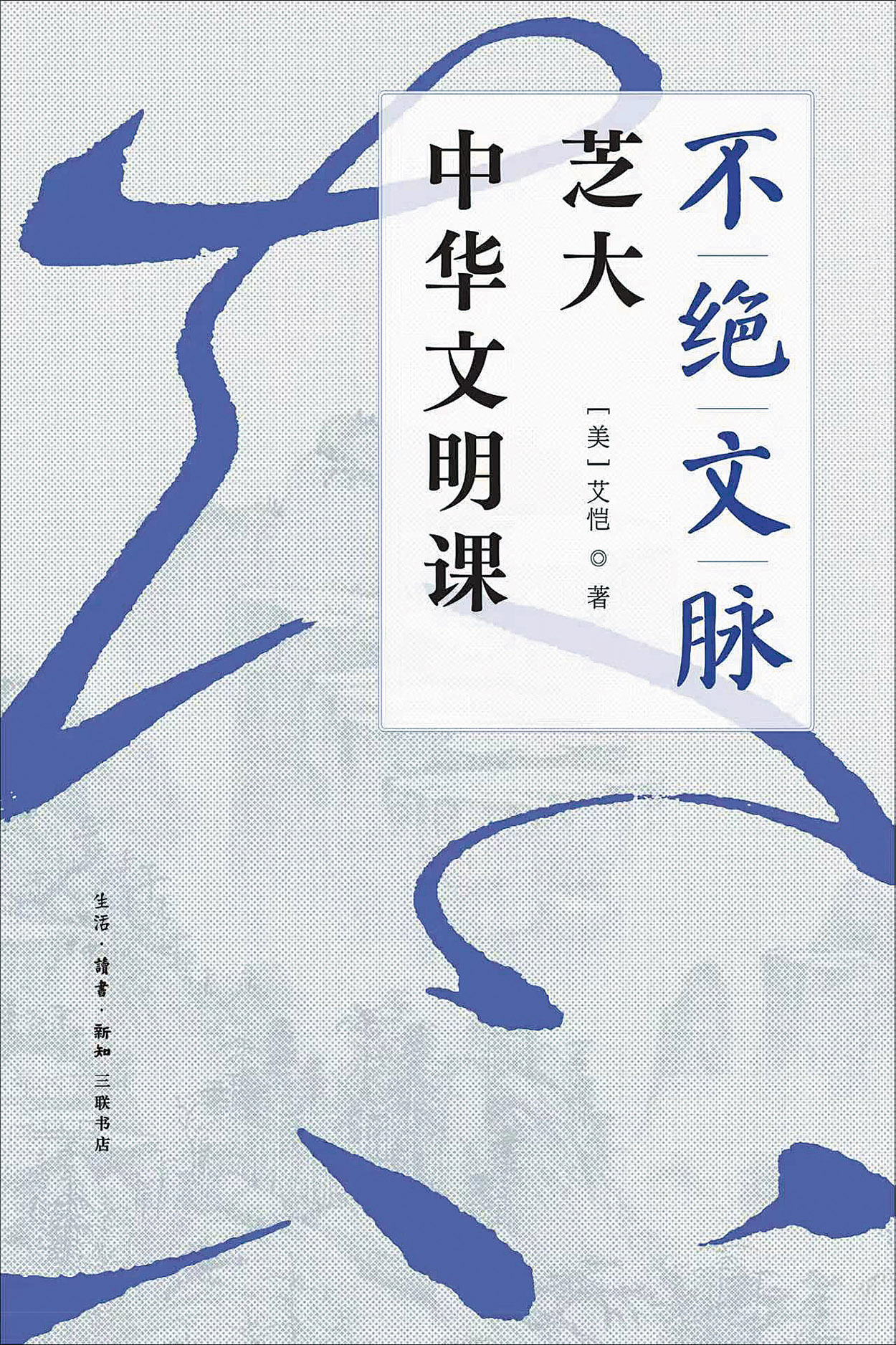
Alitto often recounted this story to his students at the University of Chicago, hoping to help them "appreciate how life could make sense to someone without the assumptions and values that the students carried around". The central ideas of those lectures have now found their way into his book The Uniqueness of Chinese Civilization in World History. In tracing the roots of relational thinking, Alitto turns to the Yijing, or Book of Changes, an ancient Chinese classic that he sees as the distillation of collective wisdom accumulated over several centuries leading up to the early Zhou period, around the 11th century BC.
At the heart of the Yijing is the interplay of yin and yang, opposing yet interdependent forces that define, complement and give rise to one another. Neither exists in isolation; each acquires meaning through its relationship with the other. Rather than viewing the world as a collection of fixed, self-contained entities, the Yijing presents it as an interconnected process of continual change. Its vision of the relationship between Heaven, Earth and humanity places human existence within a larger cosmic order, in which the meaning of things is shaped not only by their inherent qualities, but also by their relationships with the world around them.
Yet Alitto is equally struck by another feature of the Yijing: its reliance on symbols and images to convey meaning. Its 64 hexagrams, formed by different arrangements of broken and unbroken lines representing yin and yang, express a wide range of relationships and changing circumstances through a remarkably simple visual system. The text thus suggests that understanding the nature of things requires more than simply naming or describing them; it calls for an appreciation of the underlying patterns.
"Written words and even speech itself are static. We have to have an agreement about what my words mean before I say something to you. And that makes for a static relationship," Alitto says. "What the Yijing is trying to capture is the endless flow of things — a reality that changes every nanosecond."
This concern with the limits of language also has echoes in ancient Greek philosophy. Heraclitus saw the world as being in perpetual flux, yet shaped by an order that gives coherence to change; Plato questioned how stable knowledge could be attained in a world of constant change, while Aristotle distinguished words from the realities they represent.
However, Alitto believes that this way of thinking found its strongest and most enduring expression in Taoism and, later, Buddhism. The Dao De Jing (Tao Te Ching), one of the two foundational texts of Taoism dating to around the 4th century BC, opens with the famous premise: "The Dao that can be spoken of is not the constant Dao; the name that can be named is not the constant name." Often translated as "the Way", Dao carries a far broader and more elusive meaning: it refers to the generative principle and natural course through which all things arise, develop, interact and return. For Taoists, language is essentially unable to convey the truth of the world.
When Buddhism arrived in China in the first century AD, it gradually took on a distinctive expression in Chan (Zen), a tradition shaped by the encounter between Indian Buddhist teachings and Chinese intellectual culture. Emphasizing direct realization, Chan embraced the principle of "not relying on words and letters", reminding practitioners that words may point the way to awakening but can never take its place.
Alitto sees the emergence of Taoism, among other factors, as a response to what he calls "China's first modernization" — a period of profound political and social change that gathered momentum as the Zhou royal order weakened, and rival states increasingly pursued their own interests and ambitions during the Warring States Period (475-221 BC).
Yet, as he points out, the changes had much deeper roots. "Of course there's a long time leading up to that point," he says. The archaeological remains of Yinxu, the capital of the late Shang Dynasty from around 1250 to 1046 BC, offer a glimpse of the highly organized society that preceded these upheavals. Its palace compounds, ancestral temples, specialized craft workshops and extensive royal cemeteries attest to a sophisticated urban center, supported by an elaborate system of social and political organization.
Over the centuries, technological advances, the economic growth they made possible, the increasing organization of social life and mounting political turmoil all contributed to the development of Taoism. With its emphasis on spontaneity and a retreat from artificial social order, Taoism offered, in Alitto's words, "a getaway from this mess of modernization that's being created".
By the mid-second century BC, during the Han Dynasty (206 BC-AD 220), Confucianism had become the dominant state ideology. Yet the version embraced by the imperial state was far from an unaltered inheritance of early Confucian thought. While retaining its classical ethical teachings, it incorporated ideas from other intellectual traditions, notably yin-yang cosmology.
After the Han collapsed in AD 220 and the empire descended into political fragmentation, Neo-Taoism emerged. Its thinkers brought classical Taoist texts into renewed dialogue with Confucian philosophy, reconsidering the nature of existence and the foundations of moral and political order amid the upheavals of their time.
Buddhism, meanwhile, followed a different path into Chinese intellectual life. When it first arrived, its unfamiliar ideas were often explained through the vocabulary of Taoist philosophy, a process that helped make Buddhist teachings accessible while initiating a prolonged exchange between the two traditions. By the Song Dynasty (960-1279), Buddhism had developed into a sophisticated philosophical system, offering elaborate accounts of the cosmos, human nature and the workings of the mind. Its intellectual influence challenged Confucian thinkers to articulate a more systematic account of the relationship between human morality and the cosmic order. Neo-Confucianism grew in part out of this encounter, as scholars returned to the Confucian classics and developed their metaphysical dimensions.
There is an intriguing tension here. Although all three traditions recognized the reach and limits of language, particularly the written word, Alitto sees the continuity of Chinese civilization as closely connected to a distinctive feature of its writing system: its relative independence from pronunciation. Unlike alphabetic systems, in which written words are primarily composed of letters representing sounds, Chinese characters often combine components that convey clues to both meaning and pronunciation. Although their pronunciation varies across regional speech communities, their written forms can remain recognizable and intelligible to readers with different spoken varieties. For centuries, written Chinese, especially the classical written language, thus served as a common medium across regions, helping sustain a shared literary and intellectual tradition despite differences in speech and geography.
"Reverence for the written word finds expression in the art of calligraphy and in the Confucian ideal of learning as a path to moral self-cultivation," Alitto says.
"This reverence goes hand in hand with the veneration of antiquity, another enduring thread in Chinese history. Yet looking to the past need not mean resisting change. On the contrary, the belief that an ideal order once existed made it possible to imagine that it could be restored — and gave successive generations a reason to strive for it anew."
