

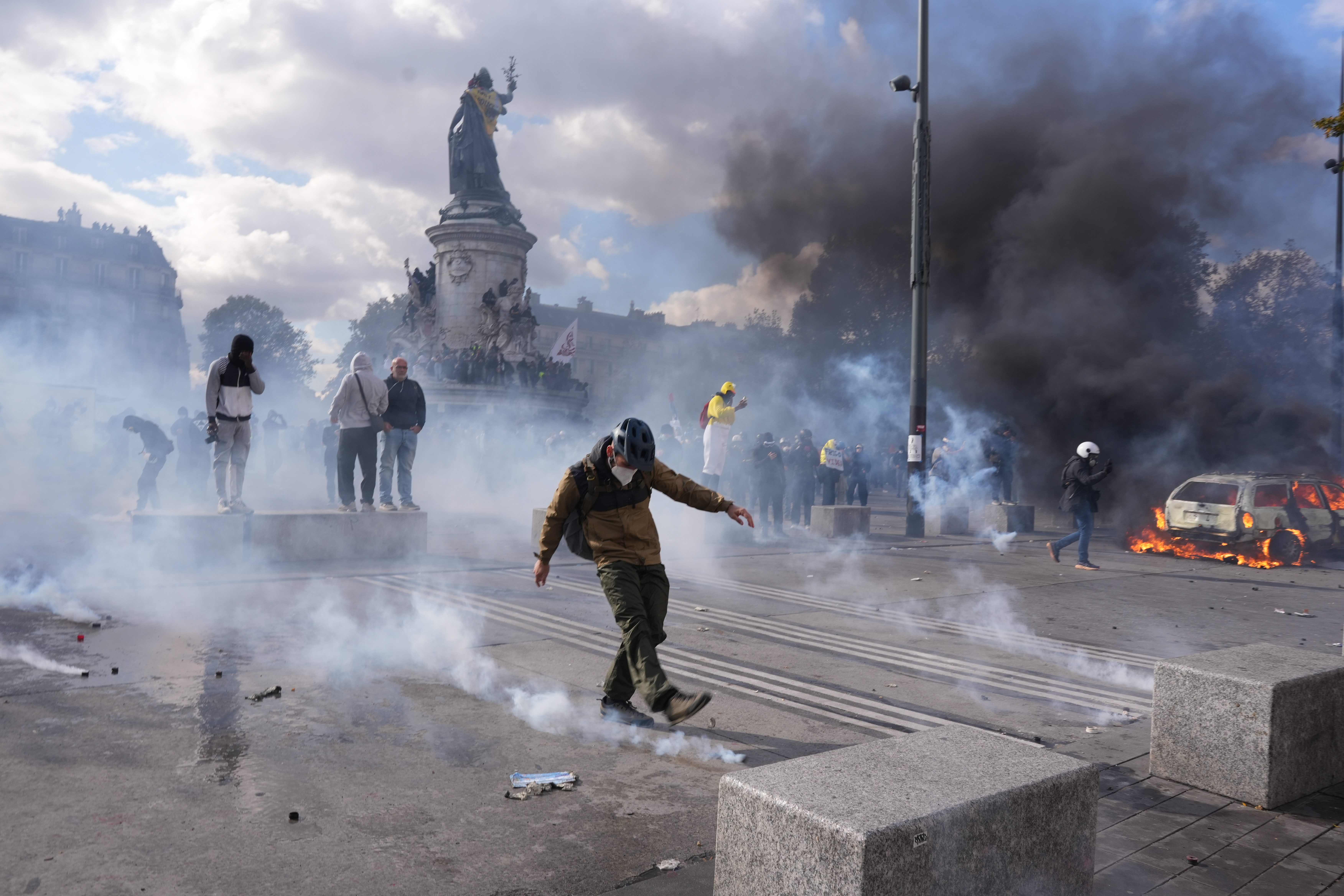
French President Emmanuel Macron said his government will aim to allow only protest marches by labor unions Saturday to prevent a repeat of last weekend’s violent demonstrations.
“In cases where it’s not unions, we’ll ban them wherever we can,” Macron said in a speech on Thursday following a meeting with top security officials. Macron is trying to avoid any demonstrations but said unions would be permitted to protest the rising cost of living along specific routes agreed with the police.
Demonstrations in public spaces require government approval, and bans are sometimes challenged by activists who participate in authorized protests, potentially leading to clashes with the police.
READ MORE: Minister: 550,000 people take part in protests across France, about 400 arrested
Macron acknowledged “planning failings and elements of surprise” last Saturday, when protests drew more than half a million people and degenerated into vandalism. Rioters attacked public buildings and looted stores in cities across the country. The French leader blamed seditious acts led by organized ultra-left groups that seek to bring down the republic, alongside acts of delinquency.
Before they turned violent, protests last weekend grouped several groups, including high school students and Yellow Vest activists, an occasionally radical grass-roots movement that emerged in 2018 to fight rising living costs.
In a statement Thursday, the CGT union said it was the government’s responsibility to maintain order, calling on authorities to end their “repressive tactics.”
As the government braces for another round of violence. Paris police banned protests and demonstrations Thursday in some areas of the city, including around the presidential palace, along the Champs-Elysées and near other tourist sites, citing the risk of violence. Thursday’s ban in Paris is in force from 8 a.m. to 8 p.m.
ALSO READ: France extends partial curfews to quell unrest
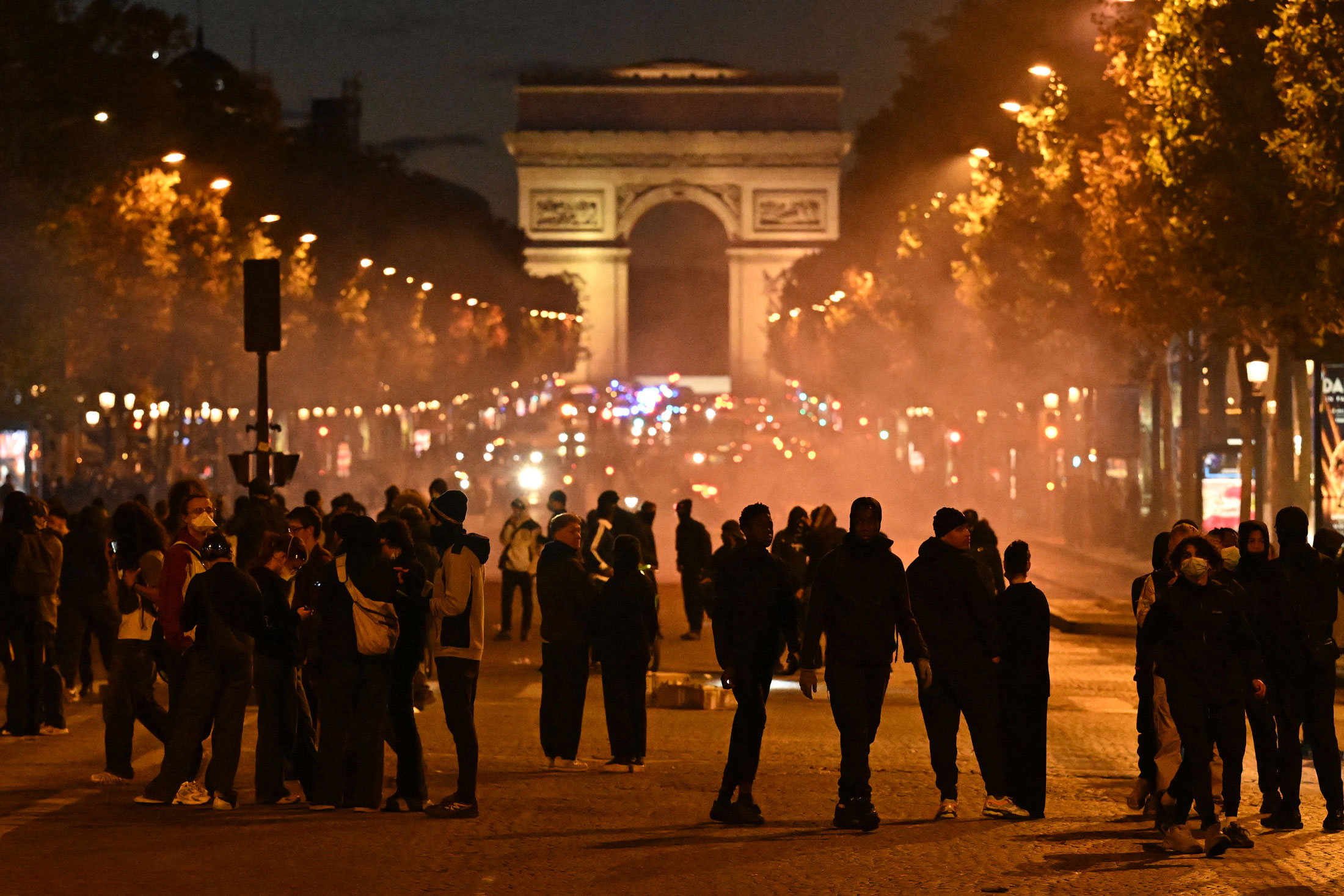
Several other cities around France also prohibited protests, Agence France-Presse reported.
The police decree refers primarily to student protests, which have been running since mid-September and stem from complaints about overcrowded classrooms, teacher shortages and the system used to allocate university slots. Several demonstrations “in sympathy” with high school students have also sprung up, including one that forced the Louvre museum to close on Monday.
Early on Thursday, before the ban came into effect, several student were dragging green recycling bins toward the front door of a university in Paris’s 6th arrondissement, a frequently used method of blocking access. SciencesPo university’s Paris campus was briefly blocked on Thursday morning by protesters before police intervened and allowed buildings to reopen.
Italy protests
France isn’t the only European country dealing with demonstrations. In Italy, trucker protests and road blockades over soaring fuel prices have disrupted deliveries particularly in the country’s south, causing food shortages in some areas. The blockages have prevented fresh products like milk from reaching dairies, leading to a halt in the production of the Campania region’s prized buffalo mozzarella.
READ MORE: French premier vows energy price curbs, talks to quell protests
The unrest in the south is separate from protests that led to looting and rioting in Milan over the weekend.
Earlier this week, Italian Prime Minister Giorgia Meloni announced measures aimed at stemming further violence amid concern over another round of demonstrations scheduled for the coming weekend. The government plans to deploy 500 military personnel in Milan through the end of the year.
