

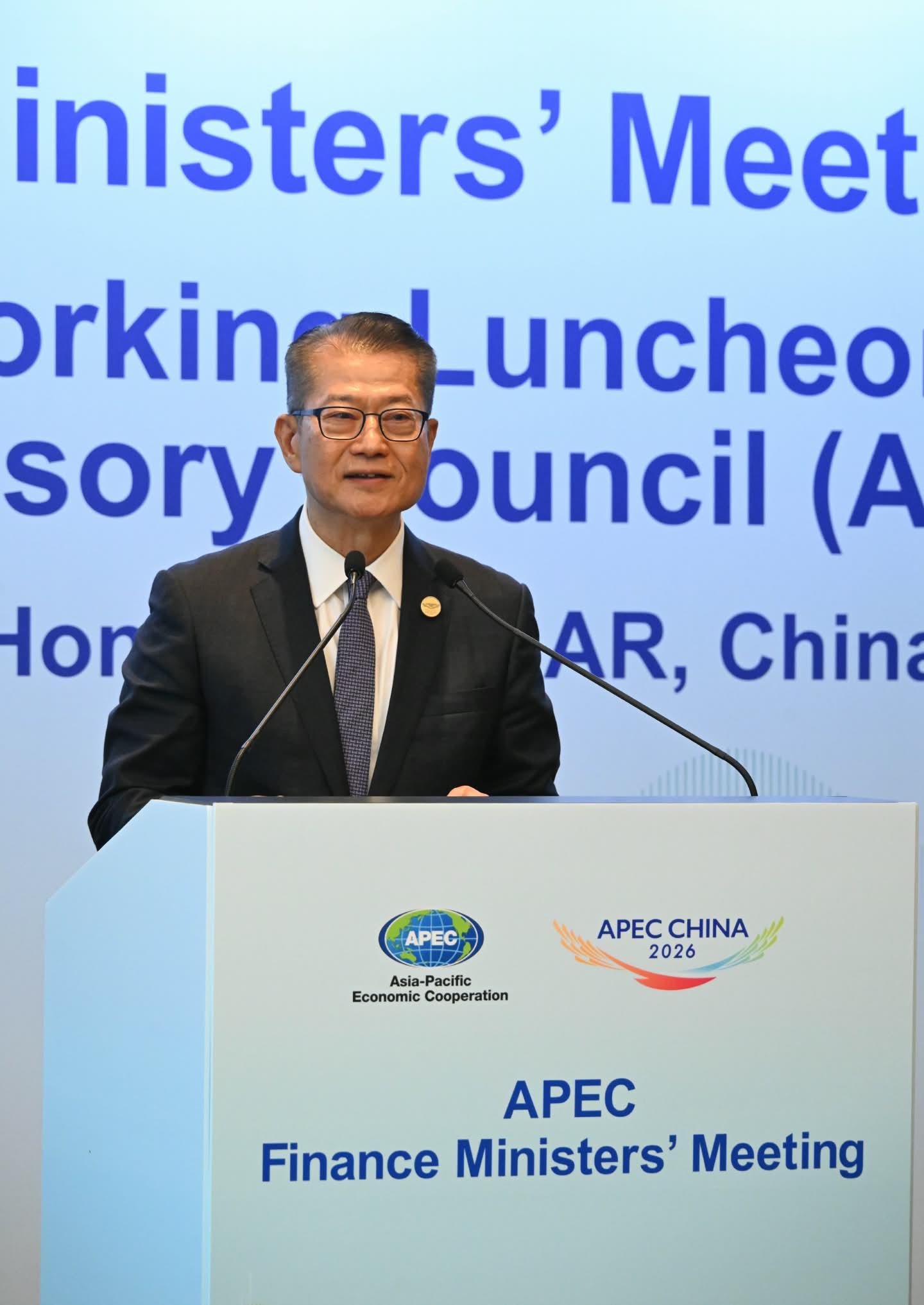
Creating an enabling investment environment, developing shared digital infrastructure, and cultivating various financing approaches are three essential foundations for digital infrastructure financing, Financial Secretary Paul Chan Mo-po said.
The finance chief made his comments during the working luncheon with the APEC Business Advisory Council at the 33rd Asia-Pacific Economic Cooperation Finance Ministerial Meeting on Tuesday.
“Our discussion goes beyond mobilizing more capital. It is about making digital infrastructure investable, while ensuring that it delivers affordable and reliable services which are accessible to underserved communities,” Chan said at the luncheon.
READ MORE: HK, ASEAN can ‘drive economic cooperation across APEC’
To achieve this goal, three elements are essential.
First, APEC member economies need to create an enabling, friendly and attractive investment environment.
“We have to be proactive and facilitative. Policy certainty, the clear delineation of responsibilities among government departments, and coordinated procedures greatly reduce uncertainty and delays, and are very much appreciated by investors,” Chan said.
Second, the APEC members need to develop shared digital infrastructure so that the public and private sectors can work together rather than leaving them to operate in isolation.
Chan cited the example of “iAM Smart” — Hong Kong’s digital identity platform — which allows residents to access different public and private services using a single identity, thereby reducing paperwork and repeated identity verification. The Hong Kong Special Administrative Region government has said it plans to extend this digital platform to the business sector later this year.
ALSO READ: iAM Smart AI assistant to answer queries on HK govt services
The Hong Kong Monetary Authority's Commercial Data Interchange securely connects banks with commercial data providers, allowing banks, with the prior consent of clients, to use their transaction data and other business records in credit assessments. By doing so, loans can be extended to the small and medium-sized enterprises on the basis of transaction documents, filling the financing gap much needed by SMEs who may not be able to provide real assets as collateral.
Third, Chan said APEC member economies need diversified financing approaches suited to different markets and stages of development.
He said that besides bonds and syndicated loans, public listing and securitization can provide economies with a useful refinancing channel for infrastructure. “By bringing mature projects with established cash flows to the capital market, funds can be recycled to invest in new projects. The Hong Kong Mortgage Corp and the Hong Kong Exchanges and Clearing stand ready to provide the technical and financial help.”
READ MORE: Closer cooperation seen as HK gears up for APEC
Chan said multilateral development banks can contribute in financing as well as expertise and experience in project preparation, implementation and operation. “There is a lot that MDBs can assist economies in the region in terms of assessing project viability, structuring viable revenue models, allocating risks and establishing transparent procurement arrangements,” he said.
“Success should be measured not only by capital mobilized, but also by affordable, reliable services delivered, and improvement to people's lives. The HKSAR stands ready to share the experience and expertise with governments, businesses and MDBs to translate their priorities into bankable projects to accelerate their sustainable and inclusive growth,” Chan said.
The 33rd Asia-Pacific Economic Cooperation Finance Ministerial Meeting kicked off on Tuesday, bringing together about 500 financial policymakers and representatives of international organizations for two days of discussion on four key objectives: using fiscal policies to support livelihoods; financing for digital infrastructure; promoting inclusive financial development; and enhancing young financial talent exchange.
