

Ho Lok-sang says country’s success is based on three simple principles: hard work, devotion, and — most importantly — wisdom
In recent years, the world has had to sit up and take notice of China’s groundbreaking achievements. The country’s consistency and reliability as a member of the international community of nations has earned it second place in global soft power ranking, at only 1.4 points (out of 100) behind the United States. In addition, a recent Gallup Poll placed China ahead of the US in global approval. China is clearly well positioned to better serve the vision of a shared future for mankind.
 China is renowned as the factory of the world. Its manufacturing output was about 28 percent of the global total in 2024. Less well known is the fact that China is also the world’s top agricultural producer, accounting for 36 percent of global output by value and equal to 3.5 times that of the US. In 1980, shortly after the reform and opening-up process kicked off, China’s per-capita GDP was only $195.1 in current US dollars, noticeably lower than India’s $271.1, based on World Bank data. By 2025, China’s per-capita GDP had risen to $13,962, roughly five times that of India’s $2,702.5.
Over the years, China has carved out a path of development with bold reforms and enacted many laws to protect intellectual property rights, private property rights, labor rights, foreign investors’ legitimate interests, and more recently a private sector promotion law. Following the promulgation of the Regulations of the People’s Republic of China on Disclosure of Government Information in 2019, the Center for Studies of National Index of the Rule of Law under the Chinese Academy of Social Sciences found governments at all levels in China had made notable strides in promoting transparency and public participation. In August, China’s landmark Ecological and Environmental Code took effect. The country has shown the world it is committed to sustainable development.
Today, China has achieved remarkable accomplishments across many areas, including poverty eradication, innovation, artificial intelligence, power storage and transmission, clean energy, high-speed rail, bridge building, ecological conservation, economic resilience, healthcare, law and public order. China’s strong competitiveness has raised concerns among some of its competitors, who call it “China Shock”.
As one who has studied China’s economy closely, I have learned that the country’s success is based on hard work, devotion, and wisdom. It is tragic that some “China watchers” in the West have come up with the totally mistaken notion that China’s competitiveness was gained through “State subsidies”. Sadly, while China and the West share similar ultimate values, ideological bias has obscured the difference between ultimate values and ideological hangups among some Western “China watchers”.
China, like the West, strongly believes in equality and human rights. Today, Stoicism is very popular in America. Its four cardinal values, namely wisdom, justice, courage and temperance, almost directly correspond to the Confucian values of wisdom, benevolence, courage, and doctrine of the mean. Sandra Woien, a professor at Arizona State University, wrote in the Ohio Capital Journal in 2023 that Stoics believe “that the universe exhibits a rational order, so we ought to align our beliefs and actions with eternal principles. Living in accordance with nature also reveals the interconnectedness of all things, showing how humans are part of a larger whole”. This is like a statement about the Daoist way of life. Westerners, like the Chinese, also cherish sincerity. Hence the English idiom, “walk the talk”. Ming Dynasty philosopher Wang Yangming (1472-1529) is famous for his “mind is reason” (xin ji li) and “practice what you know”(zhixing heyi) philosophy.
These parallels are real, and as humans, we all share the ideals of peace, prosperity, and freedom. Under its political system, China’s leaders display the qualities of sincerity, humility, and focus. Once they have identified an objective based on seeing the big picture (wisdom) and reason, they maintain focus and devotion (yongxin yiye; Xunzi), and readily learn from mistakes with humility and reflection (Book of Documents and Zengzi (505-435 BC)). China’s leaders gain promotion through demonstrating a track record of laudable service. While China respects equality of political rights, the country does not practice the Western-style electoral system, which over the years has been shown to suffer various weaknesses, including short-termism, pork-barrel tactics, and polarization. Under Western-style systems, politicians tend to cater to short-term demands from constituents and the demands from their donors; projects that require longer-term commitment and investment are not attractive and often ignored. A sincere believer in Stoicism committed to serving the public interest over the longer time is unlikely to win an election.
The Communist Party of China today has more than 101.28 million members. It is free of dogmas. Instead, the “Three Represents”, which has been written into the Party Constitution and the nation’s Constitution, requires that the Party must always represent the development trend of China’s advanced productive forces, the orientation of China’s advanced culture, and the fundamental interests of the overwhelming majority of the Chinese people. Since President Xi Jinping proposed the four global initiatives to promote the vision of a shared human destiny, China has in effect announced to the world that it is committed to serving the shared human destiny.
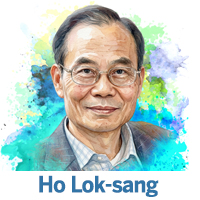
The author is an adjunct professor at the Academy for Applied Policy Studies and Education Futures, the Education University of Hong Kong; and an honorary research fellow at the Lingnan University and the Chinese University of Hong Kong.
The views do not necessarily reflect those of China Daily.
