

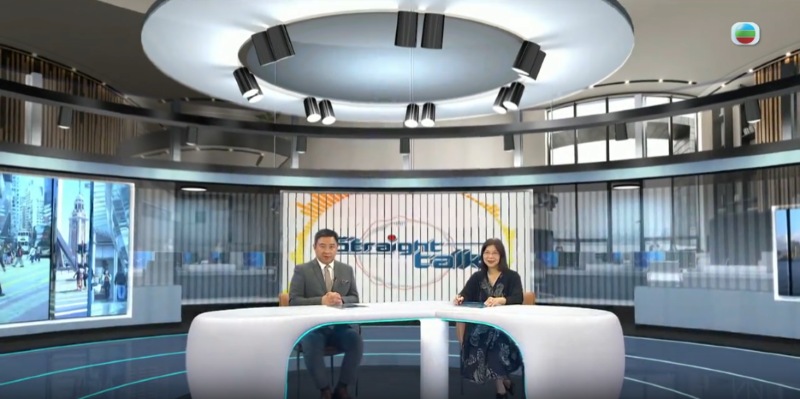
Secretary for Constitutional and Mainland Affairs Janice Tse Siu-wa is on the show this week to talk about Hong Kong's first five-year plan and how the plan will empower Hong Kong residents. Check out the full transcript of TVB’s Straight Talk host Eugene Chan Kin-keung’s interview with Secretary Tse.
Chan: Good evening, I'm Eugene Chan, and welcome to Straight Talk. Joining us is Secretary for Constitutional and Mainland Affairs Janice Tse Siu-wa. Appointed in March this year, Tse brings nearly 40 years of public service, including senior positions across numerous government bureaus, including director of Home Affairs and permanent secretary for Environment and Ecology. This evening, we'll be speaking with her about Hong Kong's first five-year plan, and more importantly, how the five-year plan will empower Hong Kong residents. Welcome to the show for this first time, Secretary!
Tse: Thanks, Eugene, for the invitation!
Why HK needs 5-year plan
Chan: I think all of us are eager to meet you after you have assumed your position as secretary. And I think the first major task in your bureau is Hong Kong’s first-ever five-year plan. Much has been talked about in the community, but this is a very good opportunity for you to explain to us why it is so important that we have this five-year plan, and especially why in 2026.
Tse: I think the first five-year plan for Hong Kong indeed is a very important task for the government and also a great challenge and opportunity for Hong Kong as a whole. Why do we need a five-year plan? Hong Kong has been doing quite well in its own way, in finance, in trade and in other aspects. But against a very complex global economic situation and with all the geopolitics around us, as a small and open economy, we can see that Hong Kong will face a lot of uncertainties in our development in the near future, with all the rapid transformation brought about by technological advances.
The national five-year plan, with all its foresight and strategic overview of what's happening in the Chinese mainland and around the world, will provide us with great opportunities to see what will happen in the next five years. Not only that, it provides an anchor for stability for Hong Kong's future development. We can see that with the technological advances in the mainland, it transforms a lot of industrial upgrading as well as other aspects of daily life. That will open up a lot of opportunities not only for enterprises in Hong Kong, but we can make better our position as an international financial center, international trading hub and international logistics and aviation or transportation hub. We can also serve as a magnet for all the talents to come to Hong Kong who can grasp the development in the mainland and raise the necessary capital and contribute to the technological advances in the mainland as well.
Chan: Right. So, Secretary, I think Hong Kong people are very grateful for you to come up and sort of in charge of this historical moment for Hong Kong. And the reason why we invite you right now is that there have been six weeks of consultation. What has been the responses? Because many people in the past in Hong Kong … we know that when the government writes out a policy, you're very keen, but people are very lukewarm about it. So, how have the responses been compared to other consultations you have done in the past?
Tse: So far, we have received over 3,000 submissions via our dedicated website, which is quite encouraging, and we have conducted many consultation sessions through various sectors, stakeholders, and they have given us a lot of views about the five-year plan. Indeed, the responses have been encouraging, but we fully understand that the concerns of the public, many of them are focusing on livelihood issues. Even though the five-year plan are more strategic, more forward-looking and pointing about the future direction of Hong Kong's development, we welcome views from all walks of life on all aspects, because their views do matter. And the five-year plan does matter for them as well, because, for example, many people are concerned about housing development, concerned about the employment opportunities. Many aspects that we will look at in the five-year plan would affect people's livelihood. Ultimately, the underlying principle in formulating our five-year plan is a people-oriented approach to bring better life and greater opportunities for people.
Chan: Right. Secretary, I know that not only you, the chief executive, the chief secretary, other secretaries, actually the whole government team has been meeting representatives from different sectors and stakeholders. And do you feel Hong Kong people are really engaging this time compared to the past? What do you feel?
Tse: I think people are definitely engaging, even though some of them are looking at the five-year plan from different angles – some from their own sectoral levels, some from the public concerns about livelihood issues. But all can see that the five-year plan is definitely a timely reform for Hong Kong in terms of economic and social governance. We need a strategic plan for our future.
Chan: Secretary, when you mentioned the term timely reform, you know in the past, we relied on the annual Policy Address and also the annual Budget. So, how are we going to fit all this in for Hong Kong from now on? I mean, are we going to still have a Policy Address and Budget? And how do people, how should we view this five-year plan in relation to the Policy Address and the Budget?
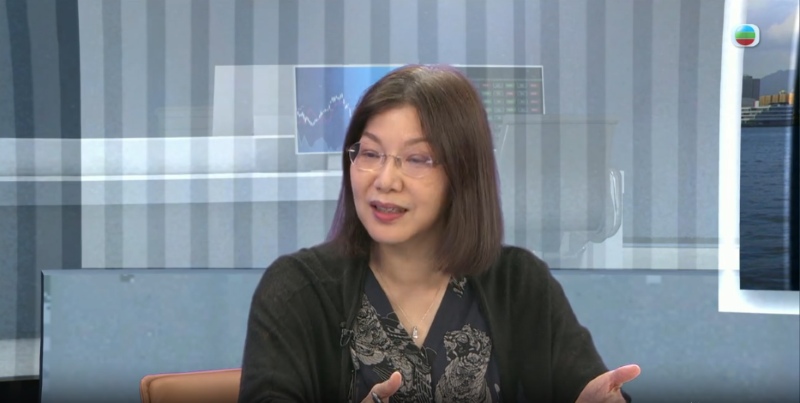
Tse: I think these are very good questions because the five-year plan is meant to be a strategic, forward-looking and directional plan – a blueprint for Hong Kong. It would not go into very detailed implementation aspects, which would be the responsibility of the Policy Address. The Policy Address can lay down detailed measures, initiatives and even KPIs for monitoring how we can do in implementing the five-year plan to make it a reality. And also the Budget will accord priorities to certain initiatives and resources to make it happen. So, all this is part and parcel of an overall mechanism to realize Hong Kong's economic and social development.
Chan: Secretary, while we understand this five-year plan is vital for Hong Kong's long-term positioning and competitiveness, I look at your consultation paper. The first area that you mentioned is the Northern Metropolis. Is the Northern Metropolis the key to Hong Kong's future? Is that why you put it on the first chapter?
Tse: Yes, the Northern Metropolis is indeed a very important part of our five-year plan. The reason is that in encapsulates a lot of vital concepts and development parameters for Hong Kong. The Northern Metropolis is not a simple land development project. It provides the necessary space for our university town area. And with this, we provide further expansion for our education. But not education per se, but it's an embodiment of asset, technological advances, and talent attraction, as well as town planning. The Northern Metropolis will provide the necessary space not only for our universities, but the universities, through their cooperation and collaboration with enterprises, can have a kind of a more organized approach to developing scientific research to enable the future development of asset industries. And then we can provide value at the services to these asset industries, and as well as to attract many talents to come to Hong Kong. And all these assets can leverage on Hong Kong's position as an international financial center. They can raise funds here. They can enable many startup companies to get into the global market. And also, the Northern Metropolis adopts a lot of facilities to support the development of the university town area, as well as the other industries. This not only provides new living areas for our people, but also job opportunities. So, all this, the Northern Metropolis indeed is what we have been doing, but with a reform angle in our next five years.
Aligning with national development
Chan: Secretary, before we go to the break, I'm going to ask you the final question, but I'll be quite brief. I like the word you use, leverage. Hong Kong has always been admired by even our Singapore counterpart. I met the CG in Hong Kong. They said you have the mainland as your backbone, right? So, how are we going to leverage this five-year plan with the national Five-Year Plan, in brief? How can we do that?
Tse: I think the most important point is to uphold the “one country, two systems”, which provides unique advantages for Hong Kong and as an international financial center and other trade center as well. Internationalization is the unique aspect that Hong Kong has to leverage on. In the dedicated chapter in the national Five-Year Plan about Hong Kong and Macao, they have been repeated mentioning about the internationalization of Hong Kong. So, I think in our national Five-Year Plan, they realized the contribution of Hong Kong is to better implement “one country, two systems” and its success not only brings better economic and social development in Hong Kong, but also helps to showcase the success of the “one country, two systems.”
Chan: Okay, time for a short break now. We'll be back with more Straight Talk.
Chan: Thank you all for staying with us. We have been talking to Tse Siu-wa, secretary for Constitutional and Mainland Affairs, about the formulation of Hong Kong's first five-year plan, how it's going to improve the life of Hong Kong residents.
So, Secretary, before the break, I think one term that you mentioned categorically is the importance of “one country, two systems”; that's Hong Kong's niche. I'll go right into it. A lot of people will say that Hong Kong thrives with market economy. Hong Kong people are entrepreneurial, they're adaptive, they're flexible. And now we're going to have a fixed five-year plan. Is it going to have an adverse impact on Hong Kong's image in terms of its autonomy? What is your government’s stance on this? I'm sure you realize this is one of the Western rhetoric on Hong Kong.
Tse: I think it's a total misconception. We still maintain the market-led, government-facilitated approach. I think the free market economy has served Hong Kong well, but as I mentioned before, against all these rapid changes in the global economy and geopolitics, definitely the government has to facilitate certain development to ensure that Hong Kong, as a very small and open economy, can develop further in this very ever-changing world. In that regard, the five-year plan will only provide the strategic blueprint. It's a very broad brush. We never might co-manage.
Chan: Right. So, even with the next government, they have the flexibility or, I mean, they actually choose what to do that fits the five-year plan.
Tse: The actual implementation will be set out in the Policy Address and there will be lots of flexibility on the specific ways to implement the five-year plan, various initiatives, where we should put our resources and then what the priorities are. So, I think every term of government can follow the plan but still has a lot of room to maneuver in terms of implementation taking into account the prevailing global environment.
Chan: I see. So, Secretary, one of the chapters that you have dedicated to is regional cooperation. And we all know that the Guangdong-Hong Kong-Macao Greater Bay Area is a much-talked-about term that I will use in Straight Talk. How is Hong Kong going to benefit from this in terms of its international role for the mainland? Because at the moment, the news we got are many people going over the border over the weekend, rather than mainland counterparts coming to Hong Kong and going international. Is it going to happen soon or it's happening without us noticing it?
Tse: I think definitely the direction is what we are trying to strive at is the free flow of people, capital, and even data and talent between Hong Kong and the Greater Bay Area. And this will not only help development in Hong Kong, but also provide a very dynamic, rich hinterland for Hong Kong's future development. For example, our startups can actually realize production in the Greater Bay Area. And we also can attract many foreign capital to invest in some companies in Hong Kong and in the mainland because of the production bases. And this is really what we are trying to achieve in the five-year plan. The Greater Bay Area development is a national strategy because it provides a lot of opportunities for Hong Kong and the areas to face all the new development in the world. And that is one of the roles that Hong Kong can better serve the motherland because with our international exposure, we can bring in new capital, new talent, and new technologies as well as bring those out into the global economic scene.
Benefits for HK residents
Chan: Janice, thank you for giving us that sort of bird's-eye view of what the plan is trying to do. But according to the title of the show tonight, how is it going to empower Hong Kong residents? Because I'm sure everybody sitting by the television now will want to ask you, how are we going to benefit? Because I see the paper covers almost every aspect of the society, like housing, health care, education, employment, I&T, green transition, even infrastructure. It's very ambitious. So, in your opinion, what will be the biggest difference, let's say three areas, to make the biggest difference to people's quality of life in five years' time, in your opinion?
Tse: I think definitely in terms of job opportunities, in terms of education, in terms of living environment. Under Hong Kong's first five-year plan, the Northern Metropolis development, as I mentioned before, already encapsulated all these major elements in its plan. And it will provide more job opportunities, it will attract more talent to Hong Kong, and will provide more education opportunities necessary for our younger generation. And also, it will provide greater environment, better housing, greener environment. Take for one example, the development of life science in the Loop will definitely benefit a lot of our elderly population, if all that R&D comes to fruition. So, all this new development is not only with only economic development in mind, it ultimately is for the betterment of our people's livelihood.
Chan: Secretary, just now, you mentioned repeatedly something for the young people and also for the elderly. But I must ask on behalf of what we call the middle-income families or the middle class. The middle class is often cited as the class that misses out on everything. So, will this five-year plan for the first time concern about the middle class's benefit?
Tse: I think it will definitely benefit the middle class as well. For example, many of our younger professionals, they will have greater opportunities to do R&D and to start their own businesses in the Northern Metropolis or under the first five-year plan. The reason being that we are going to integrate and align our development with the big picture in the mainland, there will be a lot of opportunities there. I will term it as a treasure hunt because those young professionals, middle-class, small SMEs, small entrepreneurs, they can look for new opportunities and seize them. And if they are the first mover, they will definitely benefit a lot.
Chan: Right. I'm going to ask you an even more direct question now. Well, all the plans are well-meant, and I'm sure it's well thought over. As the CE said to me when he came here, he said, we have thought about Plan A and Plan B and Plan C, we have the best plan. But how about in terms of implementation? I mean, in the last few years, we did see there’re some hiccups sometimes, minor ones. How can we ensure this time, when it is so timely, that all these objectives will be implemented hopefully flawlessly? How can we ensure that?
Tse: I think to ensure a smooth implementation, definitely we need to check the progress, monitor the progress and also set targets. Many people have already suggested we need to implement a set of KPIs, but this will be more appropriate in the setting of the annual Policy Address, where we can set more detailed KPIs on every step we take to implement the five-year plan. Also, every year we can look back at the progress in achieving or in taking forward the five-year plan in the context of the Policy Address.
Hong Kong’s future development
Chan: Janice, you mentioned earlier in the show that the world is changing so rapidly with all the geopolitics and even with technology and everything. So, are there opportunities for this sort of five-year plan after it's been announced? Are there still room for minor amendments or is there a mechanism where we can still give our input and, maybe, steer the ship slightly in a different direction? Is there still such a mechanism?
Tse: Definitely, I think the five-year plan is a rather broad brush; it's more directional, so there will be a lot of flexibility throughout its implementation to allow more new ideas, taking into account different developments in different areas, and we definitely welcome views during the public consultation on the Policy Address or even on the Budget about how best to implement the five-year plan, and also there will definitely be flexibility in the detailed implementation in terms of the initiatives to take forward the five-year plan. Even on technological advances, which type of technology we should focus on, which we should facilitate in its development, is open for discussion.
Chan: Secretary, I'm going to ask you the last question and be brief on the answer. You have assumed the post for the last six months. How do you see Hong Kong's future?
Tse: As I have assumed the post for just less than four months. But I think time flies and …
Chan: Definitely, I can see that.
Tse: … if we can successfully formulate our first five-year plan, I'm pretty confident that Hong Kong is on the road to a better future because the plan is definitely for the betterment of the livelihood of our people and anyone in it.
Chan: Right, I'm afraid we have to leave it there for now, and thank you, Secretary, for the update and for sharing your insights with us. Thank you very much.
Hong Kong's first five-year plan is a blueprint for our future, aiming to drive long-term growth and improve people's lives. Viewers, I encourage you to have your say and take this opportunity to help shape our city's next chapter. Thank you for joining us on Straight Talk. Thank you. I'm Eugene Chan, and good night.
