

Hong Kong’s legal pundits rallied on Thursday in support of mediation as a viable alternative for resolving disputes peacefully through dialogue, and of the special administrative region’s aspiration to become a global capital of mediation.
“Why not Hong Kong, where else?” Secretary for Justice Paul Lam Ting-kwok replied when asked how Hong Kong had become the headquarters of the International Organization for Mediation (IOMed), citing the unique advantages under “one country, two systems”, the firm backing of the nation, and the city’s long track record as a global legal center.
The world’s first intergovernmental body dedicated to settling international disputes by mediation, IOMed was officially launched in Hong Kong last October. The number of the organization’s signatory states has since climbed from 37 to 48, alongside 18 contracting states.
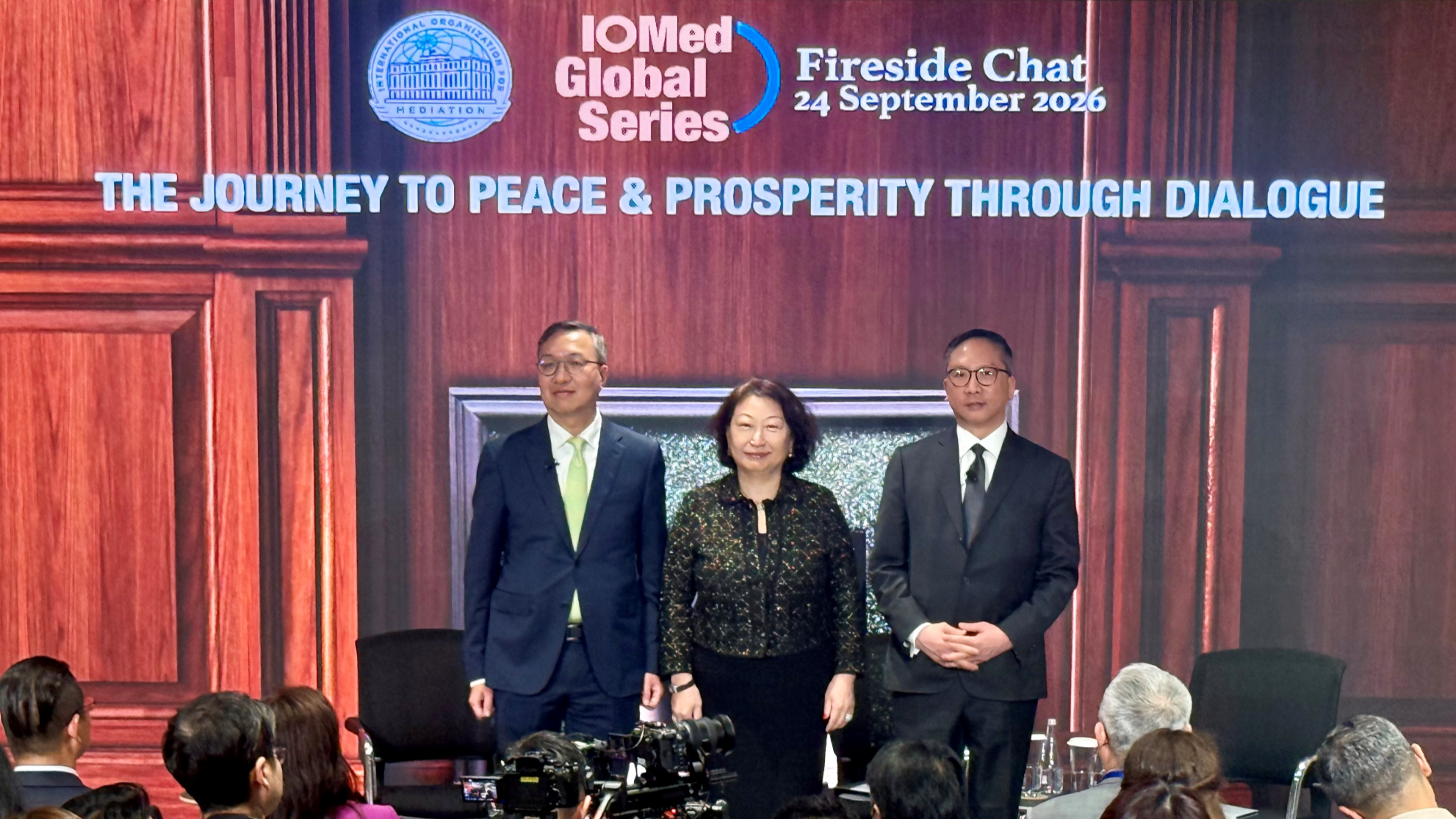
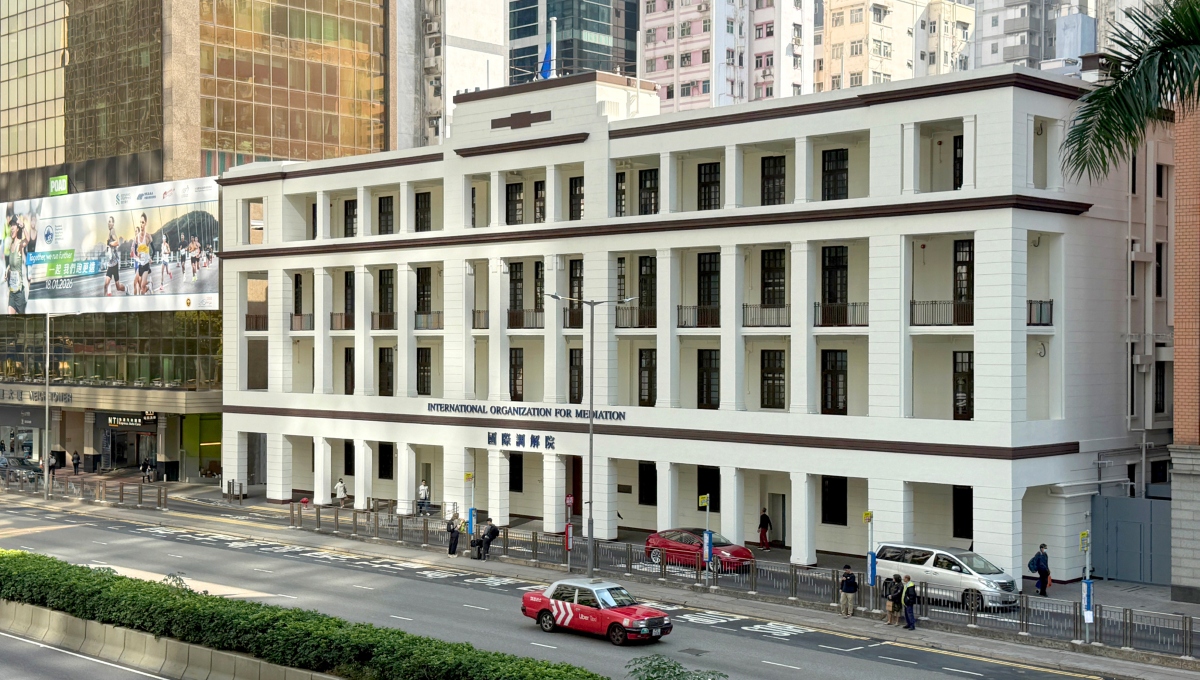
Lam spoke at a fireside chat at IOMed’s headquarters in the Old Wan Chai Police Station, joined by Rimsky Yuen Kwok-keung — one of the IOMed General Panel of Mediators and Hong Kong’s secretary for justice from 2012 to 2018 — and IOMed Secretary-General Teresa Cheng Yeuk-wah, another former secretary for justice of Hong Kong, who held office from 2018 to 2022.
The talk — themed the Journey to Peace and Prosperity Through Dialogue — is the debut event of the IOMed Global Series, an initiative to foster exchanges on international law and dispute resolution, intended to champion the use of mediation.
Lam reaffirmed the SAR government’s resolve to champion the use of IOMed, with Chief Executive John Lee Ka-chiu’s latest Policy Address pledging “full support” for IOMed’s work and giving priority to including the body as a dispute-resolution option in government contracts involving international commercial matters and in international agreements signed by the Hong Kong Special Administrative Region.
On Hong Kong’s recent strides in deepening the capabilities of its mediation services, Lam referred to the city’s intensified efforts to facilitate mediation practices between jurisdictions with different economic and political systems within one country. Cross-border mediation across the Guangdong-Hong Kong-Macao Greater Bay Area stands as the emblematic case, he said.
He attributes this to the “harmonized system” within the region created in recent years: a shared accreditation system for mediator qualifications, codes of conduct for mediator professional ethics, model rules for cross-border mediation, and a mediator list formally issued by the three jurisdictions’ legal departments — all vital to encouraging people to use mediation.
During the talk, Yuen discussed untold stories behind the policies and legislation rolled out for the city’s mediation industry, from the early days.
Yuen took the helm as the first chairman of the Hong Kong Mediation Accreditation Association Ltd, helping to steer its incorporation and launch in 2012 and 2013.
“At the time, the consensus was very strong that we needed a very good system to deal with mediators so that people would have confidence in the practitioners,” he said.
Yuen also recalled the moment the city’s Legislative Council passed the Mediation Ordinance in 2012, bringing it into effect on January 1, 2013.
“The main objective is to provide a legislative regime which provides the minimum but essential guidance for the conduct of mediation,” he said, “but at the same time maintains its flexibility.”
While noting that some studies had pointed to room for reform, Yuen said the ordinance “struck the right balance”.
He conceded that “no legislation can be perfect” and pledged to keep studying the current situation to see what other areas need refinement.
Looking ahead, Cheng raised the prospect of policy levers — or other kinds of mechanisms — that will ensure the enforcement of mediation outcomes reached through IOMed.
The next edition of the IOMed Global Series is scheduled for November, the organizer said.
Contact the writer at wanqing@chinadailyhk.com
