

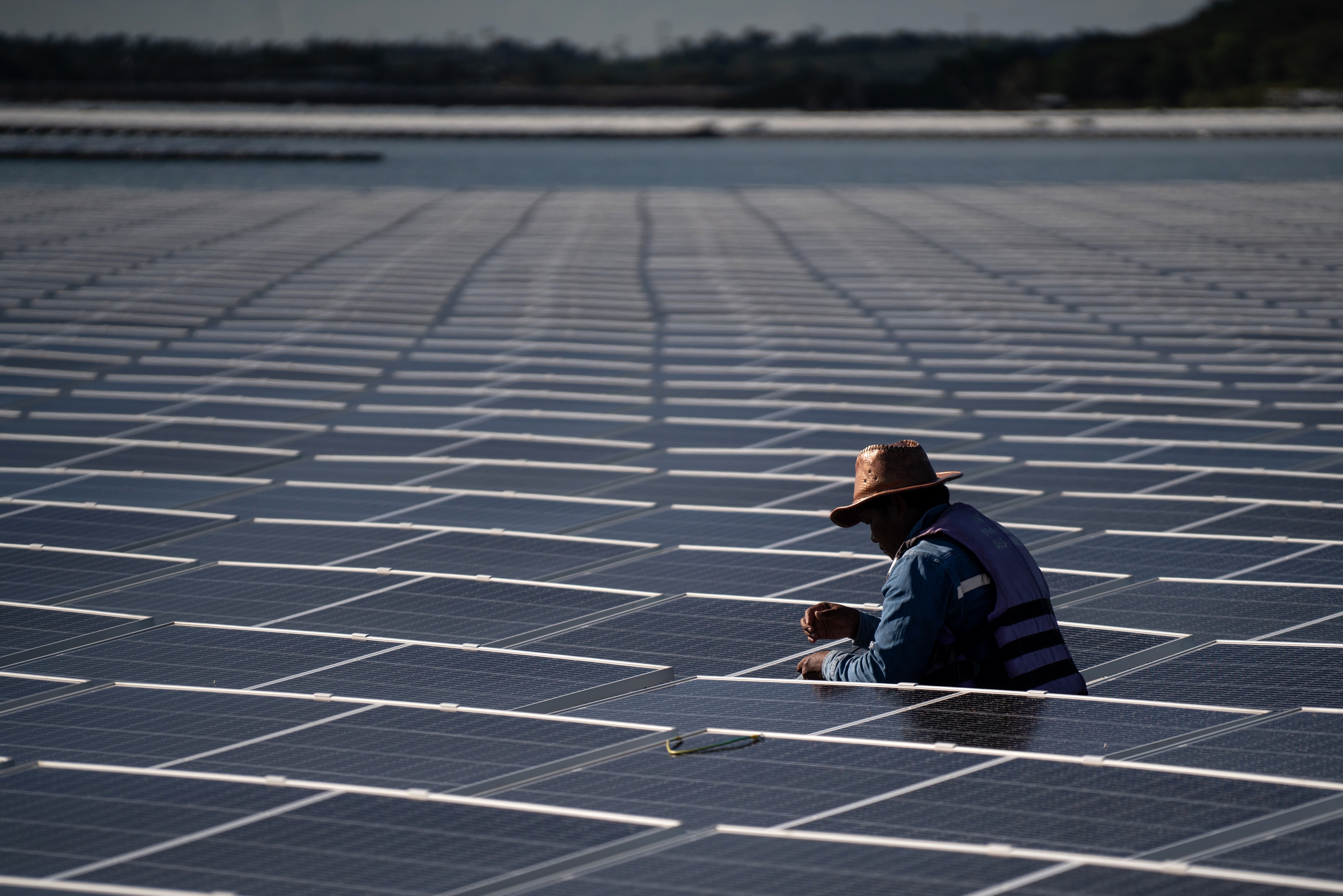
Thailand is considering generating 89 percent of its electricity from cleaner sources by 2050 as it formally puts a more ambitious long-term power plan to public consultation.
The draft released Tuesday sets a minimum clean-power share of 65 percent, with several more aggressive options also under consideration. The most renewable-heavy scenario would lift that share to 89 percent, well above the target outlined by Energy Minister Akanat Promphan last month.
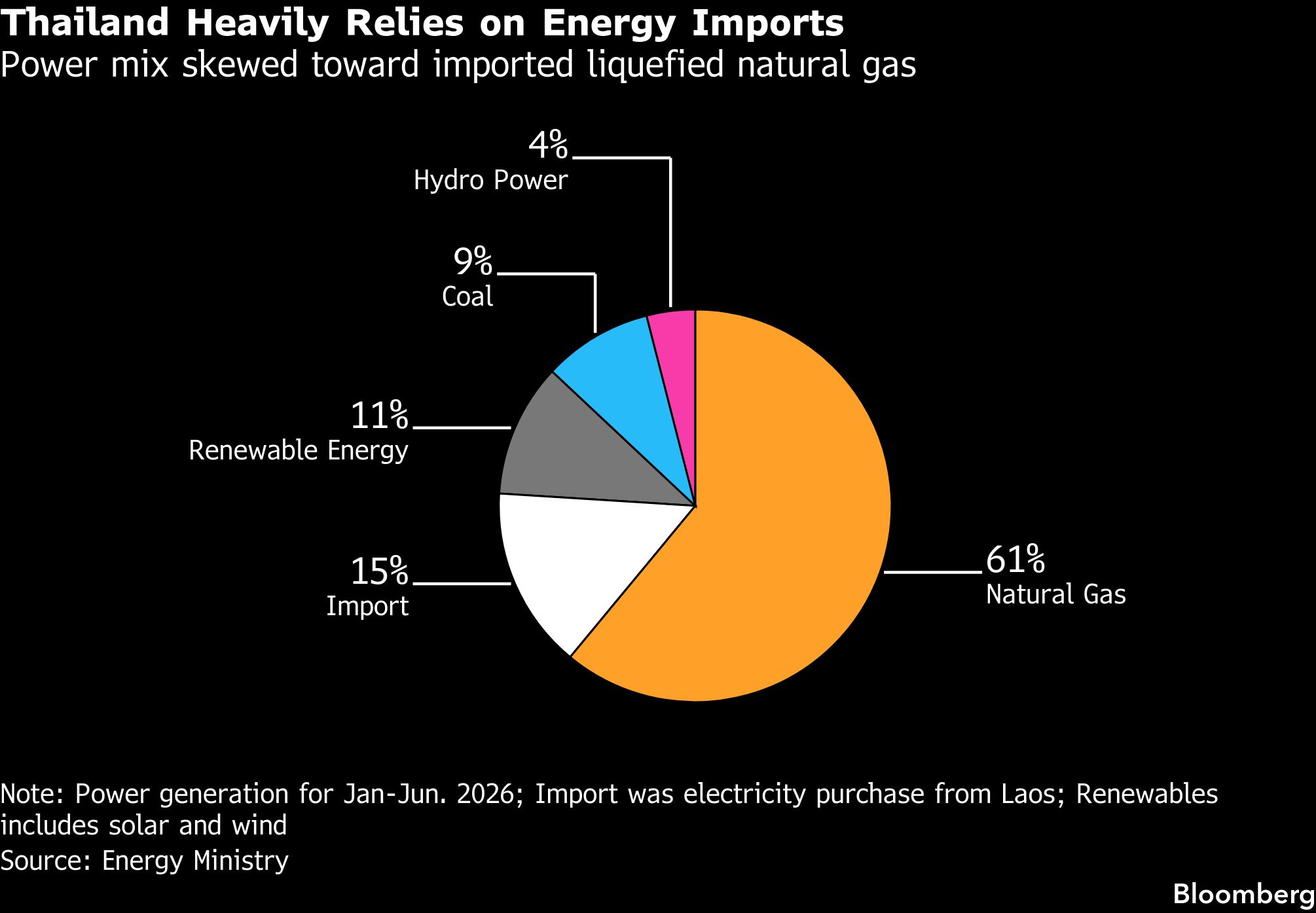
The plan comes as the country faces rising electricity demand from data centers and advanced manufacturing while trying to cut its reliance on imported natural gas, which still supplies most of its power. That dependence leaves Thailand exposed to swings in global fuel prices, a risk highlighted by the Middle East conflict and higher gas import costs.
ALSO READ: Grid reforms vital for boosting ASEAN's clean energy growth: Report
“Achieving net zero is a key challenge as global trade and investment increasingly focus on cutting greenhouse gas emissions,” Prasert Sinsukprasert, the Energy Ministry’s permanent secretary, said Tuesday. “Major global companies, particularly data-center operators, are choosing Thailand as an investment hub because they have confidence in the country’s power policies and its commitment to clean energy.”
Bloomberg News first reported last month that the government was preparing to sharply increase its use of renewable energy and add nuclear power to the national plan. Renewables currently account for about 15 percent of the power mix.
The country has attracted billions of dollars of investment in data centers, cloud computing and advanced manufacturing, adding to pressure on the government to ensure there is enough electricity without pushing up household power bills.
Under the draft, about 51,000 megawatts of new power capacity would be added through 2037, with most of it coming from solar, wind and battery storage, alongside new gas and nuclear power.
READ MORE: Thailand cuts power supply to border areas linked to illegal operations in Myanmar
The most renewable-heavy option could require about 700 billion baht ($21 billion) of investment through 2050 in power networks, batteries and other equipment needed to support a much larger share of renewable energy.
The plan also includes up to 9,000 megawatts of nuclear capacity. The government is studying small modular reactors and micro modular reactors as options for future nuclear power plants.
Thailand last revised its 25-year power development plan in 2023, before the latest energy shock and the surge in electricity demand linked to artificial intelligence. The country still aims to reach net zero by 2050.
